Fifty-five million litres are in need of a new processing plant. To ensure they do not remain unsold next spring, Luxlait is preparing to increase its own milk collection by around a third and to invest nearly €4m.
The agreement reached with Prolek is intended to provide a solution for the 68 farms that currently supply their milk to Ekabe in Eschweiler. Lactalis, which has owned this dairy since its acquisition by the Besnier Group in 1989, will cease collecting their milk on 31 March 2027. Producers now have until 25 September to individually sign the contract proposed by Luxlait. The Prolek directors affected by the scheme have already given their approval. However, implementation remains subject to a sufficient number of farms signing up, the finalisation of the industrial agreements and the organisation of the new collection arrangements.
The volume involved measures the scale of the change. Luxlait currently reports collecting around 170 million litres a year from its approximately 300 member producers. The potential addition of Prolek’s 55 million litres would increase this volume by 32%, to around 225 million litres. However, the co-operative does not have the necessary capacity at its Roost site to process this additional volume immediately. It has therefore devised a structure involving several processors. Part of the milk is expected to be processed into mozzarella, butter and milk powder. Luxlait will need to acquire further shares in a company in which it already holds a stake in order to adjust its equity stake in line with the volume it will be supplying.
No requirement to reduce production
The partner has not been named at this stage, as the final contracts have not yet been signed. The financial arrangement has been designed so as not to generate any profit for Luxlait. “Luxlait does not make a single euro from this deal,” says Luxlait’s CEO, 
The price paid to farmers cannot therefore be guaranteed in advance. It will depend on the markets for industrial products, where prices can fluctuate significantly from one year to the next. “There are years when things are much better and years when they are much worse. I cannot predict the price,” admits the director. Luxlait, however, is not asking for any structural reduction in production: each farm will have to declare its projected volumes and adhere to them within a margin of plus or minus 10%, which is also assessed at group level.”
The scheme is intended to run for several years. Luxlait and Prolek are therefore not simply proposing a transitional contract designed to postpone the problem beyond April 2027. “This is not a one-year solution,” insists Gilles Gérard. The contract is intended to give farmers the time they need to stabilise their businesses whilst the co-operative explores a more sustainable arrangement.
An forthcoming study on the idea of a new business line
This second phase could alter the economic nature of the project. Luxlait has commissioned PwC to investigate new products, new markets, potential industrial investments and various forms of cooperation. The co-operative wishes to determine whether part of the 55 million litres could be processed in Luxembourg rather than being channelled into standard industrial production.
Gilles Gérard refers in particular to protein powder, driven by the global growth in fortified foods and drinks. “Everyone consumes protein products these days. I think this trend is here to stay,” he explains. The study has yet to assess the size of the market, the profitability of a production facility and Luxlait’s ability to market these products beyond Luxembourg.
The aim would be to shift from a focus on market outlets to a focus on value creation. Butter, milk powder and mozzarella enable large volumes to be absorbed, but the returns on these products remain largely dependent on international markets. Protein-rich ingredients or differentiated finished products could add greater value to the raw material, provided the necessary investments can be justified.
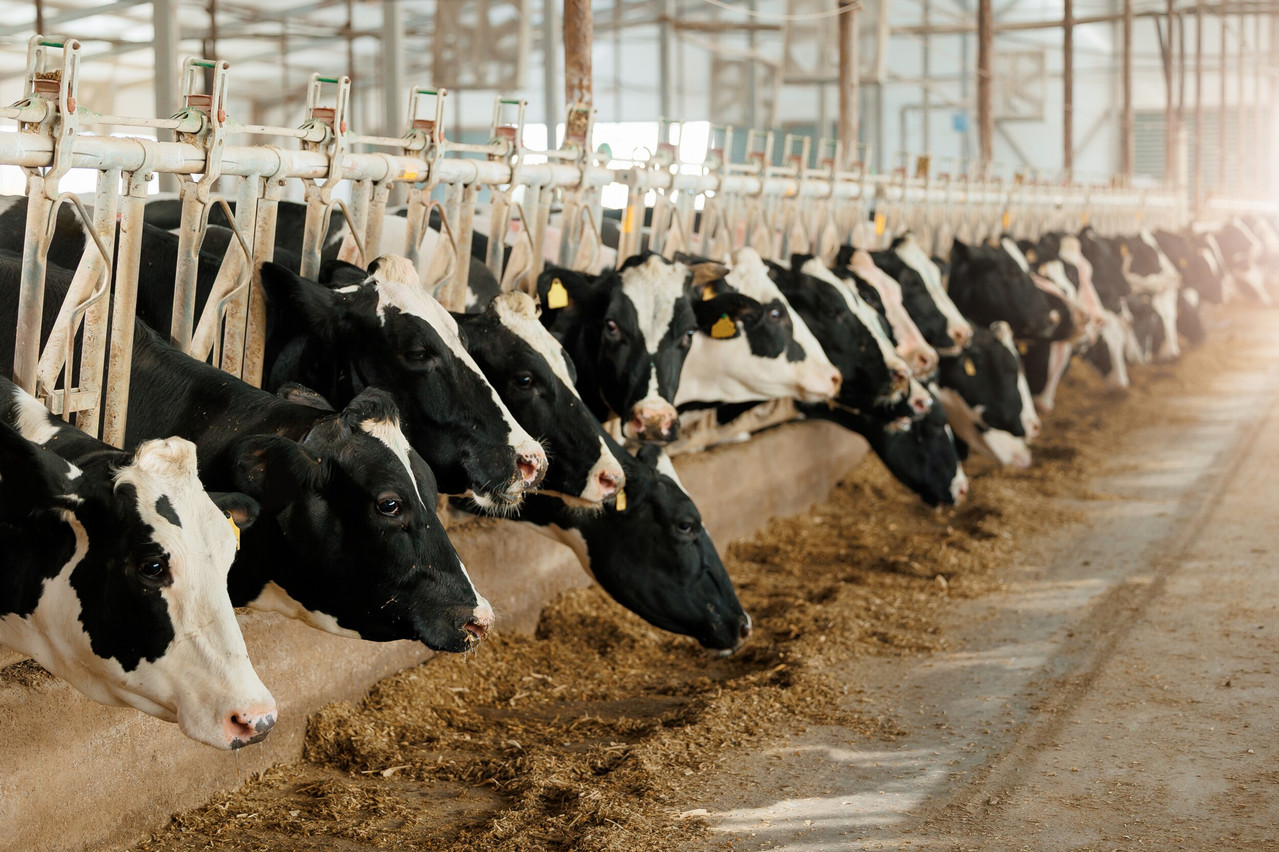
This diversification would build on Luxlait’s strategy, with its product range having expanded from drinking milk to yoghurts, cheeses, desserts, fermented drinks, ice cream and products for the catering trade. The cooperative now has 300 member farmers, 22,000 cows and collects 170 million litres of milk each year.
However, the agreement with Prolek introduces a fundamental difference. The 68 farms are not simply joining the traditional Luxlait model: each will enter into an individual contract with the cooperative under a specific mechanism for the collection, processing and redistribution of revenue. Prolek will retain a role in monitoring and ensuring the fulfilment of commitments. The government has facilitated discussions between the producers, Luxlait, Lactalis and other industry players. However, its intervention does not alter the private and conditional nature of the arrangement. Luxlait finances its equity investments, organises the sales channels and assumes the commercial risk, whilst the producers must still sign up to the scheme in sufficient numbers.