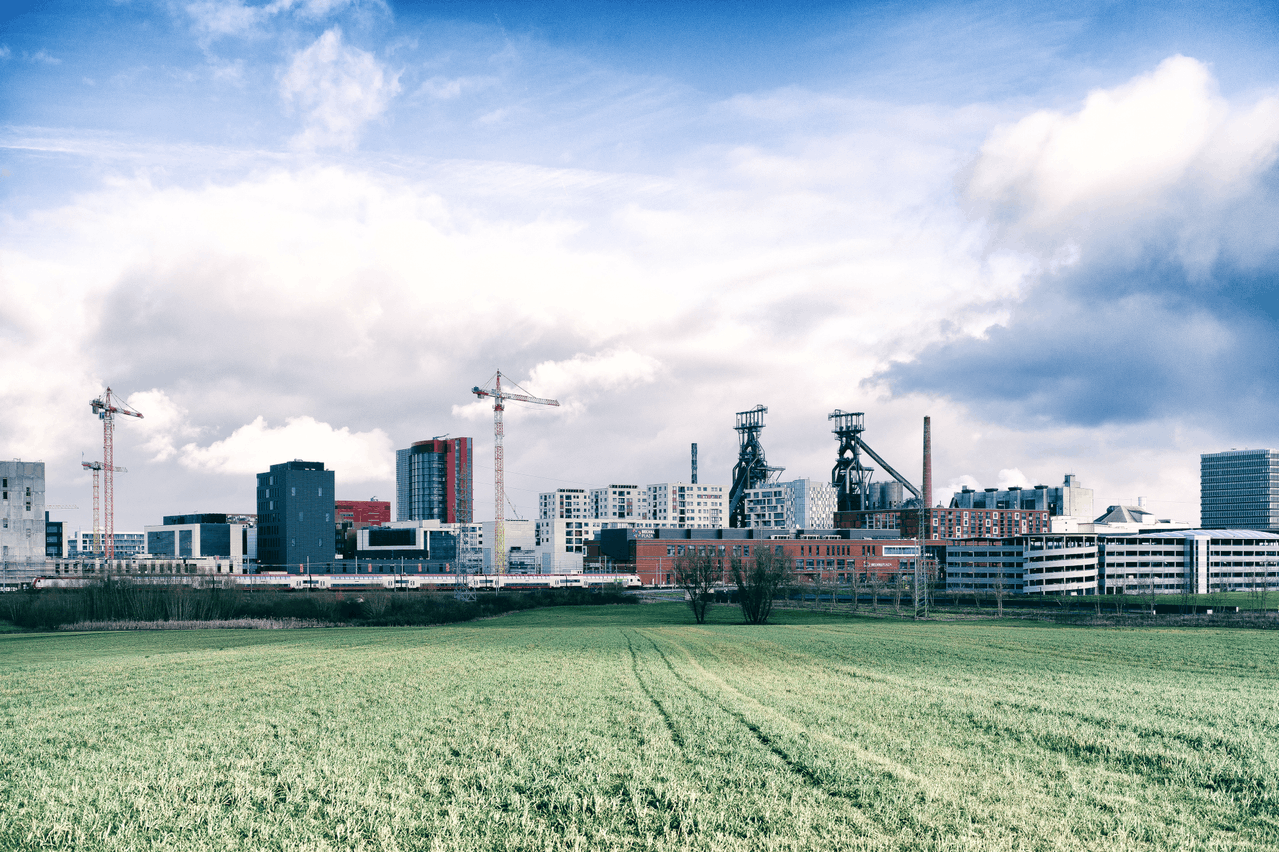
Housing
Housing has become one of the most sensitive topics in Luxembourg’s public debate. Available analyses converge on one point: the current crisis is not only a matter of insufficient supply or sustained demographic growth. It is rooted in massive inequalities of land ownership, inherited from a system in which a small number of owners hold most of the land available for construction. Today, a tiny fraction of the population owns a disproportionately large share of buildable land, shaping the market’s dynamics.
At the same time, housing has gradually ceased to be a good primarily intended for use and has instead become an asset sought by investors. This financialization changes the rules of the game: the value of a home depends less on social needs and more on its capacity to generate returns. Prices rise, rents follow, and more and more households find themselves excluded from a market that has become inaccessible. The result is clear: rising housing cost burdens and families struggling to remain in the country. In response to these pressures, a number of proposals are emerging: rent regulation, anti-speculation taxation, mobilization of land, and the strengthening of public housing. These levers could help rethink land-use planning and restore housing to its primary purpose.
Economic inequalities
These imbalances are part of a broader context of growing economic inequality. Luxembourg remains prosperous, but the distribution of wealth has become significantly skewed. A minority concentrates the majority of wealth: 10% of households own almost as much as the remaining 90%, and 3% of the population accounts for more than half of all inherited wealth. When wealth accumulates in such an extremely concentrated way, social mobility declines, gaps widen, and collective protections erode.
As inequality and poverty are closely linked, this dynamic has direct effects on living conditions. Many employees, including full-time workers, can no longer cover the cost of living, and the most vulnerable groups are slipping into precariousness.
These are not isolated incidents but the consequences of an economic model in which advantages granted to capital holders and high-wealth households often outweigh redistribution and solidarity. Understanding these mechanisms makes it clear that there is an urgent need to rethink redistribution, housing, and taxation in order to address the root causes of the problems, not just the symptoms.
Perspectives
By bringing together insights from economists, legal experts, social researchers, and field actors, Improof shows that another economic structure is possible: one that places society at the center. The aim of the contributions on the platform is to fuel informed public debate and outline realistic solutions to achieve a fair and sustainable economy.