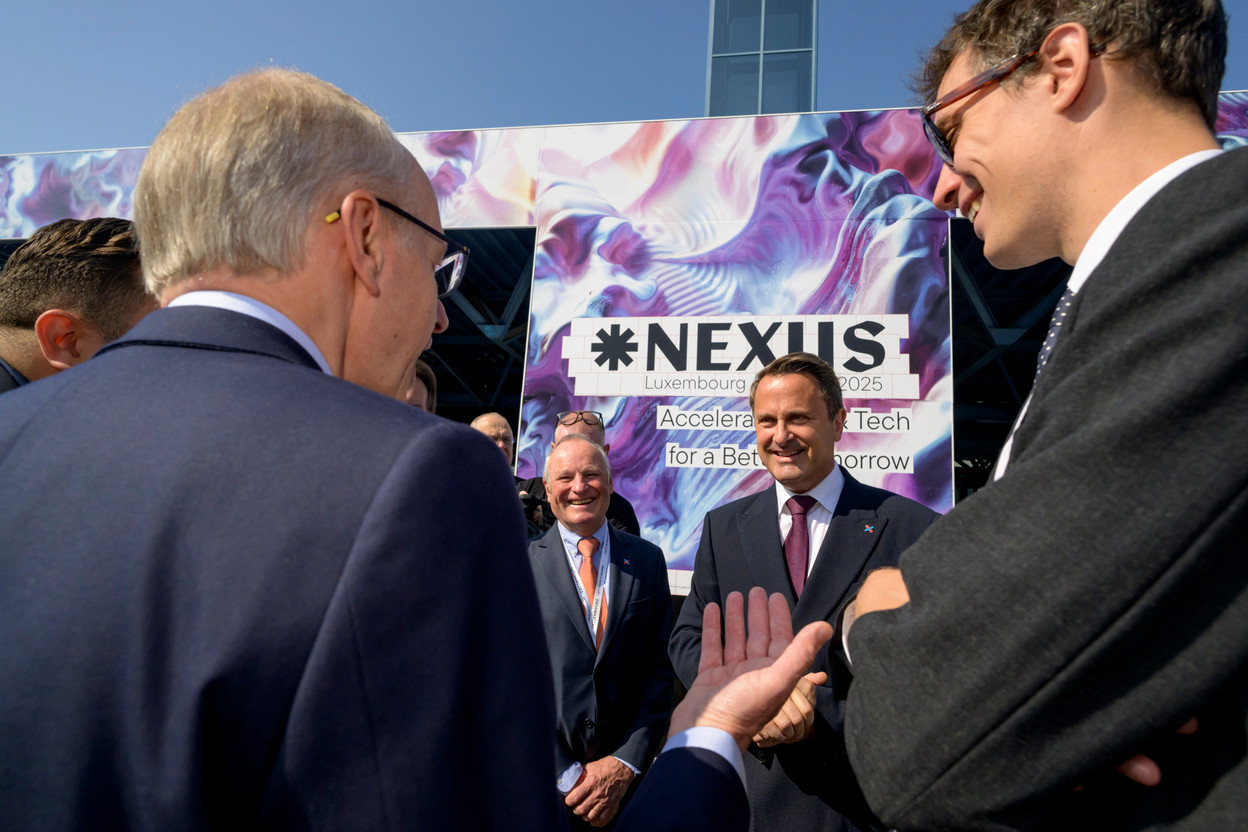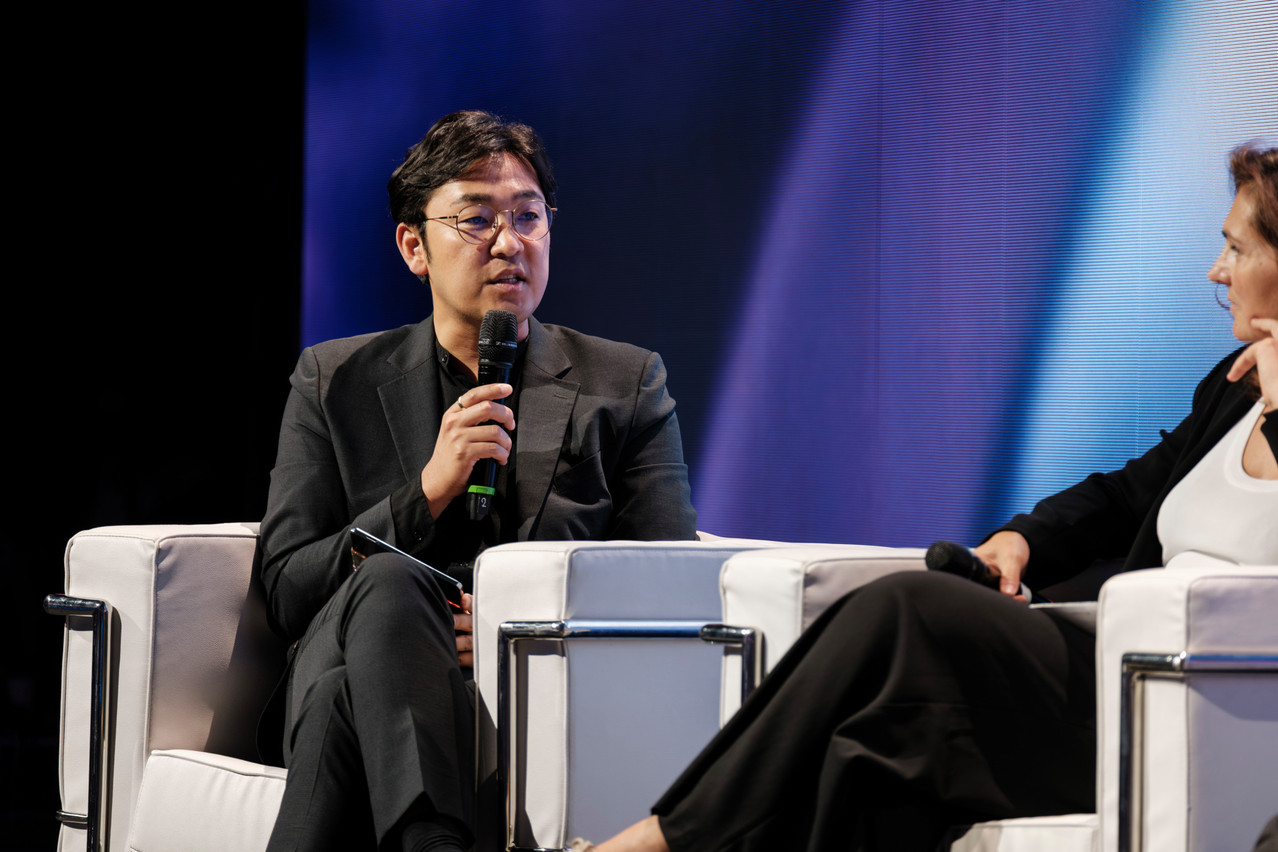
Looking for an entry point into Europe, several startups from South Korea have identified Luxembourg as a strategic location. At the Nexus tech conference, they discovered an agile ecosystem, support from institutions and direct access to decision-makers.
A number of South Korean startups came to explore the European market during this second edition. Although they have not all made up their minds about where to set up, the grand duchy stands out for its responsiveness, its human scale and the effectiveness of its support.
Discreet on the map, Luxembourg is nonetheless establishing itself as a key element in certain expansion strategies. For companies like I-ESG, it’s not just a question of location: “We’ve had numerous meetings with representatives from the public and private sectors, which shows the density and responsiveness of the ecosystem,” confides its representative. Direct access to key players, the country’s financial stature and its connectivity were all cited as advantages.
A concrete gateway to Europe
For other startups, Nexus represents a concrete gateway to the continent. Viewon, which specialises in battery and semiconductor inspection, is looking to build up a European customer base. “We’re looking for new customers,” explains CEO Bill Yoon. The idea of setting up in Europe has not been ruled out. “Once we’ve developed our business, we’ll probably open a subsidiary. Luxembourg is one of the potential candidates.”
Some companies have already taken the plunge. Hopae, which is developing a digital identity solution compatible with EIDAS 2.0, is aiming for wider European coverage. “France is a very good place to start, but it’s a bit limited to cover the whole of Europe,” says one of its representatives. Setting up in Luxembourg was made easier by effective institutional support. “It was really a much easier process.”
Bitsensing, which designs radar for smart cities, sees the grand duchy as an ideal testing ground. “Luxembourg is very open to the implementation of concrete projects,” notes a member of the team, praising the involvement of national innovation agency Luxinnovation and the embassy.
Public players committed on the ground
Local support is unanimously praised. The CEO of I-ESG, Bell Kim, confirms, “many financial institutions have visited us and shown a real interest in our technology.” Hopae agrees, saying, “the government is helping us a lot. There are civil servants on the ground, active, who really connect people.”
All of them emphasise the quality of the exchanges and the speed with which contacts are made. “I was able to meet the companies I was targeting in just a few days,” says the Hopae representative. Some are now moving on to the next phase. I-ESG is exploring the creation of a local legal entity and Hopae is planning to set up operations by the end of the year.
Luxembourg is thus confirming its role as a strategic springboard for Asian startups seeking a foothold in Europe.
This article was originally published in French.