Paperjam: Mr Frieden, what have been the highlights of your first three months in office?

Basically, we have taken measures to reduce the tax burden on households, to give them back their purchasing power, and to boost construction. I have also worked to cultivate relations with our main European partners through a number of visits to France, Belgium and Germany in particular. I also travelled to Ukraine to meet President Zelenskyy and reaffirm our solidarity with the country.
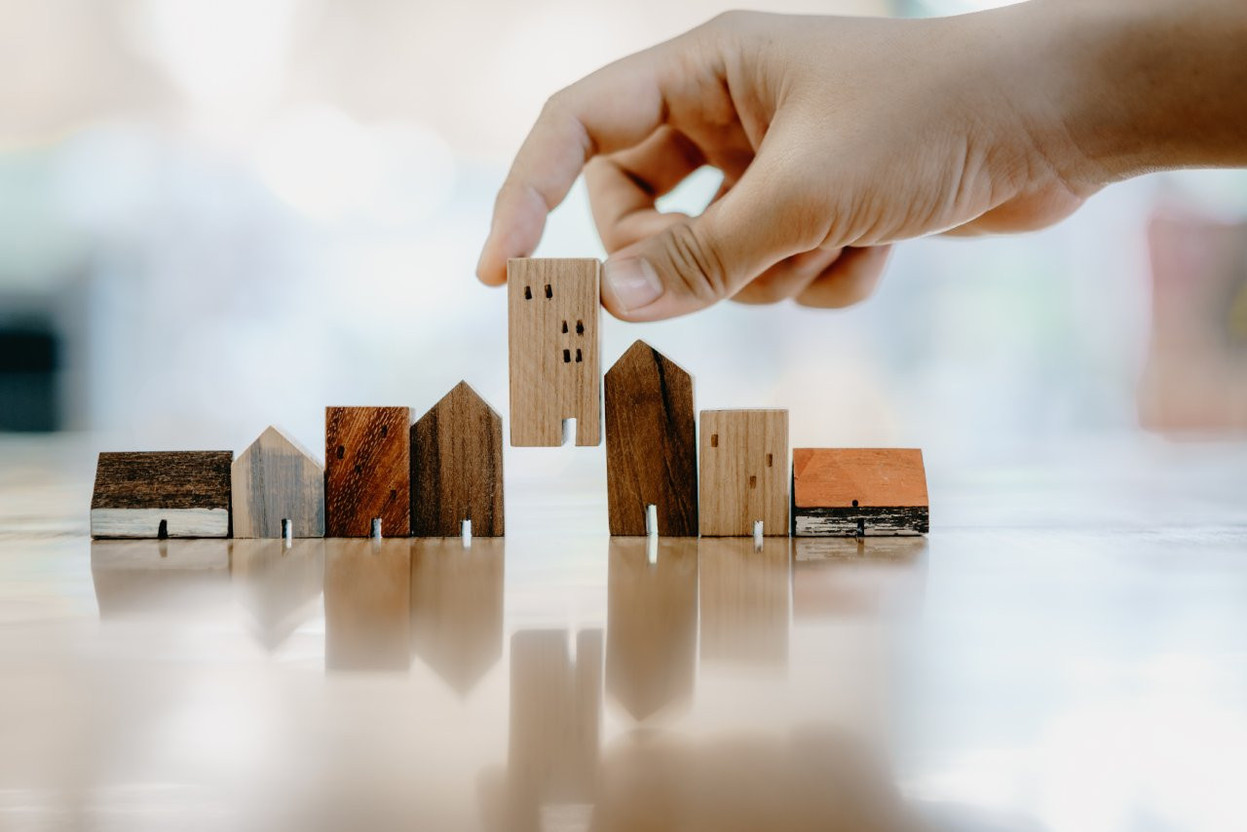
The housing roundtable took place on 22 January. You talked a lot about procedures and building permits. How have the local authorities reacted to your plans to reform or overhaul the planning permission system?
Positively. All the parties around the table deplore the current slow pace of getting a house built. I would add that, although it wasn’t the subject of the first meeting, that this slow pace is observable in renewable energies too. I’m counting heavily on wind power and photovoltaics to reduce our dependence on fossil fuels. The aim is to work with the local authorities and the private sector to see what can be done in the short term to change procedures and speed up the construction of additional housing.
Do the mayors share the objectives of more housing and the consequences that will ensue? Can local governments put the brakes on your proactive housing policy?
Everyone is aware that, given population growth, we need more housing. At the same time, however, people don’t want construction sites in their backyards. I’m aware of this contradiction--it’s why we need to be in dialogue with the local authorities. We need to give more support to local authorities in building the school, sports and road infrastructure they need to welcome new residents. It all adds up. Without the municipalities, we won’t be able to do anything. If our housing policy is to succeed, we need to engage in dialogue.
Doesn’t your aim of more housing jeopardise something many residents hold dear: the individual house? Is that a problem?
I believe that in Luxembourg we will always have both individual houses and houses with flats. But when there are more people living in a certain area, it’s logical that the proportion of houses with flats will increase. We won’t be building the tower blocks you see in major cities abroad, however. We’ll stick to building projects that fit in well with the traditional landscape.
Your government’s first budget will be adopted by the Government Council on 4 March. How would you describe it?
It’s a transitional budget, only covering the period from May to December 2024, but one that already reflects our political priorities, which are to increase purchasing power, maintain investment at a high level and take account of the geopolitical situation by increasing the defence effort. And of course, it’s a budget that reflects our social commitment, particularly in terms of housing, since the funds needed to acquire property projects for rental will be there.
A budget is all about trade-offs. Who are the losers and who are the winners?
I was the minister responsible for the budget for 15 years, and I know that the ministers always have to find their place in the budget. But no one ministry has been favoured over another--that would be very bad for government cohesion. We have a government programme that is supported by all the ministers and implemented through the budget. What matters to me as head of government is the result. This budget will respect the European criteria for sound public finances. We will respect the limits on the public deficit and public debt, and we will ensure that, over the next five years, spending increases at a slower rate than has been the case over the last five years. These are the objectives we have set ourselves, and they are supported by all the ministers.
Where can savings be made in the state budget at present? Where is the “fat”?
I don’t think in terms of savings, I think in terms of spending growth. In recent years, they have grown too fast, and so each minister has been asked to see how we can put the brakes on this growth. That’s where the savings will come from. We have no desire to go back on the decisions that have been taken, but we must avoid constantly adding things that will eventually become structural expenditure. Furthermore, as we have announced, over the next few years we are going to look at how we can better target social assistance so that it really serves those for whom it is intended.
Is this an austerity budget?
Instead of the word “austerity,” I prefer “stability” and “predictability” in public finances. I want Luxembourg to be a country where people have a moderate tax burden, where we have an attractive tax environment for businesses. To achieve this, we must not let spending get out of hand.
Jean-Paul Olinger is the new director of the direct tax department. Do you share the view that this administration is disorganised, demobilised and overwhelmed? What is his roadmap?
The direct tax administration is a very large and very important administration. That’s why we want to modernise it together with all its employees, to modernise it in terms of procedures and digitalisation. This is the roadmap that has been given to 
Jean-Paul Olinger was also recruited because he is a renowned tax expert. He has worked in the tax field for a number of different employers. His management skills combined with his tax knowhow will be important for the role that the government has entrusted to him.
Modernising the administration and simplifying procedures are political sea serpents. What is your approach to the subject: a global or a piecemeal (sector-by-sector) approach?
I’ve opted for a sector-by-sector approach. Administrative simplification is not something you do all at once and then never have to go back to again. Over time, a huge number of new procedures are created. What we are looking at is the whole picture. I have asked each minister to look at the procedures in their departments that are no longer absolutely necessary.
I think it’s more efficient to do it at a departmental level--at a state level it would take too much time and produce no results. Administrative simplification is a state of mind that needs to be disseminated.
The other major appointment recently is Nicolas Mackel as Luxembourg’s permanent representative on Coreper [a central body in the EU’s decision-making process; editor’s note]. Are you appointing a diplomat or a financier?
It’s a diplomat who has expertise in both international relations and economics. And since the issues that are dealt with in Brussels have a major impact on our country, the foreign affairs minister and I felt that he was the ideal profile to represent Luxembourg to the European Union.
Luxembourg’s permanent representative to the European Union is one of the prime minister’s and foreign minister’s main advisers on all European issues. It is an extremely important role. Europe plays a fundamental role in Luxembourg’s future--many crucial issues that affect Luxembourg are discussed at the European level. So we need to make sure that we influence them and follow them through.
I would also like to stress that all of Luxembourg’s permanent representatives in the past have been of remarkable quality. We have always had top-quality diplomats, particularly at the European Union.
The European Parliament elections are coming up and Ursula von der Leyen is standing for another term as head of the European Commission. You have given her your support and that of Luxembourg. Why are you in favour of her running for a second term?
I believe that Ms von der Leyen’s candidacy, based on her experience both as defence minister and labour minister in Germany and then as president of the European Commission, is a natural choice. She has the experience and profile needed to lead a new commission. She understands the interests of all sides, and--I would add--on a more local level, two of her brothers were born in Luxembourg and her father worked here… so she also knows the small countries, and Luxembourg in particular. Aside from this anecdote, I find her European record over the last five years remarkable and that’s why, as a member of the European People’s Party, I think she’s a very good candidate.
What is at stake in these elections for Europe and for Luxembourg?
The stakes are enormous. Only a united Europe can face up to the geopolitical challenges posed by the war in Ukraine and the economic challenges. Only a united Europe can defend the values of freedom and stability. Economically, we must remain competitive and ensure that companies produce and work in Europe and do not relocate to the American and Asian continents. This competitiveness, this European attractiveness, this capacity to produce in Europe is essential. And this is what the next commission, but above all also the European Council and the next European Parliament, must work on.
What is the government’s position if a minister were to be investigated or caught up in a scandal? Would they have to resign?
The principle is that all ministers must behave in an exemplary manner in all circumstances. Ministers are public figures; they represent the state. As such, they have a special responsibility for their behaviour. The consequences of bad behaviour must always be decided on a case-by-case basis. There is no general doctrine, since the facts that form the basis of a possible judicial decision can vary enormously.
This article was originally published in Paperjam. It has been translated and edited for Delano.