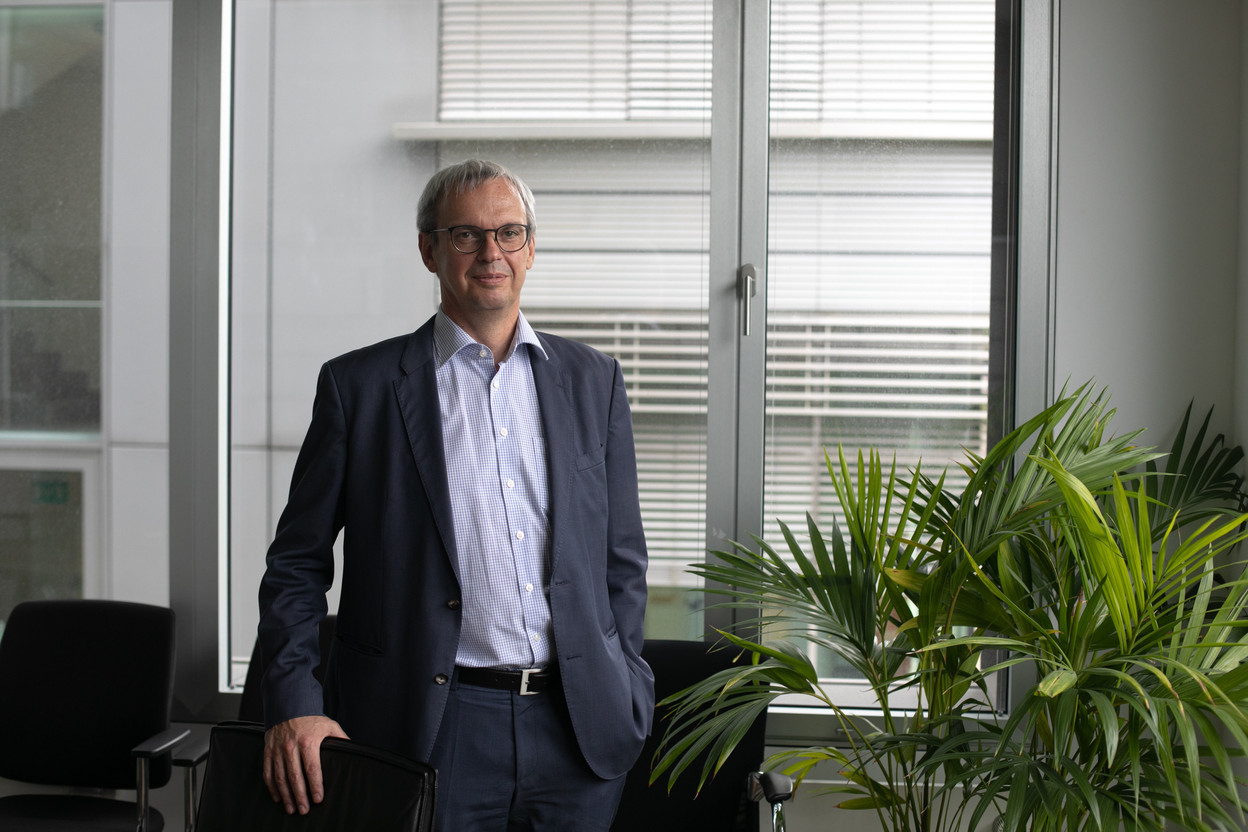
(Ahead of the Paperjam Club’s 10x6 event dedicated to the future of the Luxembourg financial centre, which will take place on 19 November at the Kirchberg Kinepolis, we have decided to give the floor to key players in the financial centre. We’re publishing their guest contributions every morning until the event. Today, the CEO of Luxembourg for Finance, Tom Théobald, shares his analysis).
The Draghi and Letta reports paint a stark picture of declining financial competitiveness in the EU, highlighting concerns over sluggish growth, fragmentation within capital markets, and regulatory burdens that impede Europe’s ability to keep pace with other global financial centres. As international competition intensifies, the European Union finds itself at a crossroads: adapt and evolve or risk falling further behind as other markets expand.
In this climate, Luxembourg’s financial centre is more essential than ever. For decades, we have operated as Europe’s trusted gateway for capital, a place where global investors find security and efficiency as they seek out the continent’s opportunities, and where European capital can access markets across the world. Luxembourg’s financial centre has achieved this position through consistent excellence in cross-border finance, an adaptive regulatory framework, and a rare political stability that offers investors predictability in a volatile world. Today, as Europe grapples with the pressures of growth and competitiveness, Luxembourg’s role as an international financial hub isn’t just an advantage--it’s a necessity.
One of Luxembourg’s strengths lies in its ability to attract inbound capital and facilitate outbound investments with equal proficiency. At a time when Europe’s economy is hungry for sustainable growth, digital transformation, and infrastructure development, Luxembourg serves as a vital conduit for the financing that make these ambitions possible. For global investors, Luxembourg provides the reliable gateway, offering both stability and efficiency; ensuring that we enable the channeling of capital into essential projects, including the sustainable transition, digital infrastructure, and affordable housing--all of which have tangible benefits for the broader EU economy.
Read also
Luxembourg’s financial centre is not merely an intermediary; it embodies the principles of a Savings and Investment Union. In fact, our financial centre lives and breathes cross-border finance in Europe. Our unique expertise means that Luxembourg already serves the entire EU rather than a single domestic market, making it an operational model for what a Savings and Investment Union seeks to achieve. As the EU works towards deeper financial integration, Luxembourg’s existing ecosystem--built amongst others on a robust securitisation framework, a comprehensive capital markets infrastructure and forward-looking legislation, as well as leadership and expertise in Ucits and AIF funds--demonstrate that the foundations for a more unified European financial market are already in place. Luxembourg’s financial centre is part of the solution to unlock the full potential of Europe’s capital markets.
Financial expertise and stable governance
In ongoing and future discussions on a more competitive and resilient European Union, we must avoid the pitfalls of intra-European navel gazing. We need to pursue the goal of developing the EU’s capital markets and increasing both the sources of financing for European companies and investment and savings options for Europe’s citizens. But in doing so, we also need to ensure that the EU Single Market remains attractive for firms coming from outside and that we continue to have access to global capital. There is no reason why the €800bn of additional investments a year that the Draghi report highlights need to exclusively come from within the EU.
Luxembourg’s international orientation also provides access to capital and investment opportunties in the other direction, supporting European investors looking to engage with global markets. The country’s toolbox of investment vehicles offers European investors the chance to diversify into high-growth regions, from Asia to North America. In a competitive world, Luxembourg has positioned itself as Europe’s bridge to global capital, supporting European firms as they look beyond the continent to expand their reach, capture new opportunities, and leverage capital in markets that are transforming rapidly.
Luxembourg’s financial expertise and stable governance provide a dependable foundation for both inbound and outbound investments.

In a Europe increasingly challenged by fragmentation, Luxembourg’s financial expertise and stable governance provide a dependable foundation for both inbound and outbound investments.
The international orientation of Luxembourg’s financial centre is rooted in a larger vision. In an era where protectionism threatens to close borders and isolate economies, Luxembourg stands as one of the EU’s staunchest proponents of global engagement. This is a country that understands the value of openness--financial institutions from around the globe operate from the grand duchy to serve a European and international client base. Many have done so for more than half a century. Luxembourg’s banks, asset managers and insurers as well as an entire ecosystem of highly-specialised service providers are familiar with navigating the complexity of international markets, which makes them natural advocates for a Europe that remains open to the world.
“Luxembourg’s financial centre stands as both a gateway and a voice”
At a time when Europe’s competitiveness is at stake, Luxembourg’s voice is a reminder of the benefits of open and interconnected global markets.
Looking ahead, Luxembourg is already moving up the value chain, ensuring that its financial ecosystem evolves to meet the demands of a dynamic and increasingly sophisticated market. The growth of private assets is a clear example, with Luxembourg emerging as the dominant hub in Europe for private equity and private debt funds. Our market share of alternative funds in Europe has grown from 16% to more than 60% over the past decade.
We have also seen Luxembourg’s role grow as a hub for corporate finance and banking. In recent years, a growing number of international banks, notably from the US and the UK, have either established new banks in Luxembourg or expanded their corporate banking offer. They have followed their corporate clients, alternative fund managers and multinational firms that are increasingly relying on Luxembourg for their international investment and financing activities. Furthermore, Luxembourg is positioning itself as a leader in innovative products such as active exchange-traded funds (ETFs), digital assets and tokenised funds. These developments are supported by forward-looking government policies aimed at enhancing competitiveness and ensuring Luxembourg remains at the forefront of financial innovation.
In order to support the growth, both in quantitative and qualitative terms, of the financial centre, the government has tabled a comprehensive package of measures to attract and retain talent, including a very competitive expat regime. These measures will be essential in supporting our financial centre in continuing to climb up the value chain.
In many respects, Luxembourg’s success as a financial centre reflects its deep understanding of global finance and its willingness to embrace a role that requires both flexibility and steadfastness.
While other financial centres may rise or fall with the tides of market trends, Luxembourg has built its strength on principles that are enduring: stability, transparency, and a commitment to the global flow of ideas, expertise, and capital. As Europe continues to adapt to a new financial order, Luxembourg’s financial centre stands as both a gateway and a voice--a reminder that the strength of a financial system lies not only in its wealth but in its openness to the world.