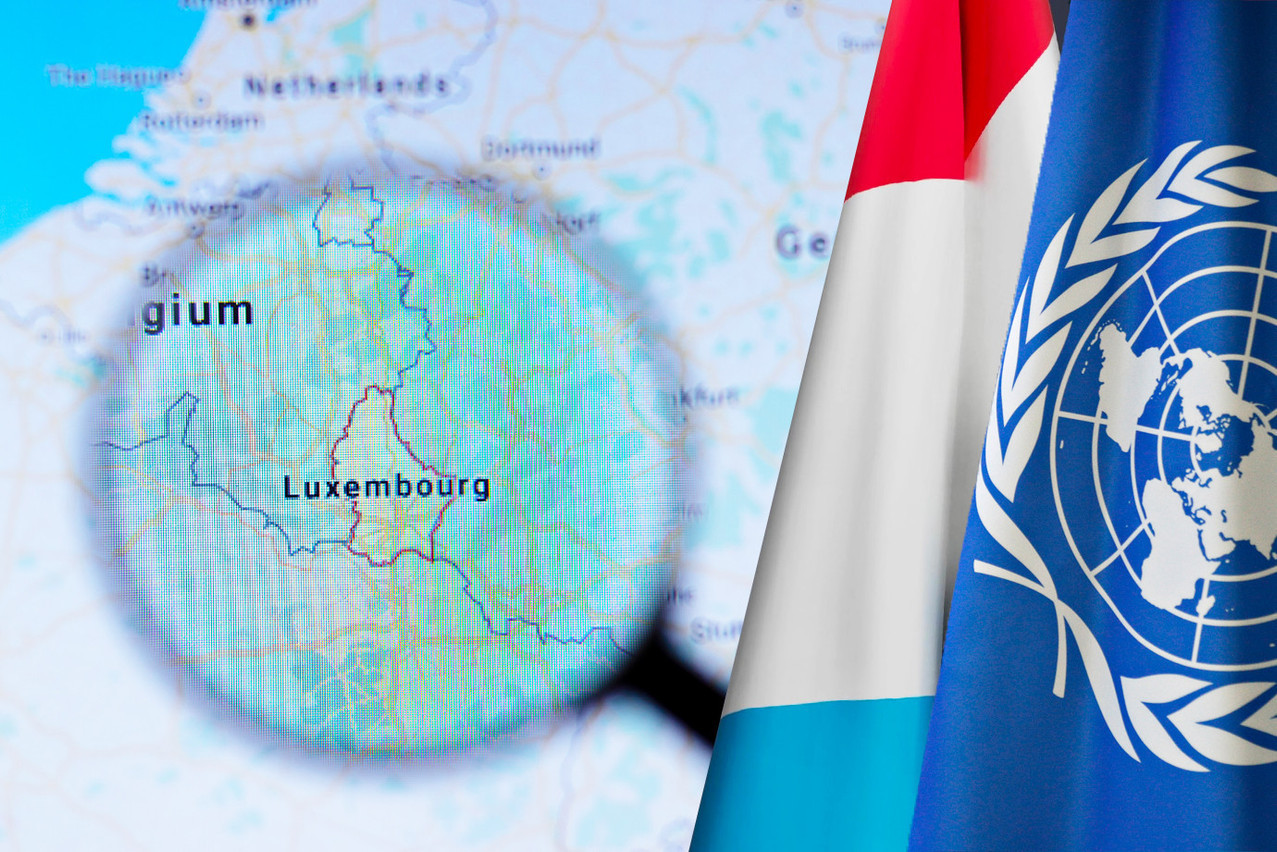
Experts from the working group met with representatives from Luxembourg's political, business, and civil society groups following an initial postponement of the country visit in July at the request of the Luxembourg government. The purpose of the visit was to evaluate Luxembourg's efforts to identify, prevent, and address negative impacts of business operations on human rights and the environment in accordance with the United Nations Guiding Principles on Business and Human Rights (UNGPs), which serve as the global standard for safeguarding human rights in a business context and were unanimously endorsed by the UN Human Rights Council in 2011.
Following the nine-day visit, the working group, led by Robert McCorquodale, expressed satisfaction with the “frank and constructive discussions” that took place, and urged Luxembourg to seize the impending EU Corporate Sustainability Due Diligence directive as an opportunity to become a “global leader in sustainable finance.” In a statement issued following the visit, it emphasised several preliminary observations and actions to be taken.
Prior to the Luxembourg visit, McCorquodale had said “the Government of Luxembourg’s invitation is very timely, as it coincides with the European Union’s human rights due diligence discussions.” The Council of the EU on 1 December 2022 adopted its position on the directive and negotiations with the European Parliament are expected in the next step. After the directive is adopted, member states will have two years to implement it into national law and notify the European Commission of the pertinent provisions.
“The due diligence directive lays down rules on obligations for large companies regarding actual and potential adverse impacts on human rights and the environment, with respect to their own operations, those of their subsidiaries, and those carried out by their business partners. It also lays down rules on penalties and civil liability for violating those obligations. Lastly, it lays down obligations for companies to adopt a plan ensuring their business model and strategy are compatible with the Paris Agreement,” the European Council explains in a statement.
The UN Working Group is made up of independent experts who are not affiliated with any government or organisation and are not part of the UN system. It reports to the Human Rights Council and to the UN General Assembly. It should be recalled that Luxembourg is now a member of the Human Rights Council until 2024. McCorquodale highlighted some preliminary observations from the visit at a press conference on Friday 9 December and in a preliminary report.
The Working Group held meeting with various state ministries, including the foreign affairs (


Preliminary observations from the visit
Renew and strengthen NAP: In December 2022, the National Action Plan (NAP) on Business and Human Rights will come to an end. Experts recommend a renewal as soon as possible with clear information on how the NAP's indicators and objectives are being implemented. A weakness of the current NAP is that it does not adequately address UNGP’s guideline concerning the availability of effective redress for human rights violations committed by Luxembourg-domiciled companies that take place overseas. They suggest that the updated NAP should place a high priority on “corporate accountability” while paying close attention to the financial industry, investment and pension funds, and climate.
Make the national pact more effective: The National Pact has received little participation from state-owned enterprises and financial sector companies, even though many businesses of various sizes have signed it. The group suggests that the government invests in human rights training and capacity building for businesses of all sizes on their responsibilities under the guidelines.
Include the financial sector and investment funds in the CSDDD scope for Luxembourg: As a significant component of the Luxembourgish economy, the group recommends the financial industry be covered by the CSDDD, even though the current draft of the CSDDD indicates that this is optional for member states and that the investment funds sector is to be excluded. The group references the fact that the current NAP already indicates that Luxembourg’s financial sector was “particularly at risk of human rights violations”.
“We note with concern that there have been discussions at the EU level to exclude both the financial sector and the investment fund sector from the CSDDD. Some Luxembourg associations indicated to us that they favoured exclusion of the latter sector because they provide a complex product and so cannot directly affect human rights,” the group said in the statement, but cautioned that this is not a basis for excluding investment funds because they can still have a negative impact.
Reduce the number of holding and “letterbox” businesses and encourage transparency: According to the group, the “huge number” of holding and “letterbox” firms registered in Luxembourg were “a threat to human rights as they might allow the potential for tax avoidance and reduced income,” it said citing the Committee on the Elimination of All Forms of Discrimination Against Women.
Build effective monitoring and evaluation of Luxembourg Pension Fund investments: The group commended the Luxembourg Pension Fund for its improved approach to conducting due diligence on human rights issues when considering investments but stressed the importance of effective monitoring and evaluation. The Luxembourg Export Credit Agency (ODL) could also be more explicit about human rights due diligence requirements for businesses and conduct thorough evaluations, according to the report.
Consider all aspects of ESG: The group praised the government's efforts in sustainable finance but advised clarity across sectors to recognise that sustainability refers to more than just environmental challenges and that ESG approaches should take human rights into account.
Promote access to justice and effective remedies: by strengthening state-based judicial and non-judicial grievance mechanisms, as well as non-state-based grievance mechanisms. The group discussed pending legislation in Luxembourg such as the Whistleblowers Bill, the Conflict Minerals Bill and the Collective Recourse Bill.
“If there's no rational grievance mechanism, if there's no means of bringing a case before the court, that immediately makes things very difficult,” said McCorquodale, who also praised Luxembourg for taking initial steps in this regard and encouraged the government to pass legislation as soon as possible.
Support groups in vulnerable situations: such as refugees, migrants, and victims of human trafficking. The group advocates for more law enforcement training on the realities of these vulnerable populations, as well as tough penalties rather than “small fines” for businesses found to be exploiting irregular migrants and human trafficking survivors. It commended the government for ratifying the International Labour Organisation Convention on Indigenous and Tribal Peoples and urged it to incorporate it into national law, with a special emphasis on financial institutions, state-owned enterprises, and businesses that engage with affected communities covered by the convention on a global scale.
Three key take-aways
The key question for Luxembourg remains whether the directive's scope includes the financial industry and investment funds.
When asked to prioritise these observations in the short or long term, McCorquodale offers three key ideas. First, prioritise “remedies, including international contact points [and] visibility." Second, act quickly on the CSDDD and include the financial sector and investment funds within the scope of Luxembourg. Third, Luxembourg businesses should already be taking steps to enforce human rights due diligence processes, operational grievance mechanisms, and stakeholder engagement. “Because this law will inevitably come, in whatever form it takes, and we'll get deeper inevitably, I would encourage them to start looking at these metrics now,” says McCorquodale.
A full report on the visit with concrete recommendations will be presented to the Human Rights Council in June 2023. Human Rights Day was recently marked globally on 10 December. The full preliminary report is available here.