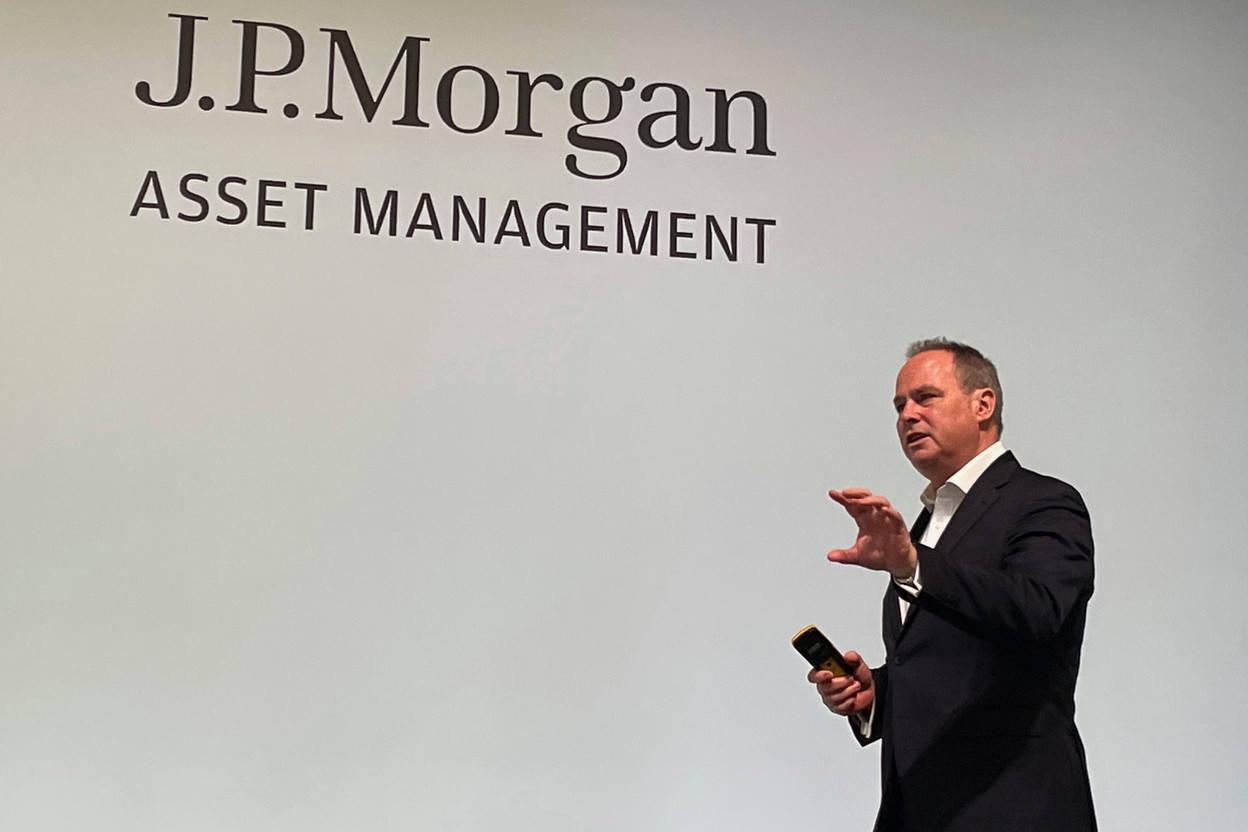
2025 so far has been exceptional overall, but June was marked by macroeconomic concerns, particularly the US debt ceiling and Section 899 of the "Big Beautiful Act,” the House of Representative’s tax bill. That’s the analysis from David Kruk, head of the trading desk at La Financière de L’Echiquier (LFDE). Kruk and Pierre Puybasset, spokesman for the portfolio management team at La Financière de L’Echiquier (LFDE) discussed recent market development and their summer expectations during a presentation on financial markets and a follow-up interview on 26 June 2025.
Discussions have revolved around a potential $3trn increase in the US debt deficit over the next decade and fears of fiscal retaliation measures impacting foreign individuals and companies, said Kruk.
“If we have debt but also growth, we’ll get through it. If we have a very large deficit, it’s more complicated,” argued Kruk. Positively, he observed that inflation moderated for the fourth consecutive month, with both the CPI and PPI indicators subsiding in recent months, whereas debt auctions in the US were well-received by the market.
Fed may cut interest rates sooner and deeper
Interestingly, Kruk noted that two Federal Reserve central bankers hinted in late June at a paradigm shift. “Rate cut expectations before the last FOMC meeting were at 1.6% [in 2025]. They are now at 2.5%... despite higher inflation in 2H2025.” Such an apparent incoherence may be explained by a possible inflation (CPI) shock to be announced in July that could return to 3.2% to 3.3% by year-end.
Another significant positive development was the decline in recession probabilities, which dropped from around 60% to 25%. This trend, which began in April, is “excellent news.” Market sentiment also improved, with less impact from Trump's tweets and a general calming of relations between the US and China.
Importantly, Q1 earnings results from American companies were very strong, exceeding expectations by 6% and growing by nearly 13%. Kruk remarked that the US tech sector was particularly “dazzling,” with companies like Broadcom, Nvidia, AMD, Oracle, and TSMC publishing “magnificent” results.
Oil: China too dependent on the Strait of Hormuz
“Most investors and brokers remained calm, not believing the Strait of Hormuz’s closure was realistic,” said Kruk. Puybasset attributed it to high existing oil production, stable demand and China's significant reliance on the Strait for energy (50% of supplies), making a blockade unlikely.
The market can only go up because supply is very low and demand is exceptional

Notably, Kruk pointed out that the Israeli market--despite a conflict that has lasted two years--reached an all-time high, rising over 20% year-to-date. This indicates that geopolitical events are not profoundly affecting investor behaviour unless there is a major escalation. The prevailing investor attitude has become “never sell in a crisis, buy the dips,” a strategy that proved effective in April, said Puybasset.
A dollar not so mighty anymore
A key development in June was the significant weakening of the US dollar. “This de-dollarisation trend is linked to [Donald] Trump’s arrival and his stated desire for a weak dollar,” stated Kruk. He thinks that the dollar’s weakness is a reflection of perceived fragilities in the US economy and a risk premium associated with Trump’s policies.
Repatriation of flow to Europe waning?
Whilst Europe’s markets struggled more than the US in June, Kruk noted that the euro’s stronger performance against the dollar somewhat mitigated the impact on European investors. “Whilst the European market has outperformed the US by 20% year-to-date (in euros), this gap has recently narrowed to 17%, suggesting the US market might be finding a floor.” Puybasset commented that Europe’s challenge remains a lack of earnings growth compared to the US, where tech and AI continue to drive strong returns.
Technical factors may favour US but also European equities
Structurally, Kruk observed that markets are experiencing an upward bias due to an imbalance between supply and demand. Supply is low, with very few IPOs (only 12 in Q1 in the US, below the annual average of 110 and far below the peak of 260 in 2022) and fewer institutional equity block sales.
Conversely, he thinks that demand is exceptionally high, driven by record share buybacks (over $1trn projected in the US this year), significant retail investor injections (almost $500bn), large dividend payouts ($700bn), and M&A activity ($225bn). “The market can only go up because supply is very low and demand is exceptional,” said Kruk enthusiastically.
US retail investors represent a substantial market share (20% of the orders, sometimes peaking at 36%) and have proven their influence by buying dips. He noted that the share of equities in US portfolios (32%) is much higher than in Europe (10%), leading to the expectation that Europe will see continued performance as more individual--including millennials and boomers--enter the stock market, mirroring the US trend. “When the retail investors are there, the market goes up.”
“Furthermore, the market is not ‘overbought,’” claimed Kruk. He remarked that the “bull-bear indicator at Bank of America is at 5 (0: very bearish, 10 very bullish). “When you are below 2, you can buy the markets with your eyes closed. When it is above 8, then you can sell.”
“The technical situation in Europe, with few IPOs and significant buybacks/dividends, supports this view,” said Puybasset. The “gamification of markets” further fuels this engagement.
This supply/demand dynamic is expected to lead to a continued expansion of market multiples, despite current valuations being perceived as high. “You may believe that price/earnings ratios are too high at 22 on the S&P and 15 for the Eurostoxx, I believe that multiples will be further boosted,” said Kruk.
A summer outlook for the market
9 July tariff negotiations: Most brokers are optimistic about a potential agreement with certain countries (Japan, Vietnam, and India) or a three-month extension of current tariffs. Kruk thinks that early July may go sideways due to caution and a “blackout period” for share buybacks, but after 9 July and the start of earnings season, markets should continue their arch upward.
Q2 results: US Q2 earnings, beginning around 12 July, are expected to be strong partially supported by a weak dollar, serving as a further catalyst for market gains. It’s worth mentioning that more than 50% of 2025 earnings guidance was maintained, a level higher than expected.
US economic resilience: US employment figures (non-farm payrolls) for June, to be released in early July, are expected to remain robust, indicating continued consumer strength and market progression. “Watch out, though, should the non-farm payrolls falls to zero… the employee is the consumer but also the investor.”
Seasonality: July is historically the second-best month for market performance, averaging a 3.3% gain over the past decade. “All these 10 years displayed a positive return.”
Technical signal: The Nasdaq recently formed a “golden cross” (50-day average crossing the 200-day average), an exceptional bullish technical signal that historically has preceded significant market rallies (50% in 2023, according to Kruk).
Whilst short-term caution may exist, Kruk believes that the underlying structural market dynamics, positive economic data, and a robust “buy-the-dip” investor sentiment point towards continued market progression.