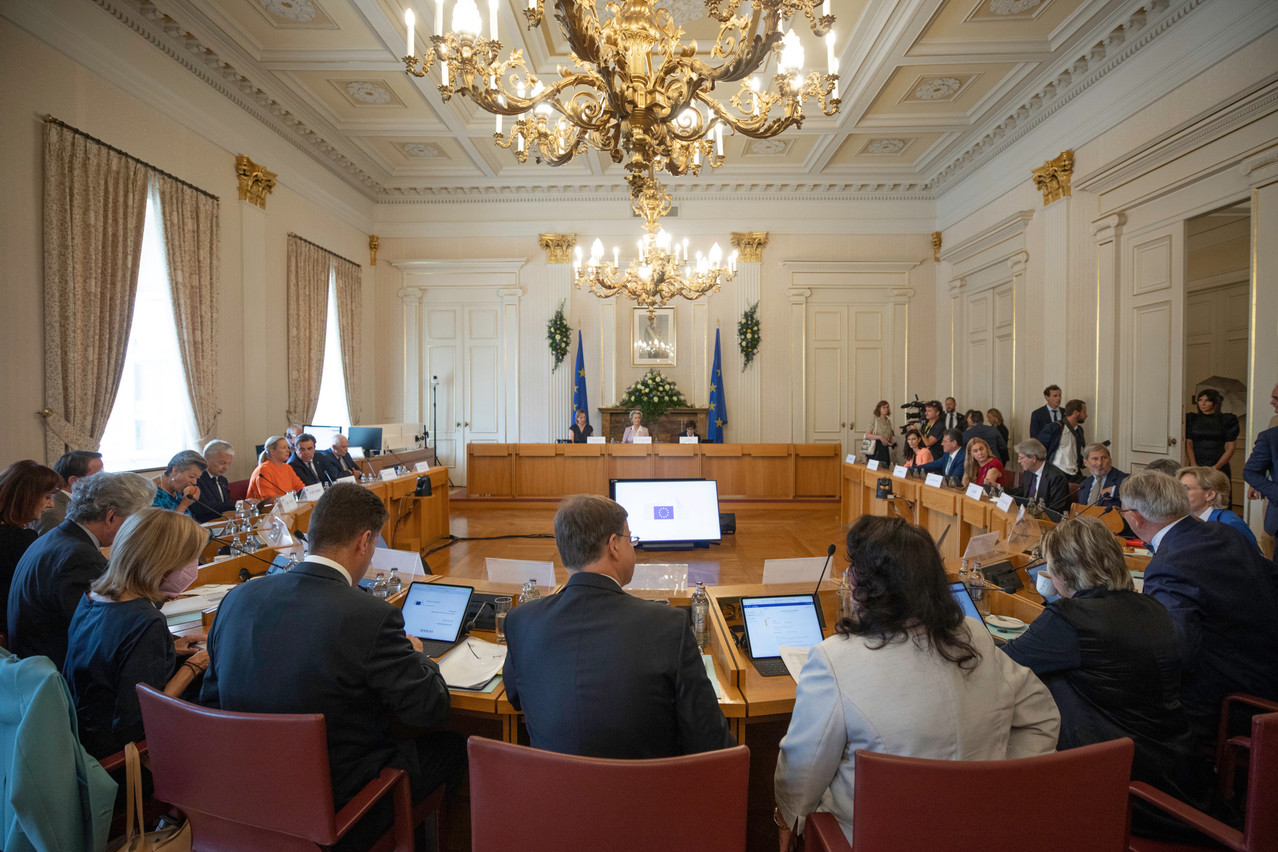
The Commission’s report, which contains specific recommendations addressed to each member state, built on its previous iteration with issues persisting in many member states. European Commissioner for Justice Didier Reynders presented the report after a weekly assembly of the college of commissioners, held in Luxembourg on the occasion of the 70th anniversary of the first meeting of the European Coal and Steel Community. He highlighted Luxembourg’s progress in the establishment of a national justice council.
“In Luxembourg legislative amendments have been tabled to align the composition of the future council for the judiciary and we contributed for a true dialogue on the basis of the assessment of the previous two editions of the report,” said Reynders.
In April Reynders said he was “delighted to see efforts ongoing to create a judicial council”. However the report states that work must continue in that regard. The legislative amendments aim to specify the competences of the justice council regarding the management of magistrates’ careers, and introduce a new disciplinary regime.
Legislation to make legal aid more accessible was developed in the grand duchy jointly by the justice ministry and the bar association with the Commission saying that it needs to continue to be developed. Reducing the time of processing of requests for disclosure of official documentation was another point in which Luxembourg can improve and which remains a shortcoming that was highlighted in the 2021 report. The Commission remarked that there are still concerns regarding the overall inclusiveness of the legislative process in Luxembourg.
“We have seen problems in many member states from reforming the composition of judicial councils, strengthening the autonomy of procecution services and digitalization of justice to improve efficiency,” said Reynders.
Respecting decision of the European court of human rights was included as a criterion in the Commission’s report. The assessment comes against the backdrop of Russia’s invasion of Ukraine which the Commission’s report points to as “a direct challenge to EU values and the rules-based world order”.