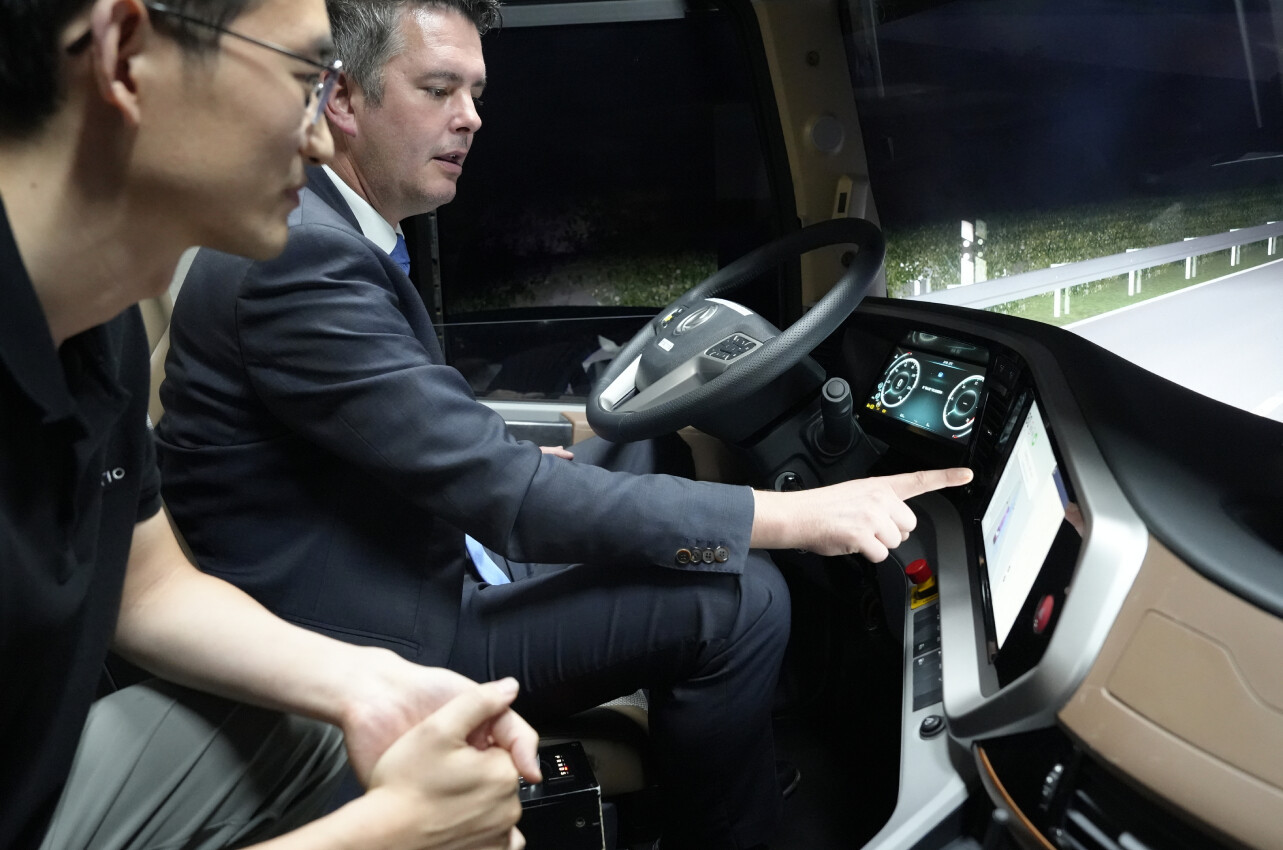
A lorry that changes lanes, takes a motorway exit and adjusts its speed to suit the traffic: this is the sort of journey that Inceptio is seeking to automate for hauliers. The Chinese company, which has been relatively unknown in Luxembourg until now, has just signed a memorandum of understanding with Arthur Welter Transports.
Inceptio, founded in April 2018, develops the software, control units and perception systems that enable the partial automation of heavy goods vehicle driving. It works with manufacturers to integrate this equipment into mass-produced lorries, which are then used by transport and delivery companies. Its founder and managing director is Julian Ma.
Its growth has attracted investors from the industrial, logistics and financial sectors. Inceptio announced two funding rounds of $100m and $120m in 2020, followed by $270m in 2021 and $188m in 2022. These four funding rounds total $678m. Battery manufacturer CATL, JD Logistics, Meituan, PAG, Sequoia Capital China and Legend Capital are among the investors named in these funding rounds.
Inceptio also provides figures on its operational fleet. In November 2025, it reported that more than 4,000 lorries fitted with its Level 2+ or Level 3 systems were in commercial operation. In September 2026, it announced that its systems had clocked up more than one billion kilometres in operation. This represents the total distance travelled by all the vehicles in question, according to the company’s figures.
In practical terms, its technology can keep a lorry in its lane, adjust its speed and following distance, change lanes, and manage certain motorway entrances and exits. However, the thousands of lorries fitted with this technology do not operate without a driver: the L2+ systems currently on the market still require a person to be present and monitoring the vehicle from the driver’s seat. At the same time, Inceptio is developing Level 4 applications capable of driving under defined conditions, and reports that it has carried out trials and demonstrations in China.
This is not merely a demonstration technology. Inceptio claims that lorries fitted with its systems have covered over one billion kilometres in commercial operation, mainly in China. It says its system covers around 97% of the Chinese motorway network. These figures come from the company and represent the cumulative distance travelled by its equipped fleet; they do not mean that a single lorry has travelled one billion kilometres, nor that these journeys were carried out without a driver.
A European pilot at the Port of Antwerp-Bruges
This distinction is key to understanding what Inceptio is capable of today. Its commercial long-distance transport operations rely in particular on Level 2+ systems, which provide significant driving assistance but require the driver to remain in control and alert. At the same time, the company is developing Level 4 vehicles, capable of driving without human intervention under defined conditions and in specific areas. It reports having been granted test permits in several regions of China and having carried out a freight transport demonstration with JD Logistics.
Inceptio is also preparing a European roll-out. The Port of Antwerp-Bruges has announced a commercial pilot project with the company and the haulage firm Group-GTS. This autumn, a lorry fitted with its technology is set to transport containers between a depot in Kallo and various terminals at the port, both day and night. The port aims to determine the conditions under which these vehicles could be integrated into logistics operations on a long-term basis. The press release does not specify whether a driver will be on board during this project.
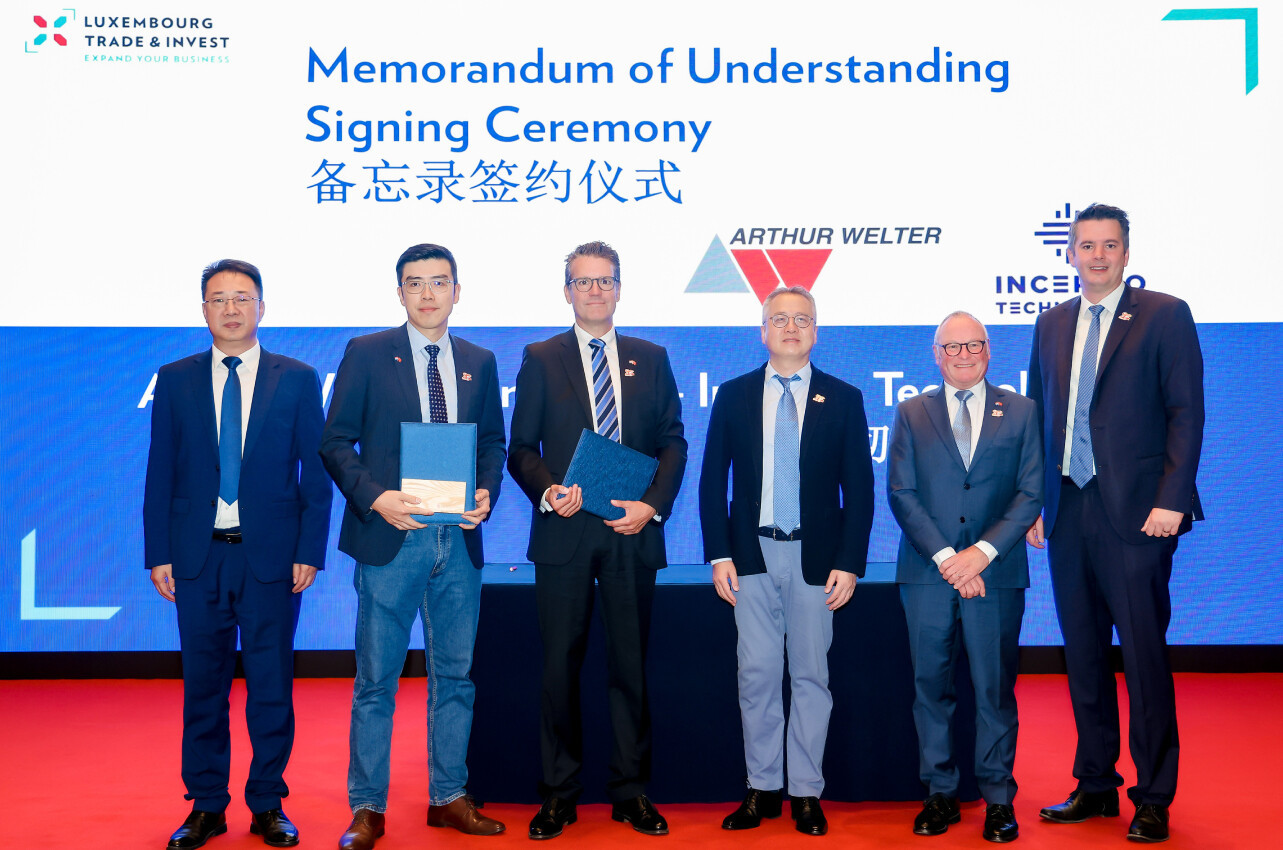
To mark Lex Delles’s visit to China, a partnership agreement was signed between Arthur Welter Transports and Inceptio. (Photo: SIP)
It is during this phase of European expansion that Arthur Welter Transports comes into the picture. Its agreement with Inceptio was signed on 23 September in Shanghai, during a seminar organised as part of the economic mission to China led by the Minister for the Economy, Lex Delles. According to the Ministry of the Economy, discussions centred on automated freight transport and the development of Inceptio’s presence in Luxembourg. Two further agreements between Luxembourgish and Chinese organisations were signed at the same event.
The agreement with Arthur Welter Transports is not accompanied by any announcement regarding trucks ordered, a test route or a date for the service to begin. It does, however, bring a Luxembourg-based haulage company into partnership with a firm whose systems are already in use on Chinese roads and whose technology is set to be trialled at a nearby port.