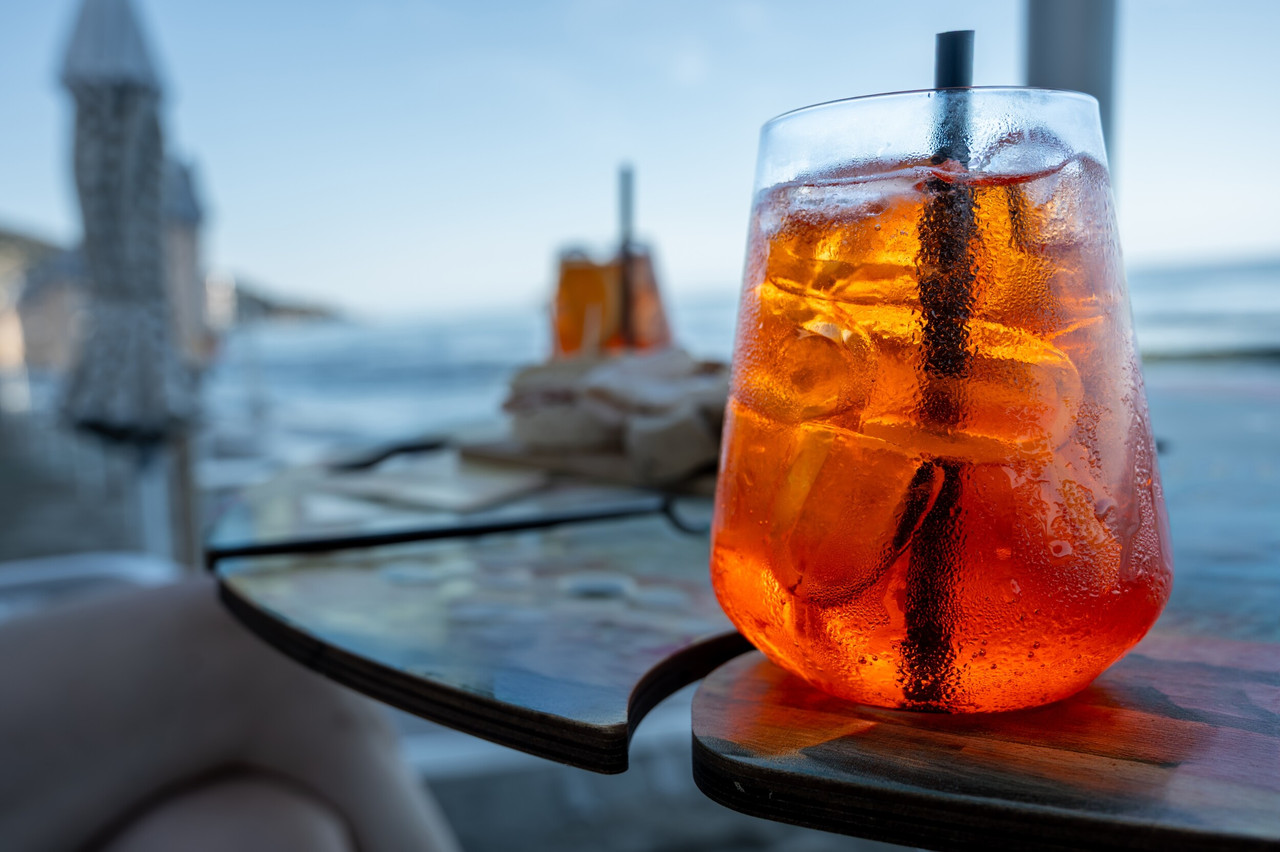
The Italian spirits group Campari, whose holding company is based in Luxembourg, is stepping up its efforts to protect Aperol – the driving force behind its growth in recent years – as imitation spritzes and rival aperitifs vie for a share of a rapidly expanding market. In Italy, where competition is fiercest, the group has launched a promotional campaign and a loyalty scheme for partner bars and pubs. Global consumption of spritz has risen from fewer than 2.5 billion servings in 2019 to nearly 4 billion in 2024, according to data from IWSR, whilst Aperol alone accounts for around 26% of Campari’s turnover.
The colour orange, which has become synonymous with the brand, is the subject of a trade mark application as part of a wider strategy to protect intellectual property, and the group has, on occasion, taken legal action against smaller competitors. Andrea Neri, managing director of House of Aperitivi at Campari, explains that since 2023, some bars and restaurants have been serving orange-coloured drinks on tap that are not necessarily made with Aperol, adding that consumers often believe they are drinking the original. Italy, where the Aperol spritz originated, remains Campari’s second-largest market after the United States.
From an academic perspective, Sandro Castaldo, a professor of marketing at Bocconi University, puts the threat into perspective: the presence of similar products is more a sign that Aperol is a very strong brand, as colour is often the first element copied by imitators. On the financial markets, Theodore Duval-Segard, an analyst at AlphaValue, takes a similar view, believing that imitation products do not currently pose a threat, as Campari has, in his view, literally reinvented the spritz.
Well-known competitors and the “Tyrolean” cocktail
The competitive landscape unfolds on several levels. Campari faces competition first and foremost from historic Italian aperitifs, starting with Select from the Montenegro Group – often described as the “Venetian original” of the spritz – as well as the non-alcoholic Sanbitter, owned by San Pellegrino, a subsidiary of Nestlé Waters. Rather than ceding ground to third parties, Campari has itself expanded its own portfolio with the original Campari, as well as Cynar, Crodino and an elderflower-based aperitif, Mondoro, not to mention the recent launch of Sarti Rosa, aimed at a female audience with a viral marketing strategy.
However, the threat deemed most serious by the specialist press comes from elsewhere: the Hugo Spritz, a cocktail originating in South Tyrol made with elderflower, mint and lime. Strictly speaking, this is not a brand but a recipe, whose star ingredient – St-Germain elderflower liqueur – is owned by the Bacardi group. Bacardi told Reuters that sales of St-Germain were seeing double-digit year-on-year growth, driven by the Hugo’s growing popularity, particularly on bar menus in the US and the UK.
The third front is that of the supermarket sector. Chains such as Lidl and Aldi have been selling low-cost generic versions for several years, priced at around half the cost of the original Aperol. In the UK, Sainsbury’s has its own version produced by Giacomo Sperone, an Italian producer of wines and vermouths, whilst in France, Carrefour offers an “aperitivo” under its own brand, described by some tasters as one of the imitations that most closely resembles the original flavour.
Aperol Spritz on tap to ensure consistency
To tackle the confusion between generic spritzes and the authentic Aperol Spritz, Campari has also expanded its loyalty programme, which now certifies around 2,000 venues in Italy serving the drink according to the official recipe, and is rolling out premixed Aperol Spritz kegs more widely, designed to ensure faster and more consistent preparation on the floor. The stated aim is to preserve the pricing power of a brand that accounts for nearly a quarter of the group’s turnover, whilst supermarket imitations – which are 30 to 40% cheaper – are accustoming consumers to lower prices.
One fundamental question remains, to which neither Campari nor the analysts quoted by Reuters provide a clear-cut answer: the commoditisation of the term “spritz” – which now refers to a style of drink rather than a specific brand – could eventually erode Aperol’s value, even if the product continues to outperform its direct rivals in terms of volume.