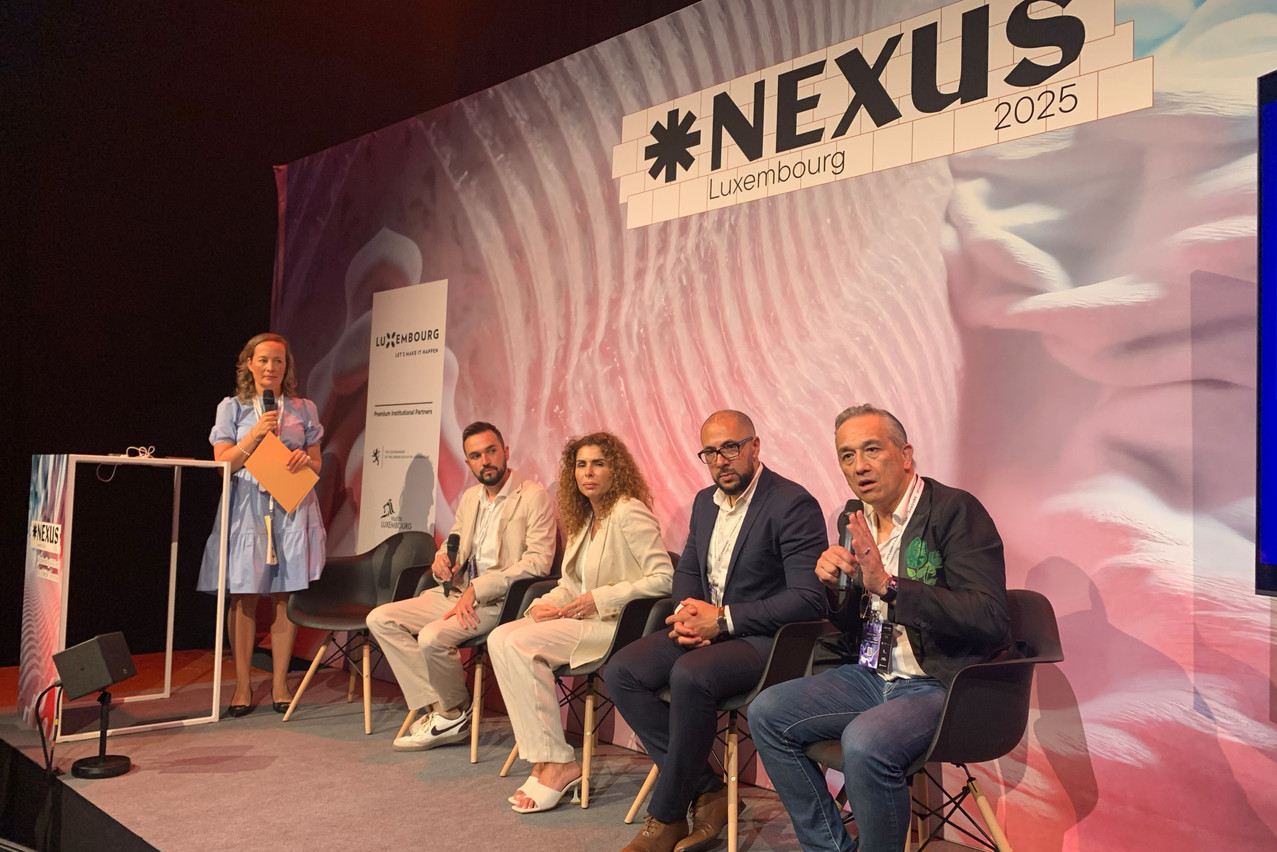
“One of the biggest challenges today is to decarbonise the concrete industry. The construction sector accounts for around 38% of global CO2 emissions. As service providers, we are increasingly demanding green solutions, and our customers are asking us for them too. We need cleaner machines on construction sites, concrete placing equipment needs to evolve,” explained Topp & Screed deputy sales director Sliman Moulai at the Nexus tech conference on Tuesday 17 June.
Founded in 2006 with a staff of five, the company--which today has 35 employees and claims to be the European leader in high-performance concrete flooring equipment--was awarded the first prize for innovation in the concrete paving equipment sector in 2022. The company, based in Riesenhoff in northwestern Germany, won the award for the development of its electrified machine for levelling industrial concrete floors. To do this, it uses technology derived from the automotive sector and aimed at reducing carbon emissions.
Need for government support
A number of speakers took to the stage to talk about “concrete solutions for decarbonising industry.” Philippe Fisch, CTO of GPSS, spoke about green hydrogen production for Agri PV, or agrivoltaics, a practice that involves combining solar energy production with agriculture on the same plot of land. “This allows optimised use of land by producing both renewable electricity and agricultural products, so we can do the same thing with hydrogen.”
Anamaria Zianveni, project manager and CEO of strategy, innovation and acquisition at Encevo, spoke about Hy4Link, the integrated cross-border hydrogen infrastructure for the Greater Region. “I started with a blank page and Luxinnovation gave us a lot of support. We are facing a number of challenges in terms of regulations and the regulatory agenda. In terms of technical prospects, we’re good, but there are also challenges in terms of getting hydrogen across borders,” she explained. “First of all, we need to develop the ecosystem to identify the players, because this valley in the Greater Region is interconnected. We depend on customers. It’s a very long process, so it will take years.”
Electric as efficient as thermal
A new player that appeared on the Luxembourg landscape less than a year ago, Click4Charge--with its 12 vans equipped with huge batteries--offers to recharge the vehicles of professionals and private individuals, wherever they may be in the public space. “At the moment, we’re in Luxembourg, but we’ll soon be in Belgium, France and Germany,” revealed 
“The biggest challenge is to convince our consumers and customers to change the way they work, and they don’t always like that. We also need the support of the state and the European Union, with subsidies for example. There is pressure from the market, we have electric machines that now work as well as combustion ones, or even better,” added Moulai from Topp & Screed.
This article was originally published in French.