Every Ash Wednesday, Remich sets a scarecrow on fire on the bridge over the Moselle. The Stréimännchen – a straw figure carrying an empty bottle and an empty wallet, the spent symbols of Carnival – has been burned there since at least 1884. It was the destination for the first edition of Chemins Croisés, and for most of the group, it was the first time they had heard of it.
Sportunity has run sport activities for people with refugee and migration backgrounds since over a decade, with weekly sessions in different sports disciplines, for different age groups. That remains the core of Sportunity’s programme supporting refugees in Luxembourg. But we understood early that providing sport to refugees alone isn’t enough. People need to actually meet – across backgrounds, in situations with enough texture to generate a real conversation. Chemins Croisés, supported by the Ministry of Family’s Vivre ensemble division, is where that realisation led.
A designed encounter, not a guided tour
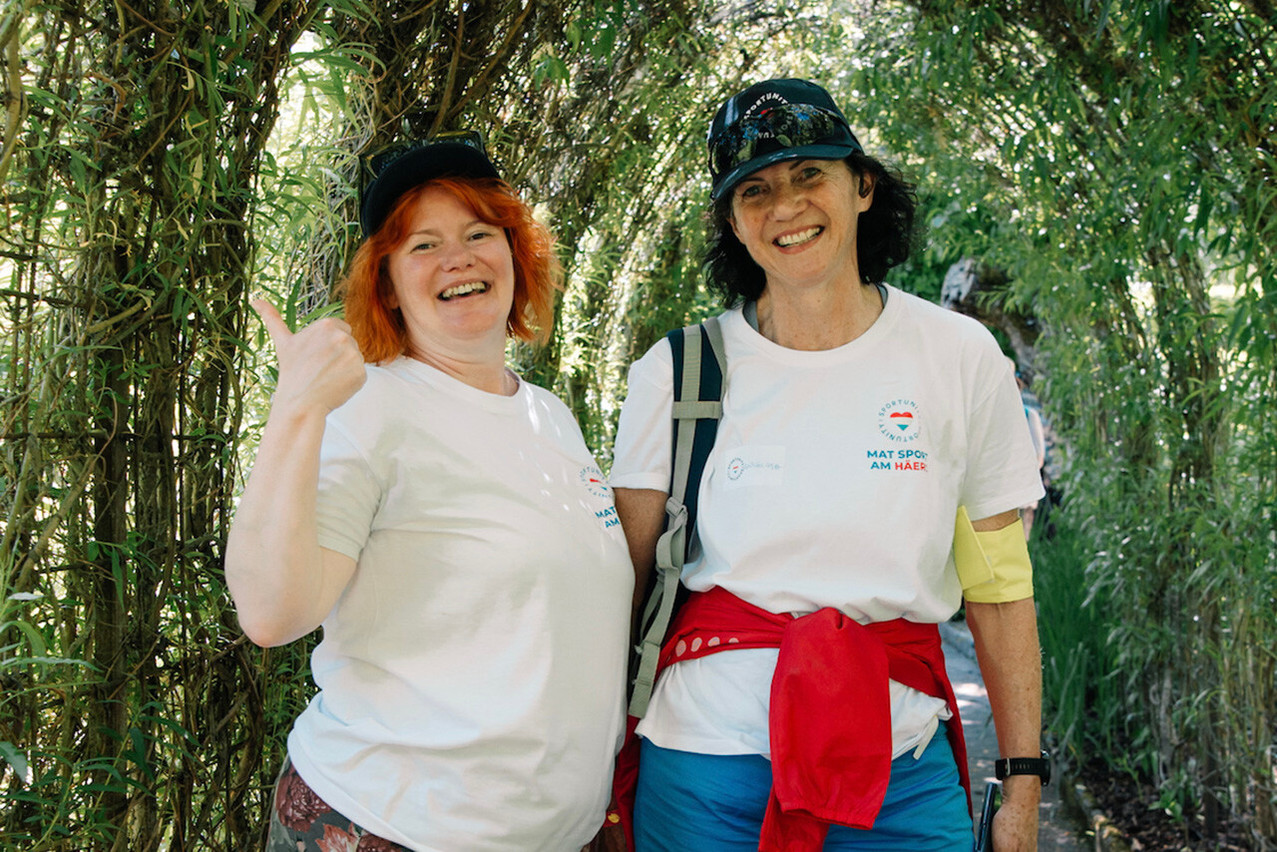
Hiking is the vehicle for practical reasons: no prior training, no equipment, accessible to almost any level of fitness. But the walk is the least of it. For each edition, we build an experience shaped specifically around the meaning and mood of that festival – from scratch each time, because no two traditions carry the same logic. Participants don’t just observe – they engage, drawing on their own backgrounds, memories, and cultural knowledge to discover the tradition alongside one another. A ceremony marking the end of Carnival on the Moselle opens a conversation about how different cultures punctuate the year, the rituals that divide one season from the next. A pottery market prompts reflection on the objects families keep or carry across time and place.
The Luxembourg tradition provides the question. What participants bring from their own lives is the answer. The walks are not about newcomers discovering Luxembourg. They are about people from different backgrounds discovering it together – and finding, in that process, that what they carry with them is not separate from Luxembourg’s story, but woven into it.
Three editions, three traditions
Since February there have been three. The Stréimännchen in Remich. Éimaischen in Luxembourg City in April – Easter Monday’s pottery market, where clay birds called Péckvillercher have been sold since 1957. And the Geenzefest in Wiltz in June, a celebration of the genêt, the wild broom shrub whose yellow flowers carpet the Ardennes hills every spring.
The next three begin on 15 August with Léiffrawëschdag in Greiveldange – celebrating herbs and flowers. The Drauwen a Wäifest in Grevenmacher follows on 12 September. And on 27 September, we’ll head to Redange in search of Kropemann, a mythical figure from local folklore. Each edition has surprised us. We expect these will too.
Free, bilingual, open to any adult in Luxembourg. Registration for the upcoming hikes is open at sportunity.org.
This promotional article was written by Sportunity asbl as part of the company’s membership with the Paperjam Club. If you would like to become a member of the Club, please contact us at club@paperjam.lu.