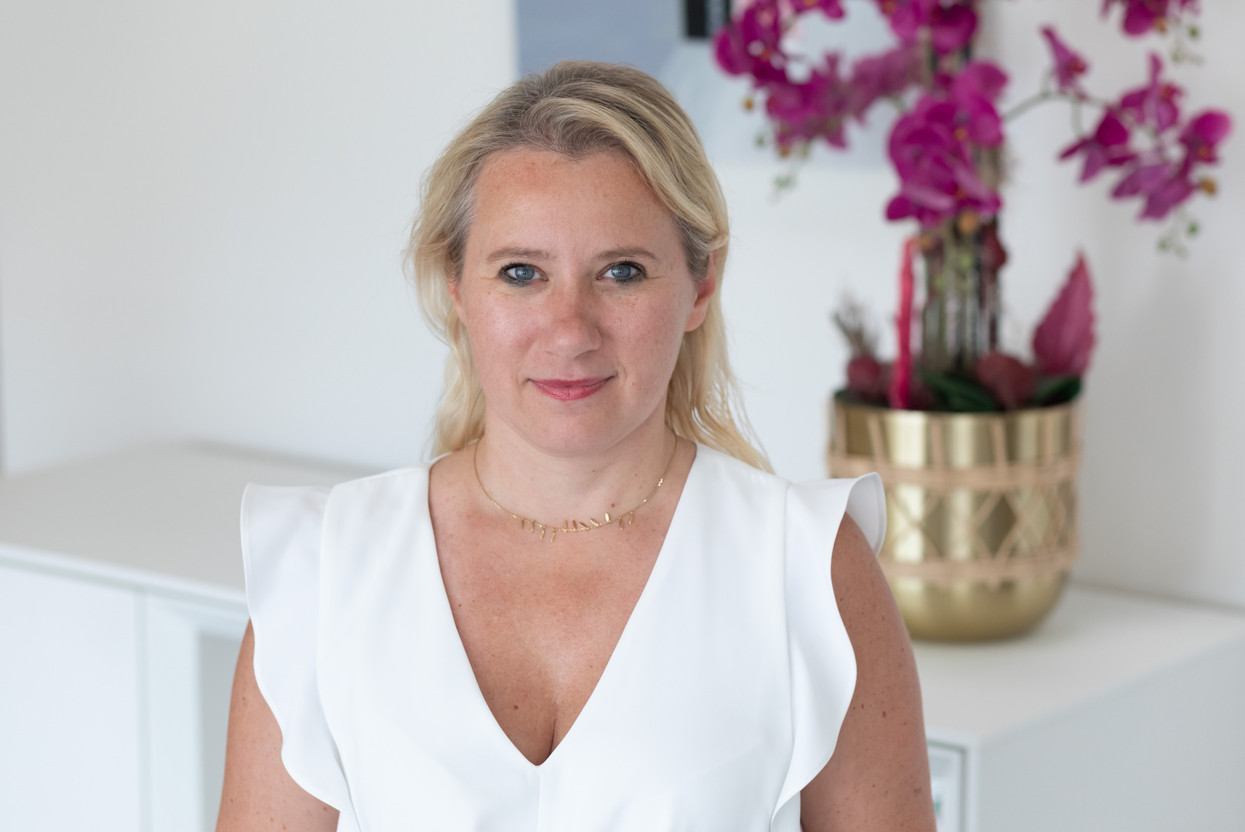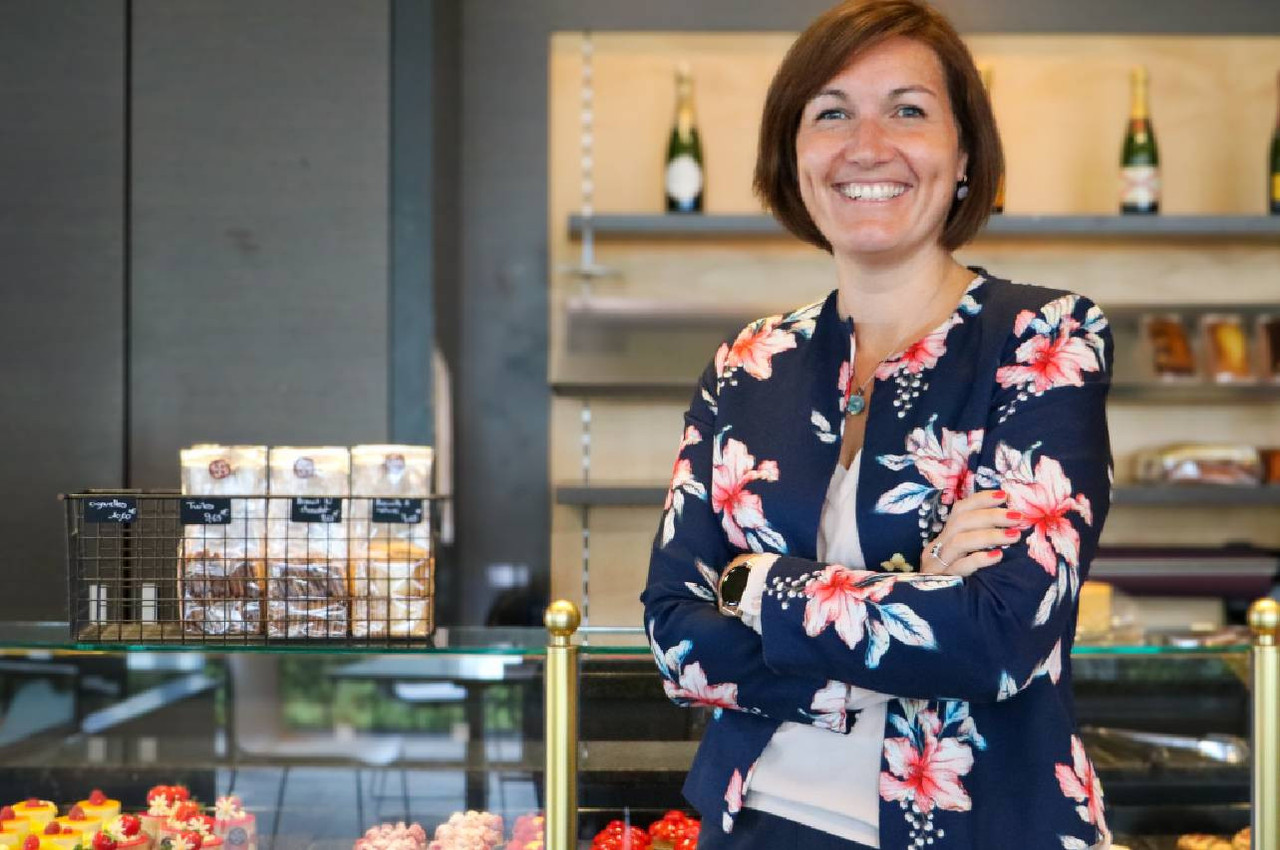
Leaving Bil to join Namur: on paper, the big departure is surprising. But for Marie Duquesne, the confectioner’s new head of human resources, the choice was a no-brainer. “Telling your children that you work in a bank meant everything and nothing. Today, when I bring home a cake on a Friday evening, it’s something concrete. And that’s what I needed,” she confides with a smile.
Her career path is, however, a classic one, with two years at Michael Page, five at Deloitte and then seven at Bil. At the bank, she worked successively in the legal, compliance, commercial and wealth management departments. It was an enriching experience, but one she had come to the end of. “When you’re not a decision-maker, you quickly come up against the glass ceiling in your area of responsibility,” she admits. The Paris-Brest, as delicious as it was, had lost its lustre. All that remained was to find a new flavour.
In August, she walked through the door of an emblematic national brand, now in its sixth generation. A family business on a human scale, facing a major challenge: preparing for the future without losing its DNA.
Listening before transforming
“My role is to provide structure (objectives, monitoring, evaluation),” she explains. “But it’s not about controlling. Evaluation also opens the door to salary adjustments, new benefits and greater recognition. What I want is for every employee to play an active part in the company’s success.”
An ambitious speech. But how do you shake up a family-run business with well-established habits and employees who have been with the company for more than three decades, when you’ve only just arrived? By listening, she insists: “I first take the time to understand each business and its specificities before proposing improvements. It's not about imposing, but about building together.”
Restructuring will also involve innovation. AI, for example, could be used to simplify certain processes. But there’s no question of introducing it into the kitchens: “It’s like a pastry robot: practical, but it will never replace the pastry chef.”
Beyond innovation, there's also a more traditional challenge awaiting the new HR manager: recruitment. “More than ever, we're looking for new talent who want to work in the traditional, artisanal way.” More than the salary, then, she intends to seduce her future employees with the pride of belonging to a house with a recognised name in Luxembourg.
This article was originally published in French.