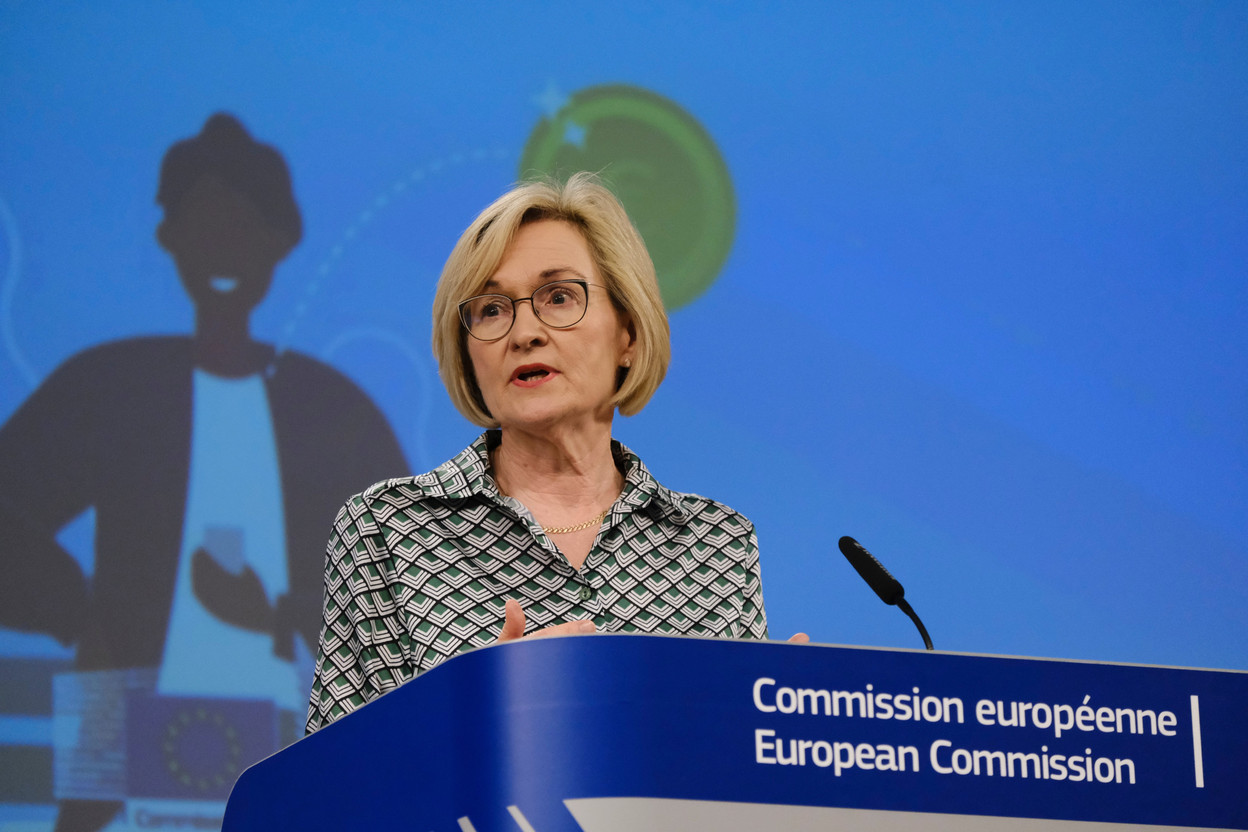
Aaron Grunwald: What should we expect to see in Luxembourg’s fintech sector over the year?

People in the fintech space are also looking at Fida [the EU’s Financial Data Access Regulation] in order to further develop their products. We will also see a transition from open banking services to open finance services [and] we already see this today. This also developed with PSD1 and PSD2 [the EU’s Payment Services Directives, implemented in 2009 and 2018]. We expected having pure payment services with PSD1, and we have seen over the years that actors never just focus on providing the payment services, but do get inspired by the new regulations to develop further services. Account information services, for example, and payment initiation services. Those services developed after PSD1 entered into force, and they got regulated with PSD2, but they were already there before. So you will always see some evolution before regulation catches up.
I think we’re also going to see further development in tokenised assets, also favoured by Mica, of course, because those products and services will it be integrated into mainstream financial services. So I could imagine seeing an evolution in tokenised fund products or various types of tokenised assets coming up over the next months and years.
With Mica, you’re expecting to see new crypto products and services. Do you mean specifically cryptocurrencies or more generally tokenised assets?
I think both. You have stable coins, which will be regulated. E-money tokens now have a clear framework as of January [2025]. So I really can imagine that we have some providers out there who are already applying for the licence in order to provide their services on the market very soon.
Then I could also further imagine seeing further developments in the tokenisation of financial instruments, tokenisation of funds and so on.
We will see more and more products which are tailored for SMEs, facilitating administrative tasks within the entities, facilitating their access to payments.
Are these types of embedded services an opportunity for service providers here in Luxembourg?
In every regulation, there are a lot of opportunities. And now we have four or five regulations entering into force in [the] next two years. I hope that the actors on the market are having a look now into those texts--and I’m sure they’re doing it--in order to get an idea of what type of products they can develop. I know that not everybody shares this [perspective]. There’s a lot of criticism currently around the [Fida] regulation. But I am sure that that we will see some interesting products and services coming out of the shift from open banking to open finance. If I were an actor out there, I would really try to find something in that space.
This interview was originally published in the 2025 print edition of the Paperjam Bible released on 7 February 2025. Click here to subscribe to the magazine.
Is your company a member of the Paperjam Club? You can request an individual subscription delivered directly to your home or office. Let us know via club@paperjam.lu.