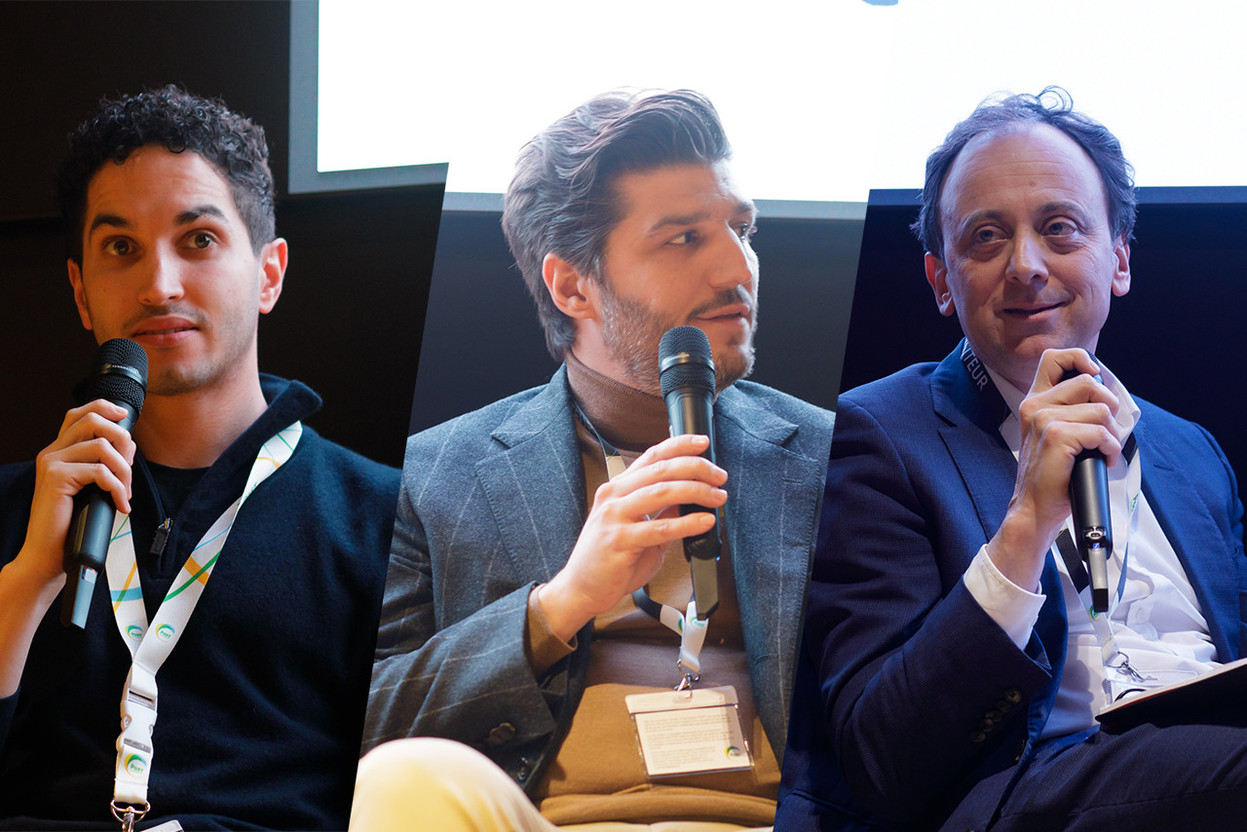
For Kevin Muller, CEO and co-founder the open-source password manager Passbolt, “we live in an era where each company must become digitalised in order to survive.” Muller was one of the speakers on a panel focusing on the next decade of digitalisation during venture capital firm Expon Capital’s second annual Digital Tech Fund event on 25 January.
But, Muller argued, there are two phases to digitalisation. The first phase is the “stormy phase,” where a company realises that they need to digitalise processes. They don’t know exactly systems they need; they’ll do a lot of trial and error, and they’ll (hopefully) learn from their mistakes. Only once companies reach a certain “level of maturity” does the second phase comes into play: this is when they understand the “parameters” and can evaluate their infrastructure.
“Human touch” still valuable
“One big challenge with the digitalisation for companies is the customer journey, the customer experience,” said Matias Mäenpää, co-founder CEO of Videobot, which uses personalised, interactive videos to help businesses connect with their customers. The company was named the winner of the 17th Creative Young Entrepreneur Luxembourg competition in December 2023.
“Everyone knows that we have to make our processes more scalable, more automated,” he added. “But that’s when people value a lot the human touch, that you are close to your clients--and that’s where we come in.”
Funds industry still very manual
Luxembourg is the second-largest investment fund centre worldwide, with €5.152trn of net assets for undertakings for collective investment (UCIs) as of the end of November 2023. But many processes in the fund industry are still very manual, said Declan O'hAnnrachain, co-founder and managing partner at Cascade. The startup, which was founded in 2019, aims to centralise client data and provide a complete anti-money laundering/know your client (AML/KYC) framework.
Many compliance teams had a lot of paperwork that they were “shuffling” around and “they didn’t want to go digital because they thought that was going to be more risky.” So to attract people from the financial sector, Cascade had to “start from the very, very basics,” said O'hAnnrachain. “You have to convince them that ultimately, going digital is hugely important.” It was only as a result of the covid-19 pandemic and newly available technologies that people started to see the benefits of digitalisation.
“We see a lot more people using technologies--like Cascade--to facilitate their lives,” noted O'hAnnrachain. Luxembourg’s financial sector supervisory commission, the CSSF, is also “quite enthusiastic” to penalise firms who don’t fulfil their regulatory obligations, he added. “But more importantly, they’ll also be pushing people to actually do more frequent reviews, etc.”
That being said, “we still come across clients--or potential clients--who have masses of paper files, where they store copies of passports, etc. But for them to ever review this--it’s a nightmare.”
At the end of the day, firms have to gather certain documents, keep them refreshed, do beneficial owner charts and country risk analyses, screen names, and know their own level of risk. For a lot of people, “although they do digitalise, too often, they’re digitalising one element, and they still do the rest in Excels,” said O'hAnnrachain. “And this is where a tool like Cascade facilitates people’s lives.”
“Reinvent yourself all the time”
Asked to look ahead to the next decade, Muller said that the goal is to “remove passwords from the equation,” he said. Employees should not have to recall any passwords, as this is a “vulnerable” point for a company. They should be able to sign in with biometrics--without ever having to input a password.
“In three years, the market can look super different,” Mäenpää said. “You have to reinvent yourself all the time.” With regards to the video and chatbot domain in which Videobot operates, there could be things like AI avatars or “concierges” who discuss with users. “But to be honest, you have to be super curious, be able to be objective and not too much in love with your product all the time, because the world is changing.”
And it’s important to be “close to your clients, understanding what they really need,” Mäenpää concluded.