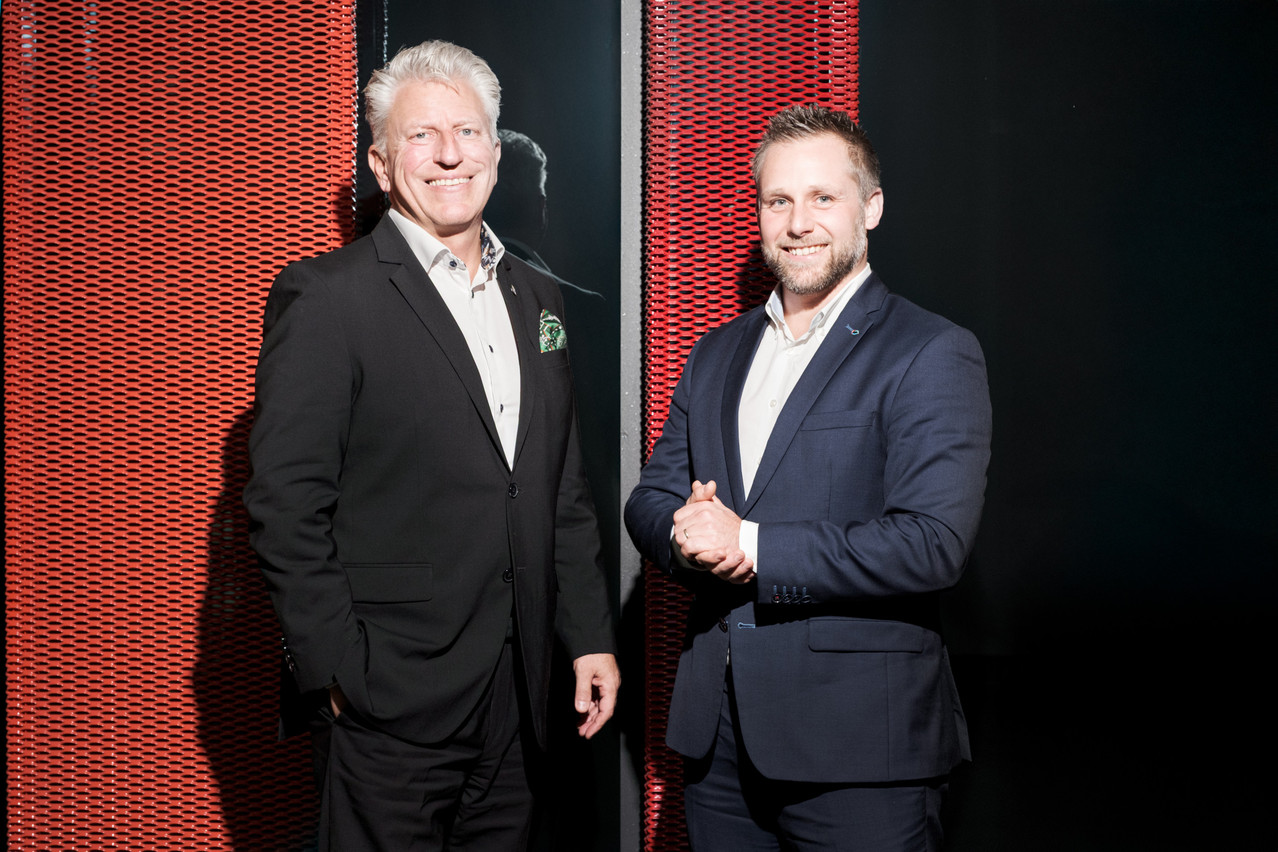
In just a few years, NSI Luxembourg PSF has established itself as one of the country’s leading IT integrators, with nearly 600 employees spread across two sites in the Grand Duchy and a network of more than 350 active clients in finance, insurance and the public sector. Backed by the Belgian NSI group — itself a subsidiary of the Cegeka Group — NSI Luxembourg PSF combines the solidity of a long-standing market player with the agility of a rapidly expanding organisation. This combination enables the company to offer comprehensive expertise covering cloud, infrastructure, application development, managed services, data, cybersecurity, automation and artificial intelligence. Beyond these areas, NSI places innovation at the core of its strategy.
“The Luxembourg market now expects fast and measurable results,” notes Robby Melin, Sales Director at NSI Luxembourg PSF. “After the COVID period, many companies urgently invested in digital solutions, stacking multiple tools. Today, they want to rationalise, measure ROI and accelerate the business benefits of the solutions already in place to improve competitiveness.” This trend spans all sectors and reshapes how business units seek to break down silos within their operating models.
A client cannot be exposed to a vendor who, without notice, adjusts their policies and pricing — sometimes in a completely disproportionate way

Staying in Control of One’s Data
Digital sovereignty has become an essential priority. “For a long time, sovereignty was reduced to keeping data in Luxembourg. That view has become insufficient. It is above all about maintaining control over technology (dependence on vendors / hyperscalers, interoperability, reversibility, etc.). A client cannot be exposed to a vendor who, without notice, adjusts their policies and pricing — sometimes in a completely disproportionate way,” insists Robby Melin.
To address this need, NSI has invested nearly one million euros in a Luxembourg sovereign cloud dedicated to developing, managing and deploying large-scale AI models, relying on IBM’s WatsonX platform and ensuring strict compliance with PSF, DORA and NIS2 requirements. This technological sovereignty goes hand in hand with methodical work on data exploitation. “Source quality remains the main challenge to obtaining robust and consistent results. Poor segmentation creates real risk, whereas well-governed data makes AI reliable,” explains Robby Melin. Each project begins with a revamp of governance, identification of trustworthy sources, segmentation of information, implementation of full traceability and strict access controls. “When the foundations are solid, AI adoption becomes natural.”
People Before AI
When it comes to artificial intelligence, NSI Luxembourg PSF adopts a clear stance. “Many clients want to ‘do AI’. But when we analyse their needs in detail, we often find that what they really need is automation — much less costly and far easier to implement,” notes Robby Melin. For NSI, AI should be deployed only when automation reaches its limits. This pragmatic approach enables NSI Luxembourg PSF to deliver impactful projects: predictive optimisation of industrial purchasing, logistics forecasting based on market fluctuations, AI agents capable of automatically suggesting car maintenance appointments by factoring in numerous parameters, or an AI agent available to employees to answer HR, IT or security questions. “These are concrete use cases, not demonstrations. They have a direct impact on margins and operations,” states Manuel Pallage, CEO of Groupe NSI and Country Manager Luxembourg.
Even with 600 people, NSI Luxembourg PSF operates with a family spirit

Merging to Grow
This capability is also the result of internal transformation. In January 2025, the merger between CTG Luxembourg PSF and NSI Luxembourg PSF brought together complementary areas of expertise. “We combined the wisdom of a company that has been present for more than thirty years with the innovative, agile spirit of an organisation that still operated like a startup. And this merger has been a success from A to Z,” says Manuel Pallage. Unlike traditional mergers, this one led to net job creation. “We won numerous new contracts and had to recruit heavily. That already represents 45 additional employees in net terms for 2025.”
With this reinforced structure, a new team dedicated to technology partnerships and an internal culture that values initiative, NSI now tackles cross-functional projects combining cloud, data, AI, security, automation and business expertise — always within a rigorous PSF framework. Manuel Pallage concludes: “There is a great deal of value within NSI, but that alone is not enough. What explains our success is that our talent is driven by an exceptional culture. Even with 600 people, NSI Luxembourg PSF still operates with a family spirit. And it is this dynamic that allows us to go further.”