This is the first time that certain works of Bert Theis (1952-2016) have been exhibited. The Luxembourgish artist, who moved to Milan in 1997, is known for his monumental, inclusive installations with a political interpretation. “Bert Theis’s work is both complex and clear; it’s always topical and it appeals to us all,” says Christian Mosar, director of the Konschthal Esch.
The exhibition “Bert Theis, pour une Philosophie Collagiste” (Bert Theis, for a Collage Philosophy) is part of a project by the Theis archive, covering a body of the artist’s work produced over several decades, from 1980 onwards. More than 200 collages are on show for the first time at the art centre in Esch, allowing visitors to discover the variety of media and techniques the artist used to express himself through collage.
A long-standing practice
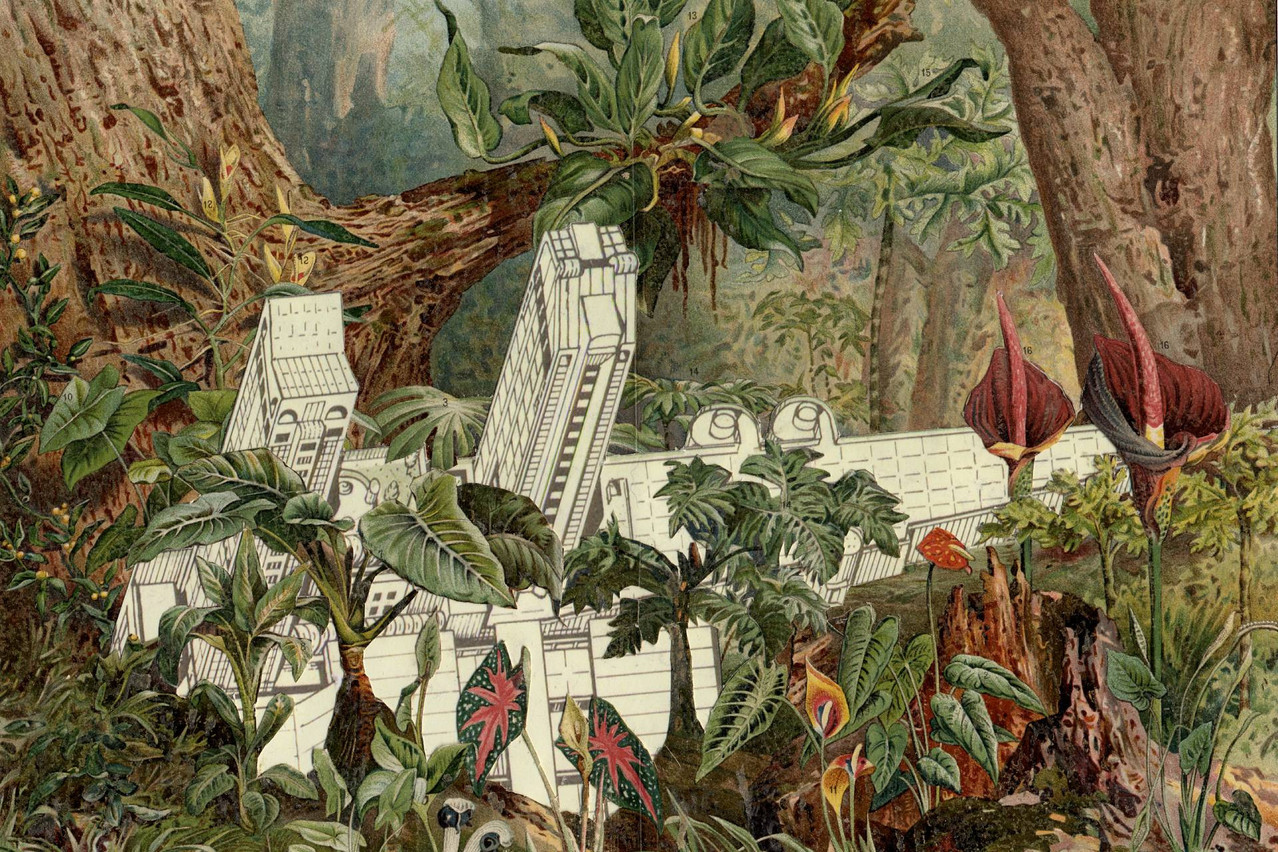
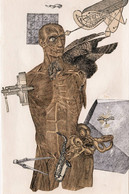
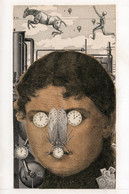
“From his apprenticeship years at the Scuola del libro of the Istituto Statale in Urbino, Bert Theis has been interested in collage,” explains Marco Scotini, guest curator of the exhibition, alongside Charlotte Masse, curator at the Konschthal. Newspaper cuttings, fragments of found objects, torn magazine pages, watercolour paper… the sources for these collages are many and varied. Throughout the 1980s, Theis continued his research, scissors in one hand, glue-coated brush in the other. The first part of the exhibition documents this period, during which the artist practised ‘multiform’ collage, whether on paper, by photomontage or even with sound. “It’s easy to see a connection with Dadaist and Surrealist collages,” comments Scotini. Marx Ernst, Duchamp, Diego Rivera and André Breton are all directly quoted. The collages are extremely precise, so fine that it is sometimes impossible to detect the junctions. Viewers can enjoy studying the images, which are often full of mischief and open to multiple interpretations.
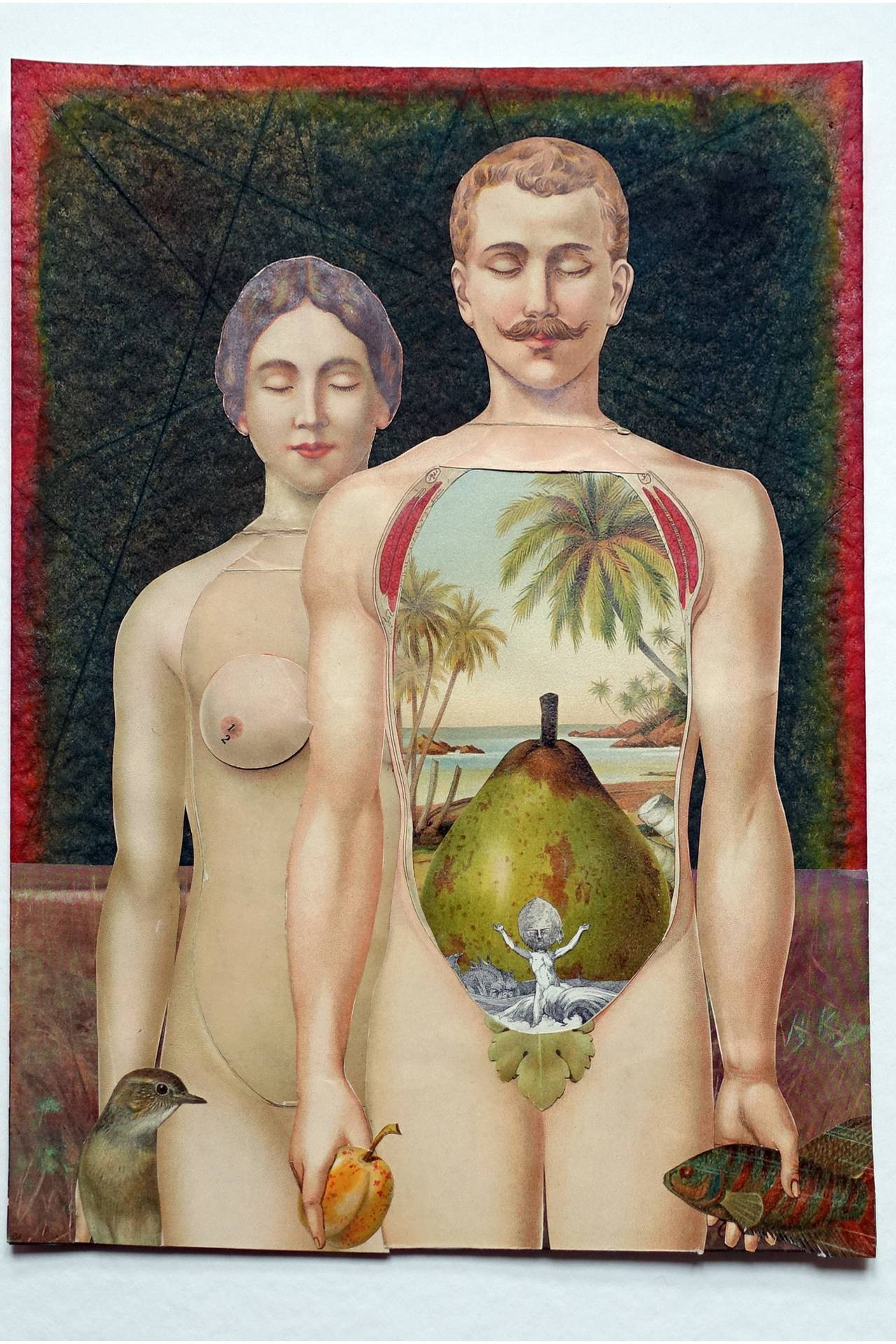
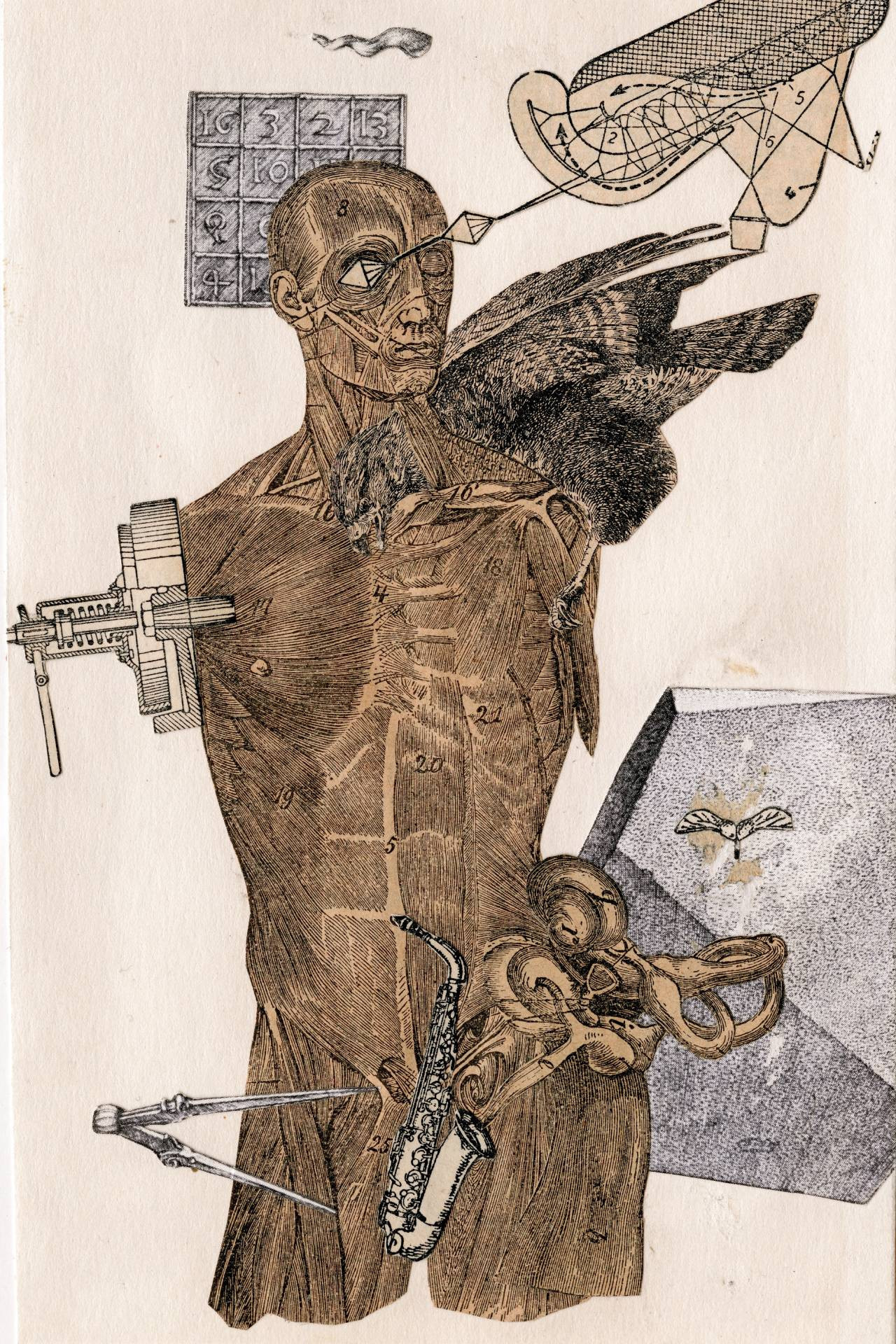
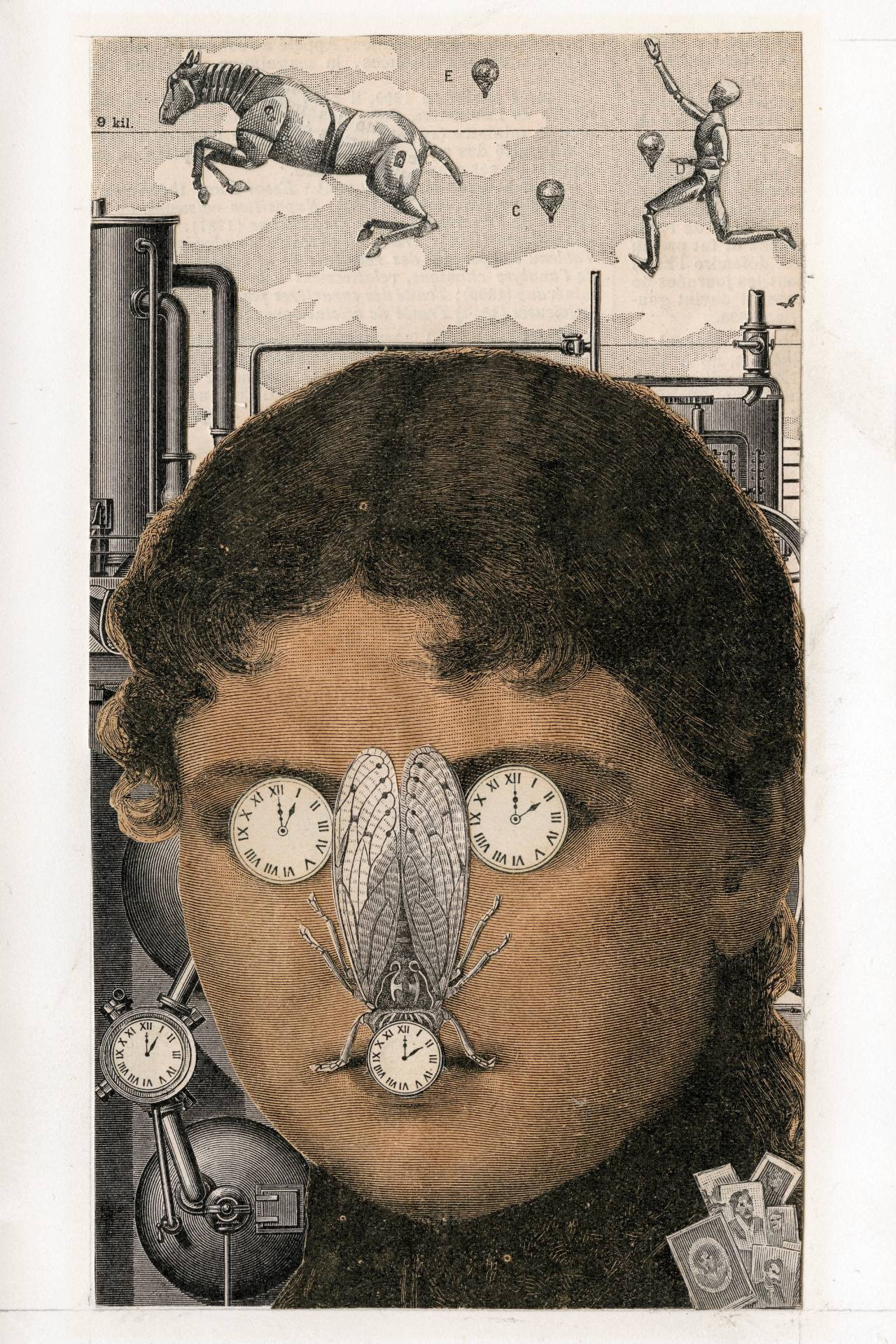
A political speech
The centrepiece of the exhibition is undoubtedly the collages designed to illustrate the text Parabel vom Wasserbecken, an unfinished book dating from 1986. This collection was published posthumously as an artist's book (printed in 100 copies; a few copies are available from the Konschthal for €350). It is a satire of capitalism, inspired by Equality, written by the late 19th century American author Edward Bellamy, who was widely read in extreme socialist and anarchist circles at the time. It shows raptor-headed capitalists in late 19th century bourgeois garb and fish-headed proletarians in commoners’ clothing moving through worlds inhabited by measuring instruments, physics, mechanical parts or scientific diagrams.
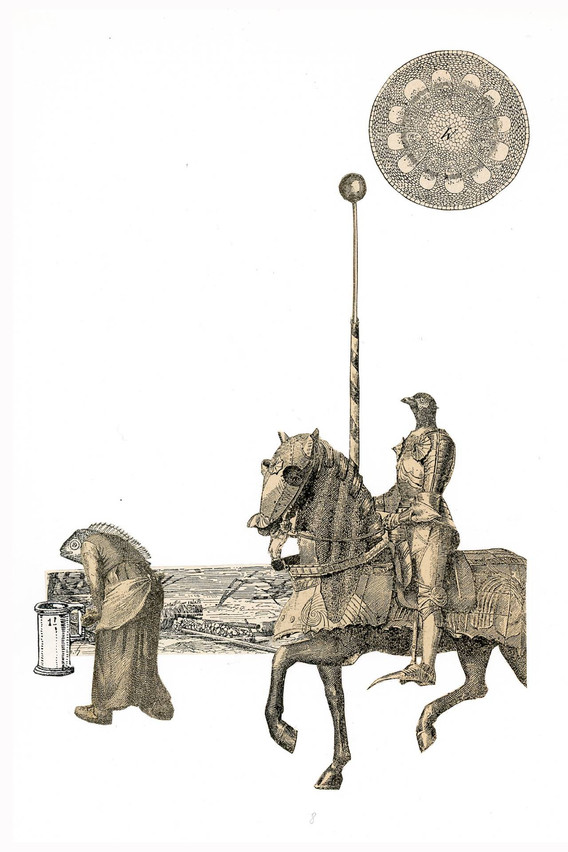
Bert Theis, Die Parabel vom Wasserbecken (1986) Photo: Archives Bert Theis
“Greedy birds and mute fish are the images of this dreamlike and political bestiary, at once incongruous yet understandable to everyone,” says Scotini. These images are unified by their archaic yet anachronistic nature, forming visual constellations that are both repetitive and constantly changing. This room also features collages with a more urban feel, both in terms of the subjects represented and their poster-like formats. Between the rooms, collages linked to painting are also presented.
The exhibition runs from 29 March to 21 September at the Esch Konschthal.
This article was originally published in French.