Luxembourg has made no secret of its desire to take climate action and move toward a circular economy. With the adoption of ESG-related regimes such as the CCUS/CDR Action Framework - which pushes for carbon capture and carbon dioxide removal - the EU Taxonomy, the Sustainable Finance Disclosure Regulation (SFDR), and the Corporate Sustainability Reporting Directive (CSRD), private and public sector entities face new and growing pressure to adapt. At the same time, incentives have been created to mobilize private investment to help reach net-zero emission targets and encourage sustainability criteria in corporate business activities.
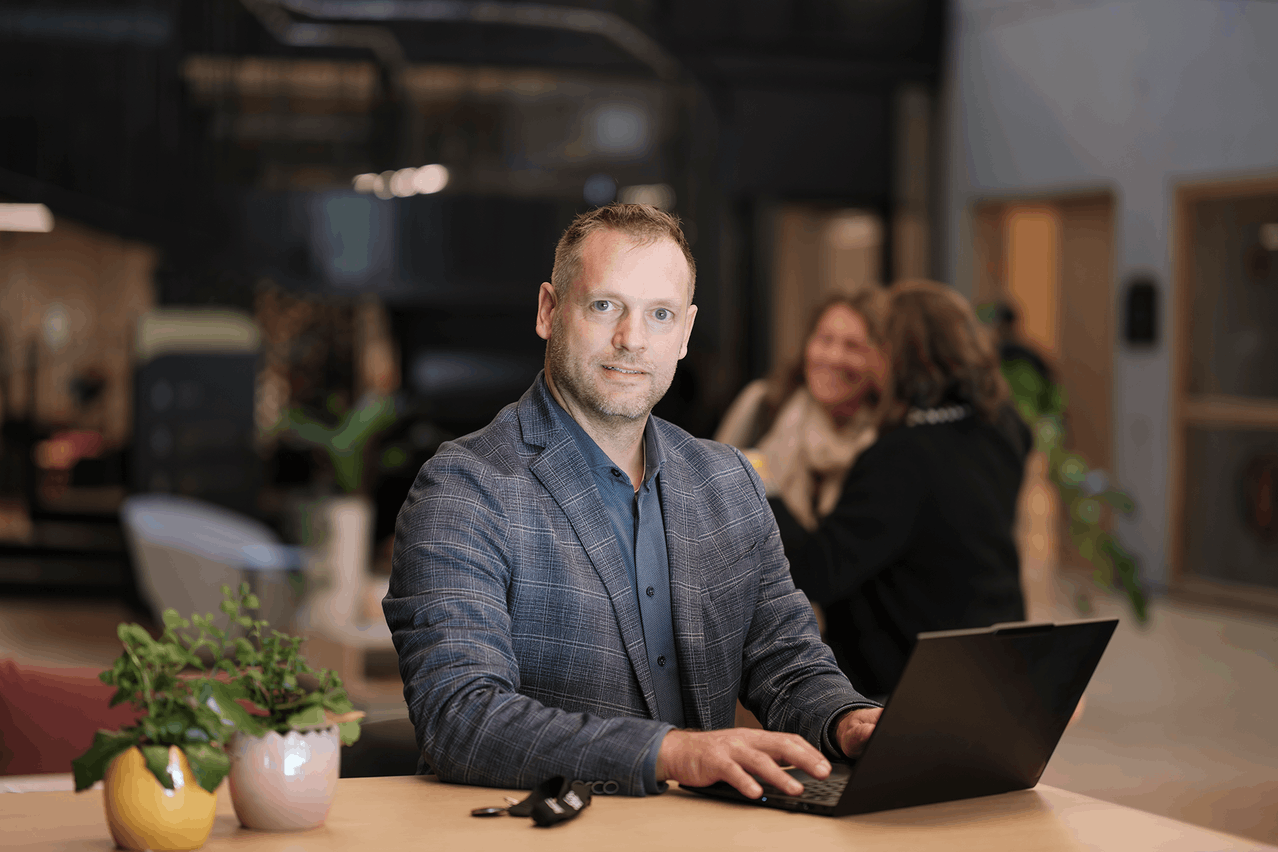
Ralf Köhler is Senior Project Director – Environment & Sustainability at LSC360. “Our company aims to drive transformation and help clients by integrating circular design, biobased materials, conducting life cycle and carbon assessments, uncovering inefficiencies, and acting as guide through the process of obtaining certifications. We also deal with innovative energy solutions and demonstrate systemic approaches to implementing renewable energy systems in buildings or neighborhoods in an economical and climate-efficient manner.”
“Increased profitability, sustainable solutions and resilience is what we offer to clients.”

The division to which Ralf Köhler belongs with clients from various target groups such as SMEs, real estate firms, financial institutions, industrial companies, and municipalities. With LSC360’s help, entities from these sectors can obtain new technical solutions in implementing their ESG goals in a sustainable and future-oriented manner, largely through targeted measures for decarbonization, circular economy modelling, and clean energy.
“LSC360’s value lies in its integrated, transdisciplinary approach that combines technical expertise with in-depth ESG and sustainability knowledge,” Ralf Köhler says. “We provide customized decarbonization strategies and have the ability to link technical innovation with regulatory and financial frameworks, delivering impactful, future-proof solutions for clients undergoing the green transition.” In other words, LSC360 can serve clients both from the technical side and the regulatory side to not only be more efficient in terms of energy and material flow management, but also to boost the confidence of stakeholders and be eligible for - and attractive to - sustainable finance.
One target group consists of SMEs such as materials providers, construction companies, and logistics firms, among others. LSC360 provides them with technical and scalable strategies to stay ahead and thrive in the wake of new regulations. Ralf Köhler says: “We analyze material flows to uncover inefficiencies and to propose new circular design, modular, and bio-based construction. We assist in reducing waste material with lower environmental impacts. We use AI-based instruments to facilitate our planning work and make it more efficient. This helps clients shift from a linear to a more dynamic and intelligent model, which is our overarching goal.”
LSC360 also works closely with players in the real estate and sustainable construction sector, helping them to be compliant, make properties more energy-efficient, and obtain ESG certification that provides greater transparency and guarantees the life cycle of buildings, all of which result in long-term added value in the market. LSC360 also works on public and private housing projects, helping construction and project management companies to both decarbonize and carry out projects more economically. For many clients, LSC360 can provide a technical assessment along with economic solutions: feasibility studies for each project and strategic guidelines to include ESG investments in corporate design. “We also work closely with industry and manufacturing, which require very complex strategies to decarbonize their processes and products,” Ralf Köhler says. “This is one example of how our transversal approach empowers us to create customized solutions. Our firm can also assist clients with carbon reporting, training for their staff, and integrating circular economy solutions in their corporate infrastructure.” LSC360 can also guide clients through site deconstruction. “We give clients a strategic pathway to deconstruct materials and provide inventory with a second life.”
LSC360 participates heavily in R&D, sometimes in collaboration with the Luxembourg Institute of Science and Technology (LIST) or other research partners. “We’re working on joint projects to develop new technical solutions, whether that is a digital urban planning tool, a Life Cycle Assessment (LCA) to quantify environmental impact of land degradation, new wood-composite applications or a product development based on recycling materials,” Ralf Köhler says.
LSC360 is also involved in training the next generation of engineers to incorporate sustainability and the circular economy in their work. “Embedded in research programs and university lectures, we provide training to help students to better understand the realities of the circular economy and its feasibility in the market.”
To learn more about recent ESG strategies and how LSC360 can help private and public entities make the transition, visit our website