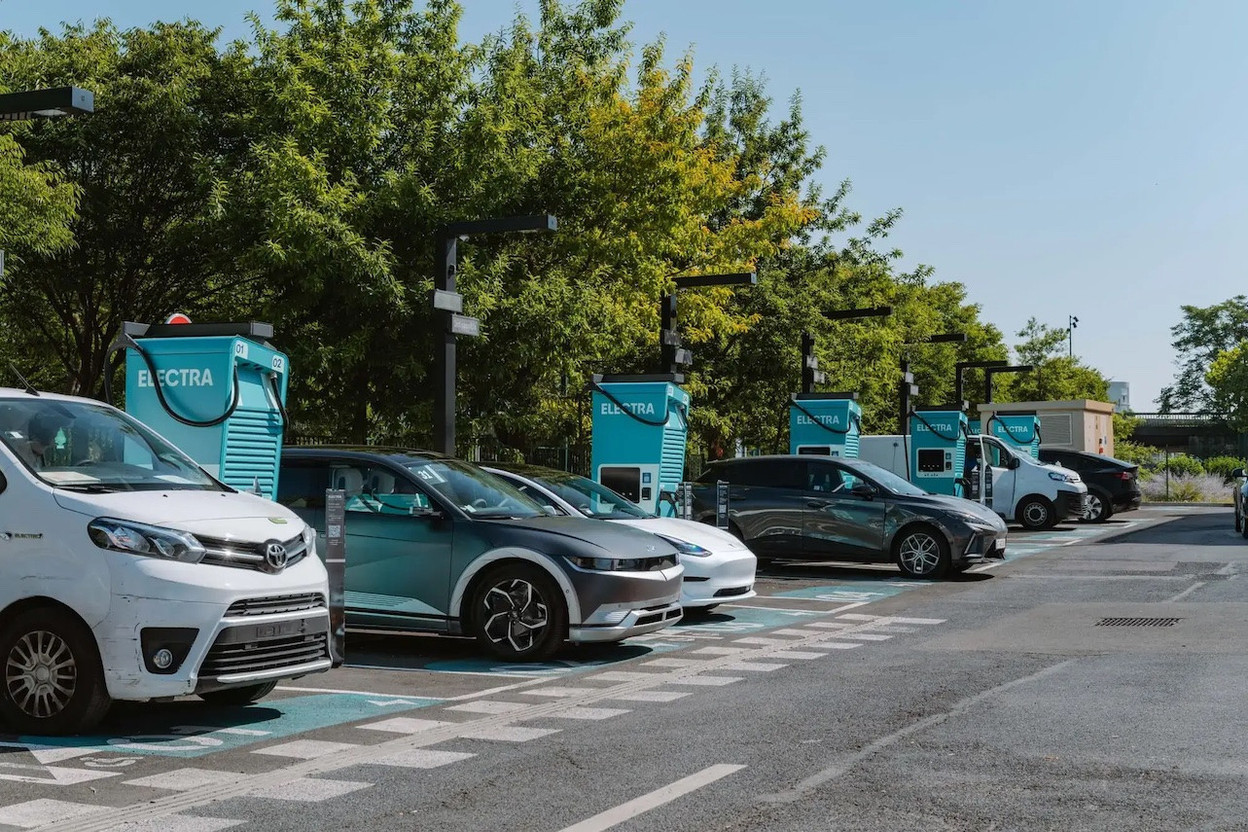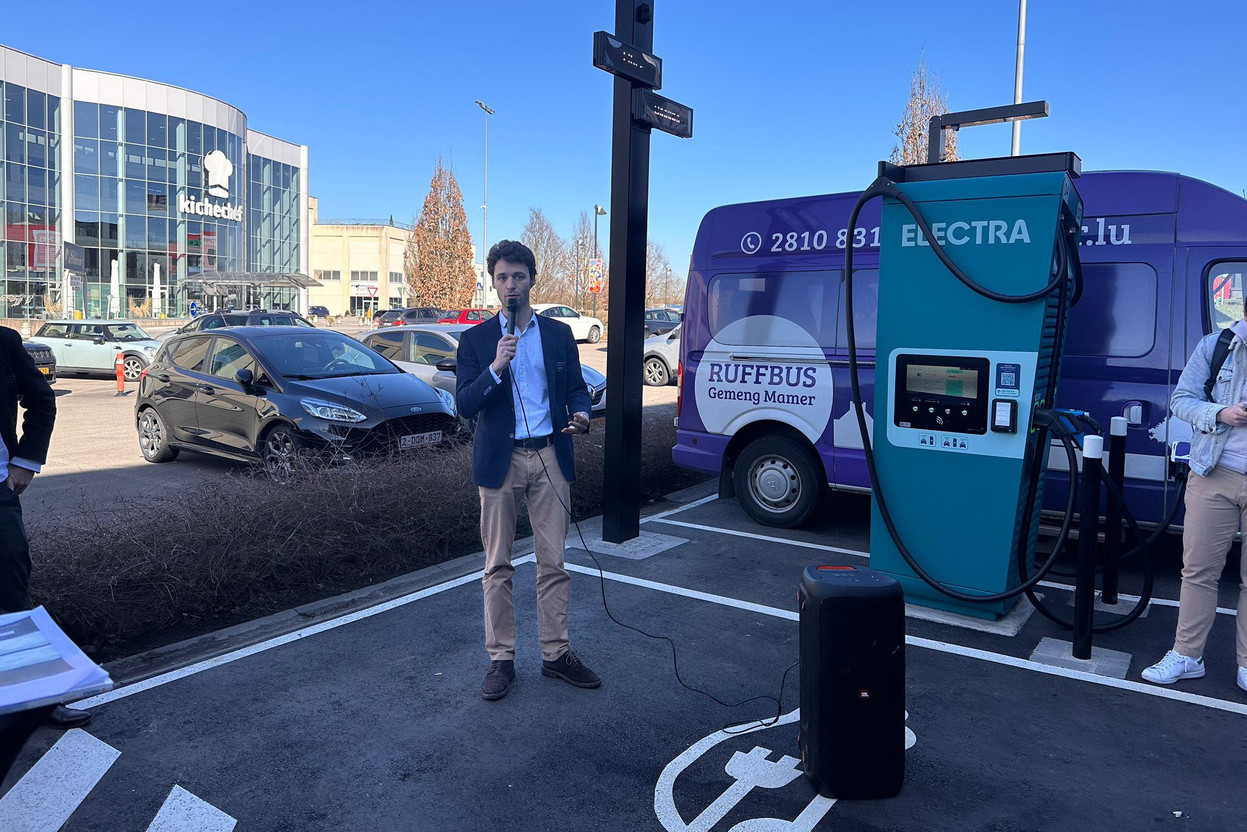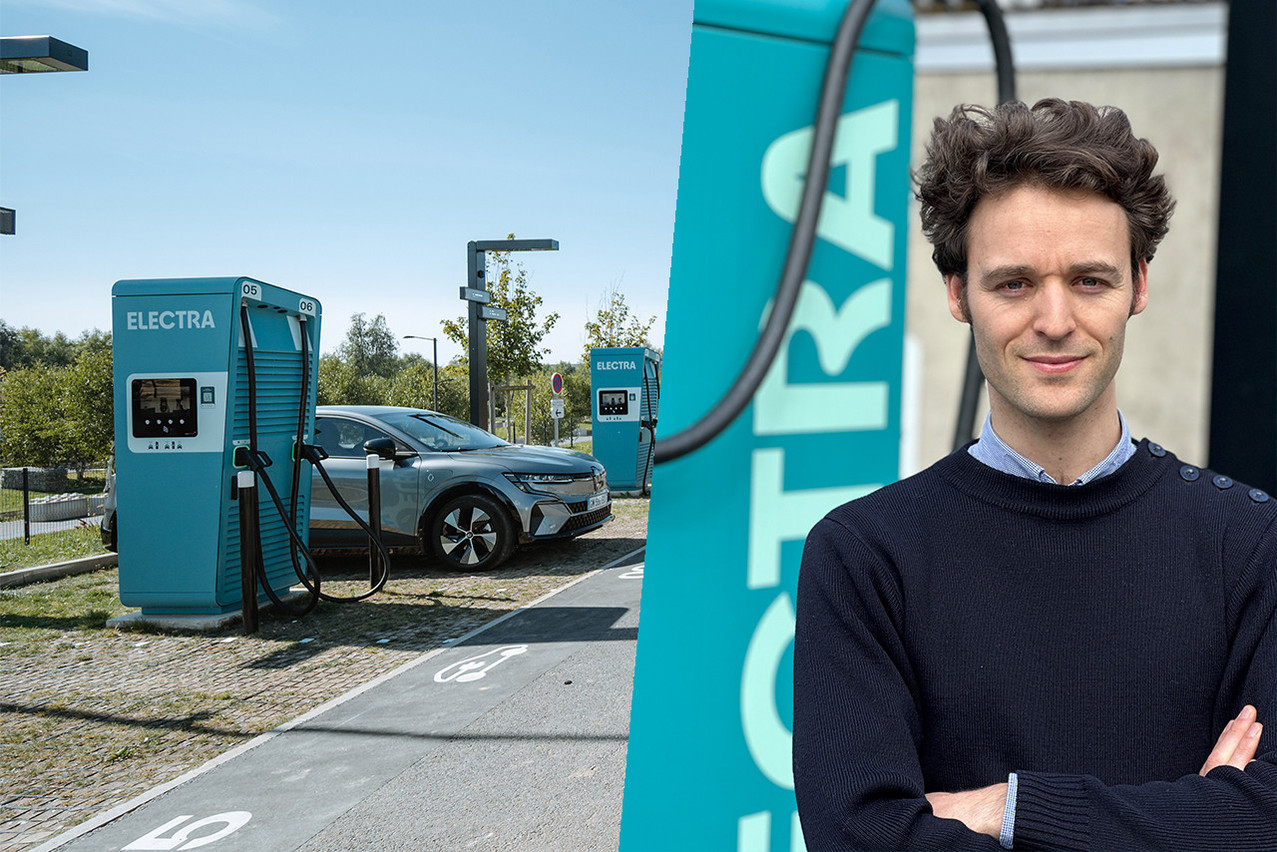
Arrived on the Luxembourg market in 2025, Electra currently operates four fast charging stations totalling 22 charging points. For Electra’s Benelux managing director, Louis-Charles Mosseray, the first 12 months have been satisfactory. “We’ve had a very good year,” he says, pointing out that the first station was built in 2025 and the fourth opened in the last quarter.
According to him, Electra has quickly positioned itself among the main players in the country. “We have positioned ourselves among the top five players in Luxembourg in terms of the number of recharging points,” he says. As soon as it arrived, the group set aside an investment budget of €20m for Luxembourg. At this stage, “with four stations, we’re at around 10% of what we’re going to start developing”, said Mosseray, emphasising that deployment is still in its early stages.
The stated ambition is clear: “To take a leading position. We’re number one in Belgium. We don’t see why we can’t become number one in Luxembourg,” he said, highlighting Electra’s desire to develop “a close relationship with customers” on the Luxembourg market.
A well-equipped market, but still not geared towards fast charging
Although Luxembourg already has a dense network of charging points, Electra’s represenative points ou that very fast charging is still in the minority. The country currently has 11% fast charging points compared with 89% slow charging points. “There are certainly a lot of charging points, but relatively few very fast charging points,” observed Mosseray.
The operator has made it clear it wants to focus on this segment in order to simplify the user experience. “It shouldn’t be a hassle to come and charge. It should be a pleasant, quick, simple and efficient moment,” he explains, believing that “there is still a lot to do in the market”.
We keep our promises, we build the stations, they’re up and running, and today we have a virtuous circle of partners.

According to Mosseray, the development of a fast-charging station is based on three essential elements. “To build a station, you need a connection, a partner prepared to lease the land for around thirty years, and a business case,” he concluded. In Luxembourg, Electra says it is in a position to meet these conditions. In particular, the company is working with network operator Creos. The managing director also pointed out that the size of the country makes it easier to multiply projects.
The third aspect concerns land partnerships. “We’re keeping our promises, we’re building the stations, they’re up and running, and today we have a virtuous circle of partners,” explained Mosseray. He adds that real estate and retail players are now contacting the company directly to develop new projects.
The Luxembourg market is also considered to be particularly attractive for electric mobility. “It’s a treasure trove, a very interesting, very attractive country,” said the firm’s Benelux managing director . According to him, around 30% of cars sold in 2025 will be electric. Another factor plays a decisive role: “Luxembourgers often change cars. They keep a car for about five years, compared with ten years in other countries. The fleet is renewed twice as fast.”
This dynamic has led to 8.7% of 100% electric vehicles in the total fleet and around a quarter when hybrid and 100% electric cars are taken into account.
Expansions planned in Luxembourg and market consolidation in Europe
Several projects have already been announced in Luxembourg. An extension to the Capellen station is in the pipeline. “We’re going to extend the station because we can see that there’s a huge demand,” said Mosseray, adding that “the number of terminals will be doubled” by 2026. A new station is also due to open at the Junglinster shopping centre in the coming weeks.
The very favourable reception from the Luxembourg government […] is a key factor in the success of the development.
Electra has highlighted a favourable environment for the development of its activities. “The Luxembourg government’s very favourable attitude towards recharging operators is a key factor for successful development,” stressed Mosseray. In his view, public support mechanisms have helped to steer investment towards Luxembourg. “Without that, we would still have come, but perhaps not with the same intensity,” he adds.
On a European scale, Electra is currently active in ten countries (including France, Italy and the Benelux countries). The group says it is concentrating primarily on its existing markets, with the aim of achieving a leading position. When asked about its financial results, the company says it does not wish to disclose its sales figures or Luxembourg’s share of the group’s business, although it does state that it is “ahead of the business case” in the most mature markets.