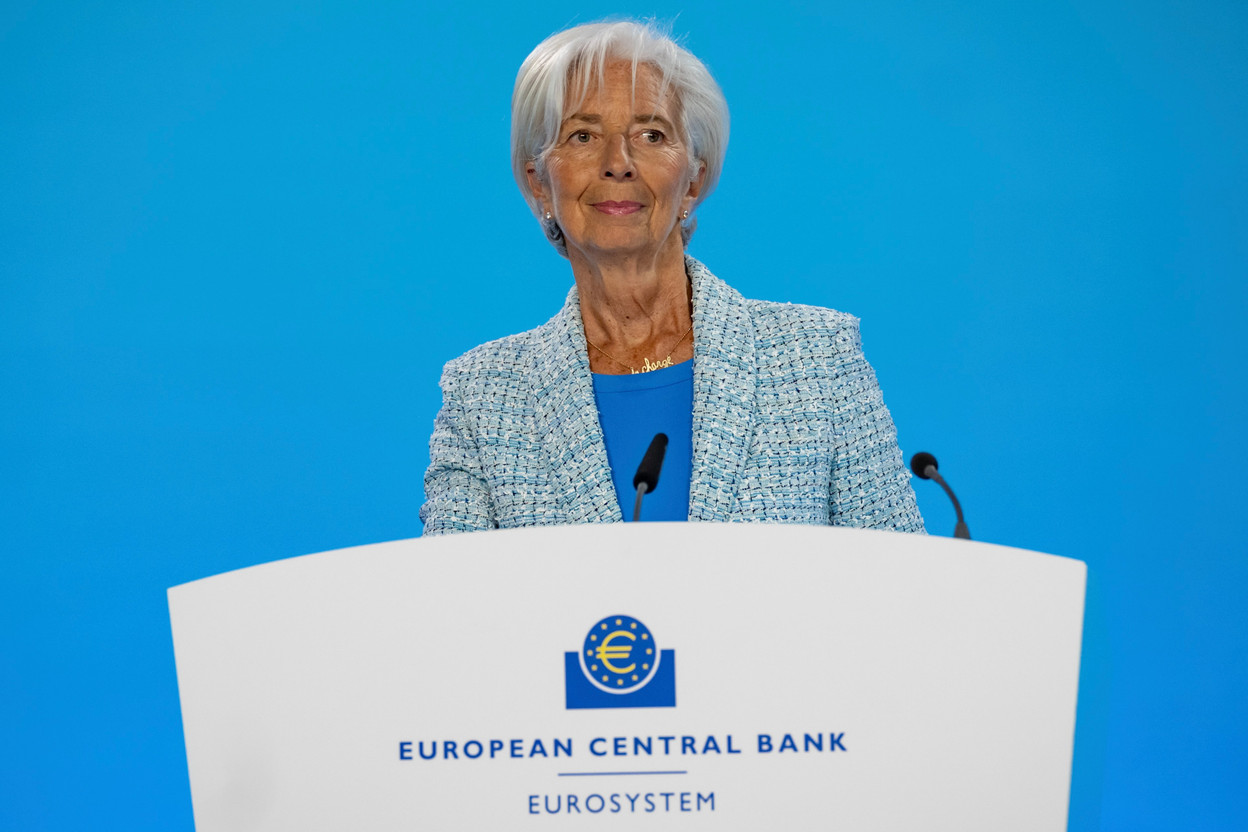
Just before stating, “We are not pre-committing to a particular rate path”--indicating that the European Central Bank will not offer any forward-looking guidance on future monetary policy decisions--ECB president Christine Lagarde on Thursday reasoned, “Our interest rate decisions will be based on our assessment of the inflation outlook in light of the incoming economic and financial data, the dynamics of underlying inflation, and the strength of monetary policy transmission.” Looking closely, the term “transmission” stands out. Here’s why.
Data-dependency
The ECB has repeatedly conveyed to the markets its commitment to a strict “data-dependent approach”--as far as monetary policy decisions are concerned. With this data-dependency in mind, the first two metrics, inflation outlook and underlying inflation as key considerations are justified. However, the third metric, “the strength of policy transmission,” which the central bank defines as “the process through which monetary policy decisions affect the economy in general and the price level in particular,” remains largely qualitative.
Interest rates
The central bank argues that changes in the official interest rates directly influence money-market interest rates and, indirectly, lending and deposit rates, which banks set for their customers. Consequently, expectations of future official interest-rate changes influence medium and long-term interest rates. Longer-term interest rates, in particular, depend partly on market expectations about the future course of short-term rates.
Economic expectations
Monetary policy plays a crucial role in shaping expectations regarding future inflation, thus exerting an influence on price developments. As the ECB’s guiding principle aims ‘to keep prices stable in the euro area,’ a stable outlook fosters an environment where businesses and enterprises are less inclined to raise prices out of concern for inflation or lower them due to fears of deflation. Additionally, the effects of monetary policy actions on financing conditions and market expectations can result in adjustments to asset prices, such as those in the stock market, and impact exchange rates as well.
Consumption and investment
Changes in interest rates affect the saving and investment decisions of households and firms. For instance, higher interest rates make it less attractive to take out loans for financing consumption or investment. Furthermore, consumption and investment are influenced by movements in asset prices through wealth effects and effects on the value of collateral. For example, as equity prices rise, households that own shares may increase their consumption. Conversely, when equity prices fall, households may reduce consumption.
In essence, higher rates tend to reduce consumption and investment by households and firms, respectively. Changes in aggregate demand may translate into tighter or looser conditions in labour and intermediate product markets, thereby affecting price and wage-setting in these markets.
Monetary policy
While wage growth and services inflation remain concerns for the governing council during recent meetings, the strength of monetary policy transmission, along with the inflation outlook and dynamics of underlying inflation, will play a crucial role in determining future banking rates and, consequently, shaping the economic growth and price stability of the euro area. However, only time will show how these factors weigh against each other over time. Given these uncertainties, it wouldn’t be surprising if the ECB leans on the “transmission” phrase in its forthcoming policy decisions.
Nonetheless, it’s intriguing to note that, according to the bank’s own words, “The transmission mechanism is characterised by long, variable and uncertain time lags. Thus it is difficult to predict the precise effect of monetary policy actions on the economy and price level.”