“The financial sector has been going through a profound digital transformation over the past decade, and at [an] accelerated pace at the recent years,” said vice president of the European Investment Bank Kyriacos Kakouris in his speech ahead of a panel on the impact of digitalisation in the financial sector.
Kakouris highlighted the rapid digitalisation of the industry--which was accelerated by the covid-19 pandemic--the need for efficient customer experiences, the increased adoption of digital technologies such as blockchain and artificial intelligence, and the rise of fintech companies driving innovation.
Disruptive digital technologies structuring new business models
For Pascal Bouvier, managing partner at Middlegame Ventures, a fintech venture capital firm, a common strategy among incumbent institutions--mainly banks with traditional banking models--involves customising new technologies to enhance productivity and profitability, while maintaining traditional market approaches.
But “this business model is broken, and it needs to be changed,” said Bouvier, citing the potential for new technology to topple established business models.
Director of innovation at the European Banking Authority Marlin Pikaro noted that “Innovation is something that we all want to have. We don’t want to live in the past. We can’t imagine that economies would develop only based on historical business models.”
Pikaro also provided a regulatory perspective on promoting innovation, ensuring fair competition, and safeguarding the security and inclusivity of financial services in the digital age.
Competition is blending priorities for fintechs and banks
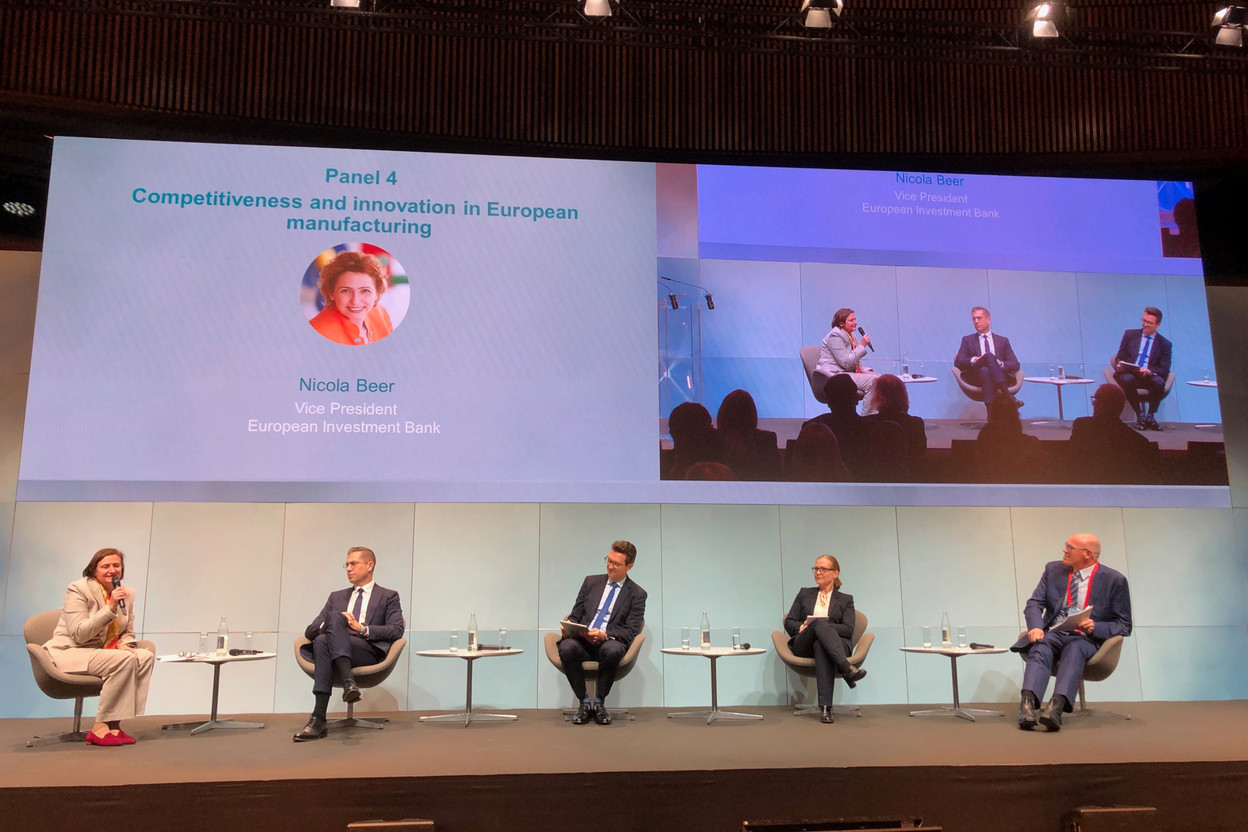
Marjut Falkstedt, chief executive at the European Investment Fund and the panel’s moderator, asked the participants about the dynamics shaping the relation between fintechs and banks in terms of innovation and cost savings.
“There’s a clear group of fintechs that are very much focusing on developing technology [that is] very much ahead, even [ahead] of big techs in many spaces. And in that scenario, definitely, there's a need for collaboration,” replied Mariona Vicens, head of digital transformation and advanced analytics at Caixabank. Vicens identified three key areas of collaboration: first, fintechs offering solutions directly to consumers; second, established banks partnering with fintechs to distribute their products; and third, working with big tech companies like Google and Amazon, which are now also becoming tech providers for banks.
Vicens called for regulations to ensure secure financial transactions, with Pikaro emphasising the need for regulations to ensure fair play, while Bouvier saw regulations as boundaries.
Importance of working together
“We are all together also in the space of innovation,” said the EBA’s Pikaro. “Industry sessions, public hearings, everything that goes along with policy development--that is actually working closely together.” It’s important for all players to share their knowledge, concerns and opportunities so that everyone has a “good understanding [about] the way forward, also from the regulatory perspective.”
And when it comes to social cohesion, the participation of key players in digitalising the financial industry is crucial. Panellists agreed that collaboration among banks, regulators and the authorities is essential to ensure financial and digital literacy to customers. Collaboration is also key to making sure that no segment of society--in particular, the younger generation and seniors--is excluded.
But Bouvier said, “I will hesitate to use the word financial inclusion in our developed countries. Financial access, I think is important. The legislator has to make sure that every socio-economic category has some type of access… a bare minimum access to all types of financial services.”
Surround yourself with the younger generation
At the conclusion of the panel, Falkstedt asked participants about their advice to the audience on how to keep up to date with a fast-changing world.
The advice from Froda CEO, Olle Lundin was: “Working with extremely talented, younger people.”
The regulator, however, didn’t agree with the idea of being able to stay up to date. “Let us not create expectations that we can catch up or be fully informed about everything that is happening around us,” said Pikaro. “And not everything is worth[y] to pursue, or to follow, so pick your games and focus.”
“I always try to stay outside of my comfort zone,” said Bouvier. “A little discomfort at all times [can] apply to anything, what I read, what I discuss. Comfort seems to be like your drive in the middle of the street, but that’s boring.”
“I would say active listening, especially if you have this ecosystem of new entrants or disruptors around you,” said Vicens. “I think this is really powerful.”
Chief executive of the European Banking Federation, Wim Mijs, echoed Lundin’s comment of working with the younger generation. “I absolutely hate complacency, to think that yesterday will stay. If you will defend yourself, either by just buying yourself out of it or asking [the] regulators to defend yourself is a huge problem. So, follow the new trends. Young people are incredibly helpful to listen to.”