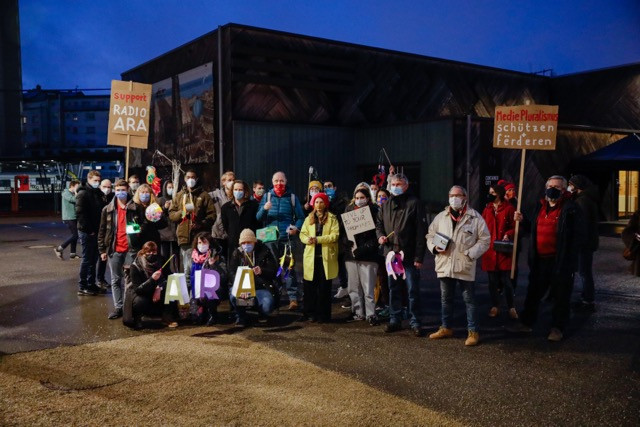
As the parliamentary media and communications committee meets this week to finalise details of the bill on aid for professional journalism, the status of community broadcaster Radio Ara still hangs in the balance. The station’s management feel they have been “continuously brushed aside” during the discussions about the reform of the state aid law--see Mike Koedinger’s commentary for background information.
“For the past three years, Radio Ara has been in discussions with the media ministry in efforts to secure our future; and in the past year we have been in acute financial danger,” the station said in a press statement on Monday. “Only through crowdfunding and other external financial aid has Ara managed to stay afloat.”
While the station says it cannot afford to employ the requisite number of full-time journalists to qualify for the state aid, it feels it should have some sort of financial support from the ministry for its efforts as a community media. Indeed, during the pandemic, when it has been broadcasting news bulletins in several languages in an effort to keep as many communities as possible in the grand duchy up to date on the latest coronavirus situation, Ara received international recognition, for example, from the Community Media Forum Europe.
Breakthrough?
There was some good news for the radio station on Monday. A spontaneous meeting with the media and communications ministry resulted in what it called “a basic compromise that will offer some financial security” for the radio station. Details are yet to be clarified, but the station managers said that their immediate reaction was “relief.”
However, as the EU's 2020 Media Pluralism Monitor (whose 2016 report was also cited by Mike Koedinger) has pointed out, media in Luxembourg, and in particular radio, is concentrated in the hands of a few organisations. In addition, minorities have very limited access to media.
Indeed, the long-term solution, which Ara says would be recognition of community media as a third pillar of the media sector, has still not been addressed. “This remains an exception in Europe,” the station says.