The union said that the number of people to be vaccinated as a priority was “manageable, so that vaccination could be accomplished within a few days.”
The change of tack comes a week after the union made a public statement saying that frontline workers were being left vulnerable. The national vaccination strategy, which had been agreed by an ethics committee, had set the principle that vaccine priority should not be given based on socio-professional backgrounds. Responding to growing pressure last week, the government added that anyone aged 30 to 54 could register as a volunteer for the AstraZeneca waiting list, which was created when it became clear that a certain number of people invited to be vaccinated were refusing this brand over health concerns.
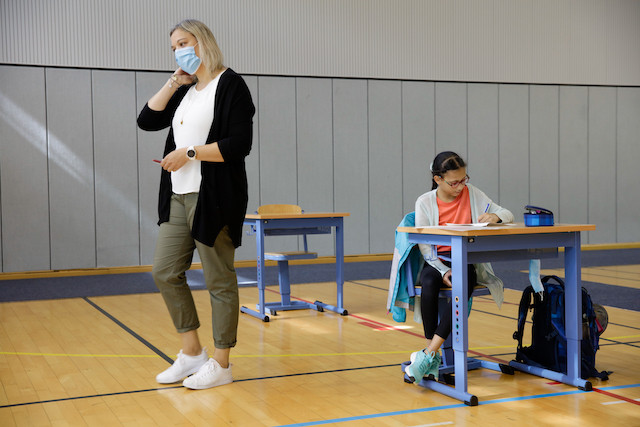
But there is some disconnect between the strategy and action, since the CGFP pointed out emergency fire and rescue staff (CGDIS) had already been vaccinated, “while teachers, police officers, the magistracy, and part of the prison staff, to name just these examples representative of others, have had to be left out? It will probably be months before herd immunity is achieved in this country,” the CGFP said in their statement.
According to Statec, in 2019 there were over 2,200 people employed by the Luxembourg police force and in 2017, over 12,300 teachers employed in public schools. Depending on their age and underlying health conditions, some of these workers will have already been vaccinated under the national vaccination strategy.
The government has yet to comment publicly about the outcome.
Meanwhile, on Tuesday, industry federation Fedil called on the Luxembourg government to fast-track vaccines for people employed in the industrial and logistics sectors who are expected to travel to countries with a high infection risk or which require full vaccination to avoid quarantine.