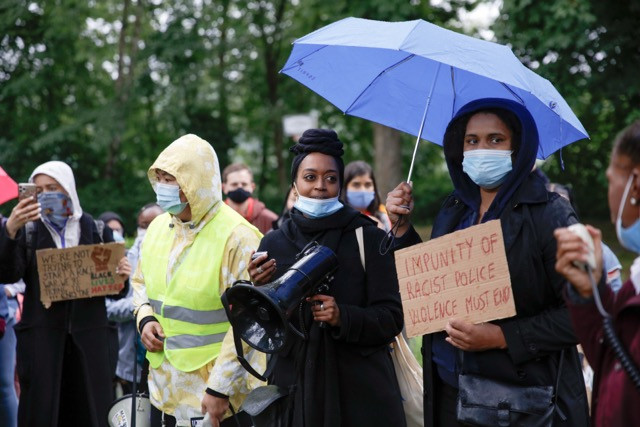
Luxembourg suffers the second-highest incidence of racist harassment in the EU according to the only available survey, produced by the European Union Agency for Fundamental Rights. The grand duchy is a small country with a mixed population of different global backgrounds and ethnicities. On the surface, it appears a harmonious and great place to live in, but the reality is different from the picture-perfect portrayal the government is trying to sell.
In countries like the United Kingdom, a website dedicated to racial and ethnic surveys is available for everyone to see. In Luxembourg, no surveys have been done in relation to racial and ethnic discrimination.
Government statics agency Statec, for instance, releases no statistics about racism and disparity. Fofo Senyo Amétépé, a demography statistician at Statec, explains that “Luxembourg does not allow surveys with questions on ethnic origins”. He said that the Centre d’égalité de traitement (equal treatment centre) conducts surveys on the subject. In fact, a quick look at their work on the matter will show you general numbers about people facing prejudice with no measurements and few actual statistics.
Discriminatory practices are widely covered or ignored, many really do believe that Luxembourg is a synergic equal living habitat for both natives and foreigners.
Activists and women’s rights groups are usually led by the privileged category. All society fragments should fight for equal rights, but why not let those affected have the platform, opportunity and voice to tackle the injustice that endures?
Women face a number of obstacles in a marketplace dominated by men. High ranking positions are usually kept for middle-aged white cis-men. Women have a small representation in some roles that can be referred to as “good positions”, but if you look further they are mostly cis-white women that happen to be Luxembourg nationals.
Sandrine Gashonga, president of the Lëtz Rise Up feminist and anti-racist organisation, says that real statistics should be produced according to gender and race. “Politicians and majority of residents don’t believe there is racism,” Gashonga said. Racism is more than racial slurs she explained, the issue is systemic racism.
Gashonga said that she pitched a project to the ministry of equality between men and women in relation to racism and discriminatory practices against women of colour, but it was rejected. According to Gashonga, the ministry explained that fighting racism was not part of its mission. “They don’t have an intersectional view of gender equality,” is the only explanation Gashonga has on why she didn’t have any positive feedback from the ministry. From her experience she felt lobbying is not reaping any positive results or having any impact on government performance--it is ineffective and tiring.
“Usually we are asked to work with isolated cases when the issue is more than a number of cases. Racism is systematic,” Gashonga explained. She said that real statistics should be produced with exact numbers so that authorities can focus on certain categories and fix the problem.
But the public sector is mostly equipped by native Luxembourgers with no regard to competence and qualification. Gashonga recalls discussions with activists from the JIF (Journée Internationale des Femmes) women rights groups collaborative platform. She said that Luxembourg activists in JIF reject the notion of ineptitude among public sector staff. “If you tell them about the problem of incompetence in the public sector, they will tell you that it is not true,” Gashonga said.
The ministry has said it is developing tools and launching initiatives to prevent gender-based violence, but there was no mention of projects focused on racism or ethnic discrimination.
Producing surveys according to sex, race and ethnicity will clearly showcase the employment preference and the overall disparity in the grand duchy. This is a much-needed action to achieve social and economic equality.
Haifa Mohammed is a broadcast presenter and producer who is currently doing a master’s in journalism at Roehampton University in the UK