A marina cannot be built in the same way as a hotel room. Coastline is limited, planning permission takes a long time to obtain, and there is frequent local opposition. This physical scarcity is gradually transforming premium marinas into infrastructure assets, capable of raising their rates without supply being able to adjust quickly. It is this strategy that InfraVia Capital Partners intends to capitalise on with the acquisition of D-Marin from CVC Capital Partners.
The deal, announced on 6 July, would value the group at just over €1bn, according to the Financial Times. Other industry estimates put the transaction in a range of up to €1.5bn. Based on an estimated EBITDA of around €70m in 2025, the price would represent at least 14 times this figure and could be significantly higher depending on the final valuation.
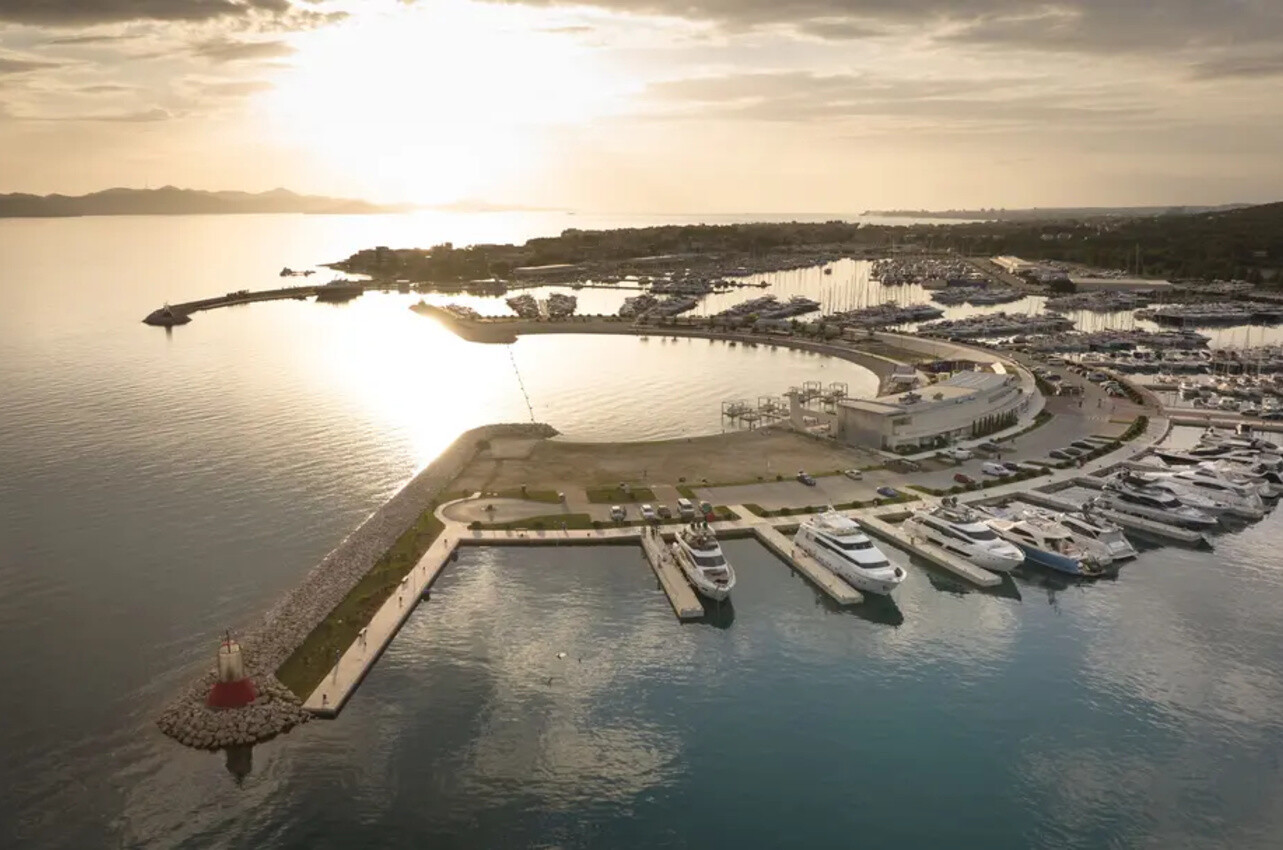
This valuation places D-Marin closer to a service infrastructure with physical barriers to entry than to a traditional tourism operator. The group operates 28 marinas in nine countries, with over 14,300 berths, including more than a thousand for superyachts. It welcomes over 50,000 customers a year and has 12 shipyards capable of servicing some 2,500 yachts.
Revenue up by 23.4%
The consolidated accounts filed in Luxembourg by Venilia Holdings, the group’s parent company, provide an indication of the growth in business. Turnover rose from €122.5m in 2024 to €151.1m in 2025, representing an increase of 23.4%.
Revenue from mooring alone totalled 101.1 million euros, accounting for nearly 67% of turnover. The remainder came mainly from the supply of electricity and water (€12.9m), commercial rents (€12.2 m), technical services (€7.3m), as well as dry-docking, yacht club, fuel and mooring activities.
This breakdown gives the model a largely recurring basis. Boat owners do not simply pay for a berth, but for a range of services essential to the operation, maintenance and safety of their boat. In the most sought-after locations, the cost of moving to another marina is exacerbated by the scarcity of available berths.
Growth in 2025 is largely driven by expansion in the western Mediterranean. Turnover in Italy, France and Spain reached €36.6m, compared with €15.6m for Italy and France combined in 2024, with Spain not yet contributing to the figures in that year.
Turkey remains the group’s largest market with revenue of €41.5m, ahead of Greece, at €39.9m, and Croatia, at €30.4m. Italy accounts for €18.9m, France €15.7m, Malta €2.7m and Spain €2m. The platform thus combines its long-standing markets in the eastern Mediterranean with more recent operations in the western part of the basin.
However, the increase in revenue did not translate into a corresponding rise in profits. Operating profit fell from €25.9m to €23.2m. The operating margin thus fell from 21.1% to 15.3%. Depreciation and amortisation recognised in the cost of sales rose from €23.1m to €31.3m, in line with the expansion of the scope of consolidation.
The group recorded a net loss of €7.7m in 2025, compared with a profit of €5.8m a year earlier. Financial expenses amounted to €26.3m and tax expenses to €19.5m. These figures reflect a rapidly growing business, but also one that is more capital-intensive and more costly to finance.
The Financial Times reports that D-Marin’s turnover has tripled under CVC. However, this trend cannot be directly inferred from the available Luxembourg accounts alone. Consolidated turnover for 2020 stood at €31.2m, but this financial year did not cover a full year of operations: the Greek and Croatian companies were only consolidated from 9 April, and the Turkish companies from 1 October. A comparison between 2020 and 2025 would therefore overestimate the group’s actual organic growth.
CVC had taken control of the platform in 2020 as part of a deal with the Doğuş Group, for a sum of around €200m, according to the British daily. The fund subsequently expanded the network beyond Turkey, Croatia, Greece and the United Arab Emirates, notably into Italy, France, Spain, Malta and Albania.
210,000 yachts… for 160,000 moorings worldwide
InfraVia’s appeal also lies in the depth of the market. In a study published in November 2025, McKinsey valued the global marina industry at around $15bn and forecast average annual growth of 8% until 2030. The consultancy reports that there are 210,000 yachts but only 160,000 available berths worldwide.
The gap is difficult to bridge. Around 6,500 new yachts are reportedly delivered each year, whilst a marina can generally only add around 300 berths over a period of five to ten years. There are around 6,000 coastal marinas worldwide, 65% of which are located in the United States, whilst 70% of global yachting activity is concentrated in the Mediterranean. In some ports, waiting lists exceed twelve months.
The scarcity of berths is only part of the argument. The largest platforms can pool their booking systems, procurement, marketing and digital investments. They can also market membership schemes or itineraries enabling boat owners to move between several marinas within the same network.
At the same time, D-Marin is seeking to capitalise on its expertise beyond the scope of its directly operated sites. The group has therefore been selected as a consultant for the Bayn marina, the coastal development being carried out by Ora Developers in Ghantoot, between Abu Dhabi and Dubai. The development covers 4.8 million square metres and will include a marina with 204 berths. The remit entrusted to D-Marin covers market analysis, feasibility studies, commercial positioning and the technical recommendations required for the marina’s design. This is a consultancy contract, not the announced acquisition or operation of a new marina. The project therefore does not, at this stage, extend the network beyond the 28 sites announced by the group. It does, however, demonstrate that D-Marin can monetise its expertise without directly tying up the same level of capital.
InfraVia is well acquainted with this type of asset, which combines regulated property, essential facilities and recurring services. Its sixth infrastructure fund, InfraVia European Fund VI, was fully subscribed to its €8bn cap in March 2026. The investment in D-Marin follows several previously announced investments, including OpCore, Louis Dreyfus Armateurs and Prosolia Energy.
“D-Marin operates in a resilient, growing and attractive market, underpinned by the scarcity of marina berths and a growing demand for high-quality nautical infrastructure and services,” says Athanasios Zoulovits, a partner at InfraVia. He also describes the company as “a compelling infrastructure opportunity in a sector where scale, the quality of sites and the customer experience are key differentiating factors”.
D-Marin’s management team, led by Oliver Dörschuck, is to remain in place alongside the new shareholder. This continuity is important for InfraVia: the group’s value is based not only on its concessions and sites, but also on its ability to integrate new marinas under a single brand and to standardise their level of service.
The Luxembourg-based structure for the acquisition was finalised over the summer. Meltemi TopCo, Meltemi HoldCo and Meltemi BidCo were incorporated on 21 July 2026 in Leudelange, before being registered in turn between 31 July and 6 August. The chain of companies traces back to InfraVia VI Invest, the Luxembourg vehicle for InfraVia’s sixth fund. The acquisition was notified on 20 July to the Greek Competition Authority, which published the announcement on 29 July. The case concerns the acquisition of sole control of Venilia Investments, which indirectly owns D-Marin.
The sector has already attracted several international investors. In 2025, Blackstone completed the acquisition of Safe Harbor Marinas, which operates 138 sites in the United States and Puerto Rico, for $5.65bn. In April 2026, Stonepeak, for its part, recapitalised Southern Marinas. These transactions confirm the emergence of marina networks as a distinct infrastructure category in their own right.