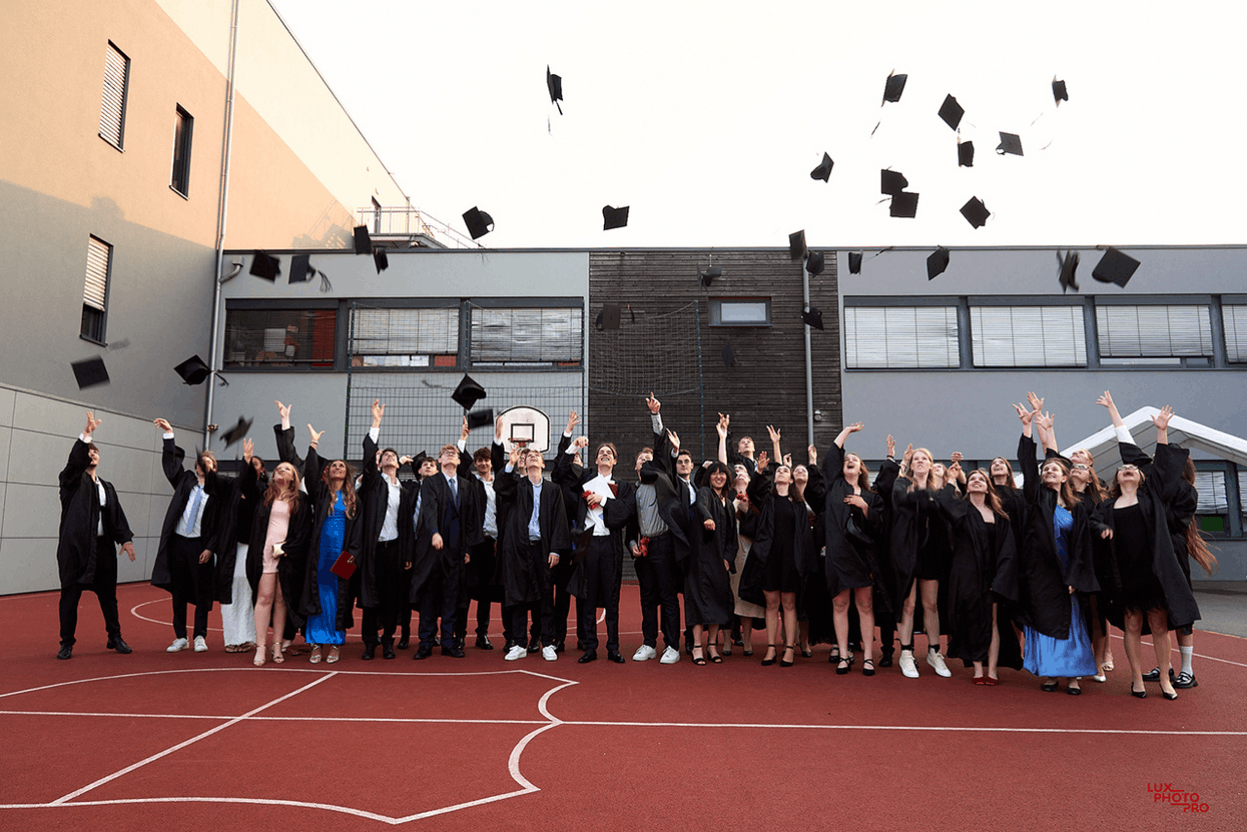
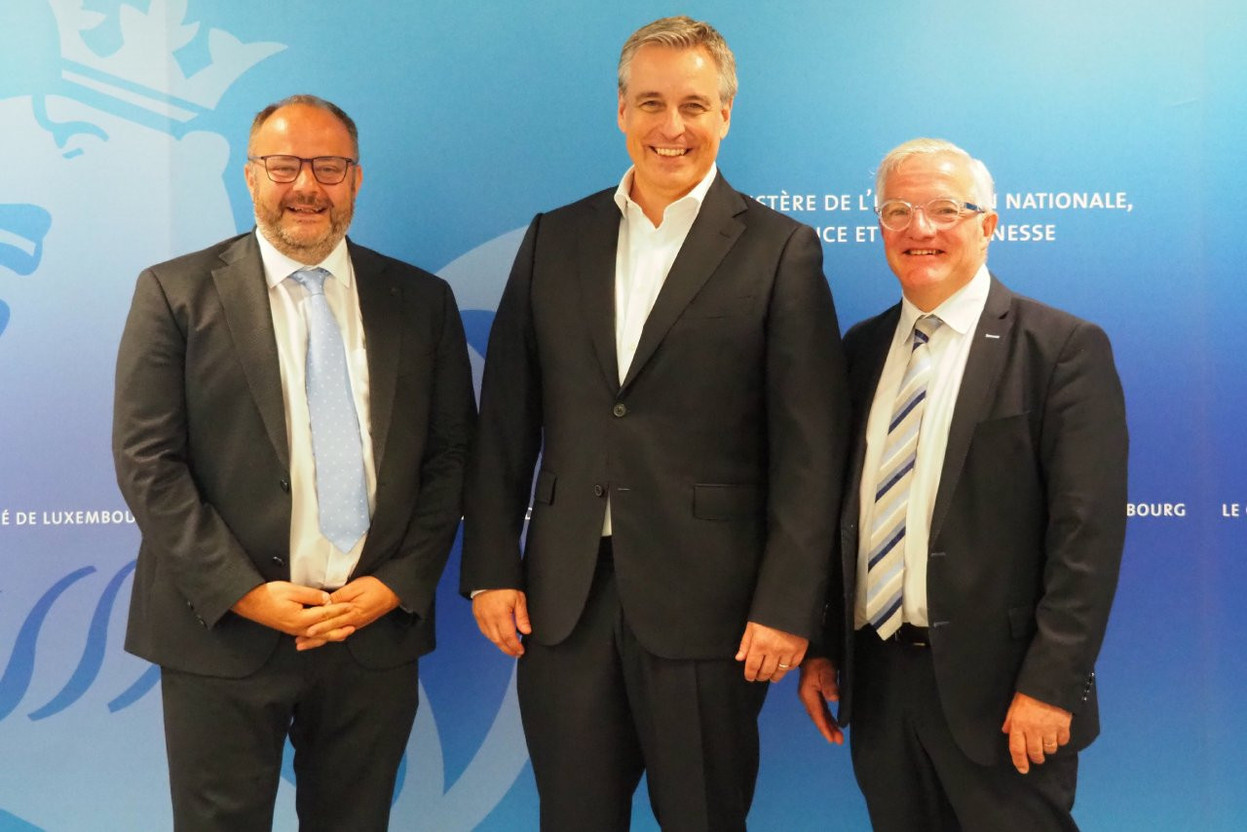
There are 118,045 pupils will be returning to school this Monday, 15 September, including primary, secondary, public and private schools. And as he does every year, education minister 
Among the main topics discussed was artificial intelligence. “After regulating the use of smartphones, we are launching a national strategy for the use [of AI] in schools. I do have some questions. What will happen when pupils no longer have to write their own essays, texts, translations or summaries? When they no longer have to learn to think and form their own opinions? As far as I’m concerned, there's a real risk of intellectual and cognitive impoverishment of the future generation,” said Meisch.
“The rapid development of AI raises major challenges: ensuring that it does not replace human intelligence, but remains a tool at the service of humans, and protecting children and young people from the risks of unsupervised use.” The ministry’s strategic framework will propose a progressive approach at three levels, adapted to the age and maturity of pupils: basic education, lower secondary school classes and upper secondary school classes.
French literacy to come
Already announced in a pilot phase three years ago, then generalised last year, French-language literacy--also known as the Alpha Zesumme wuessen project--was once again a focus of Meisch’s press conference. “It won’t necessarily be easy, but there are so many expectations and we’ve found a model that works and we’ve proved it with the pilot schools that have been experimenting with it since the start of the 2022 school year. French-language literacy will be rolled out across the board over a six-year period.”
After the four communes of Differdange, Dudelange, Schifflange and Larochette, all the country’s basic schools will therefore be offering pupils French-language literacy in cycle 2.1, i.e. the first year of primary school, for children aged six. “In the third term of the 2026-27 school year, parents of a child in cycle 1.2 will be able to choose the language of literacy for the first time. We will reach cycle 4.2, i.e. the end of basic schooling in 2032,” Meisch added.
“We will therefore take advantage of the year ahead to develop school materials and also train teachers in the various areas so that the whole school is ready for the roll-out of the Alpha project. We want to give parents the choice of the literacy language in which their child learns to read, write and do arithmetic. But we want the children to remain in a single class. This means that they will be grouped together with children from another class for language learning, writing, reading and maths. In all other subjects, however, they will remain in their own class and be taught by their German-speaking colleagues.”
In this case, for science, sport, art, music, etc., the children will be taught in Luxembourgish. “These will be taught in Luxembourgish, which is not officially the case today, so that Luxembourgish remains the medium of communication. In-service teacher training will be one of the priorities for this school year. Six training courses have already been organised, and three more will be offered by Ifen in 2025-26. To this will be added 225 training courses as part of the Alpha project.”
This article was originally published in French.