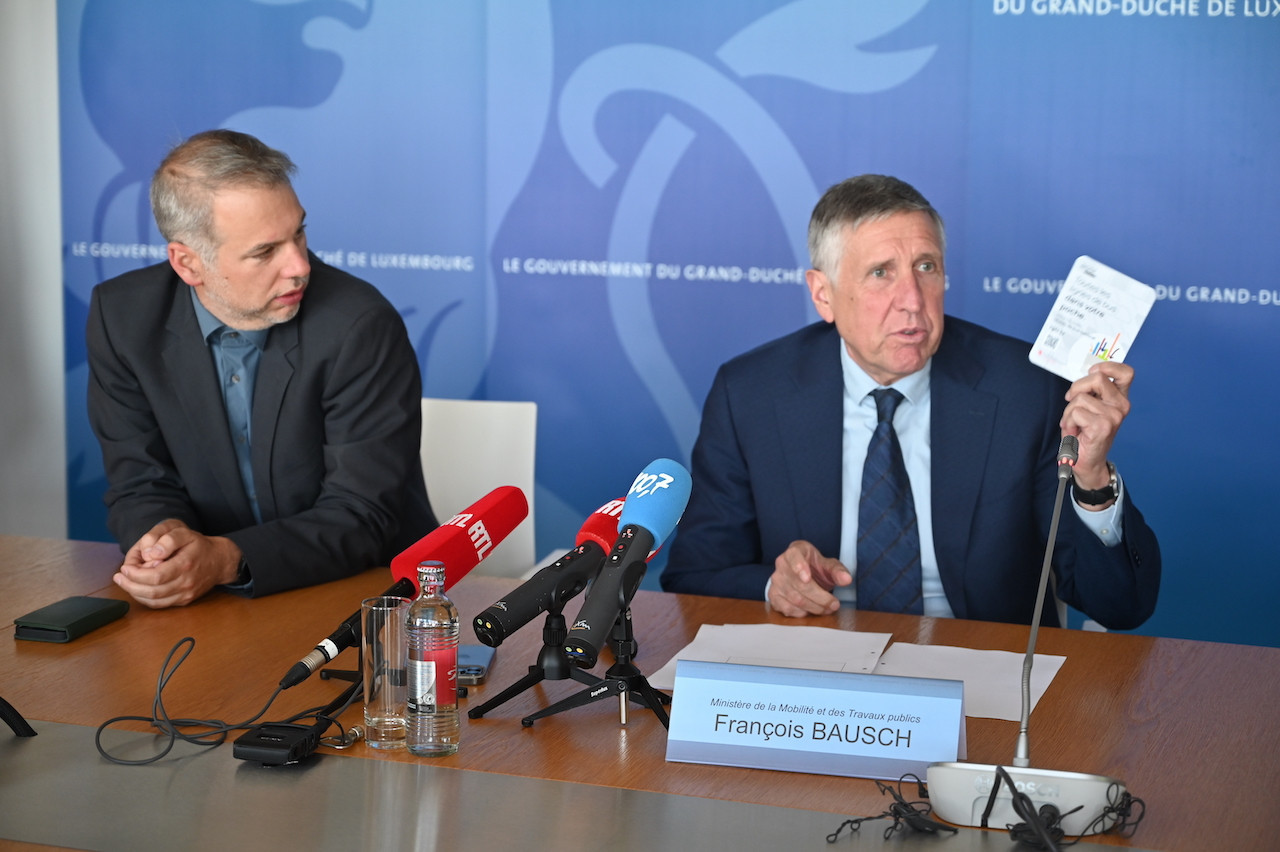

“The bus is really a key element of multimodality, and 99.92% of residents in the grand duchy have at least one public transport stop in their locality. So we hope that they will be able to discover or rediscover their routes,” Bausch said at a press conference on Thursday at which he unveiled details of a campaign aimed at improving familiarity with access to the regional bus network.
The change of the numbering of bus routes does follow some sort of geographical logic. The first number of the three-digits on each bus now indicates the main axis that the route serves:
1XX is for the north
2XX serves the northeast (Echternach)
3XX is for the east around Wasserbillig
4XX serves the south-east and Remich
5XX for the south towards Thionville
6XX is for the south Esch-sur-Alzette
7XX heads towards Pétange and the south-west
8XX is for the west and Steinfort
9XX heads to the north-west and the area around Redange
€140,000 cross-media campaign
In addition to the new numbers, several new routes were also launched into service last July and frequencies were increased at peak times on some routes. But that only seems to have added to the confusion, according to some passengers, even though the ministry says that the aim of the reorganisation was to make the RGTR network more attractive and to provide commuters with a viable alternative to the private car.
So, the ministry is pumping some €140,000 into a cross-media advertising campaign to give passengers and potential network users a clearer idea of what bus services are available. Maps of the network have been printed and the campaign will be broadcast on TV and radio and published in print and digital media, as well as on social networks and digital screens on trams and buses.
Meanwhile, the ministry is conducting a survey of how frequently each route is being used as it starts to install an automatic counting system on all buses. “We will then have a complete monitoring to know which stops and lines are working well, and which are not,” says Bausch. Once they get a fuller picture of what is really happening on the ground “we can adjust or increase the cadence of the routes,” the minister said.
The new map can be ordered via the RGTR website and bus routes can also be viewed in real time on the mobiliteit.lu website and app.