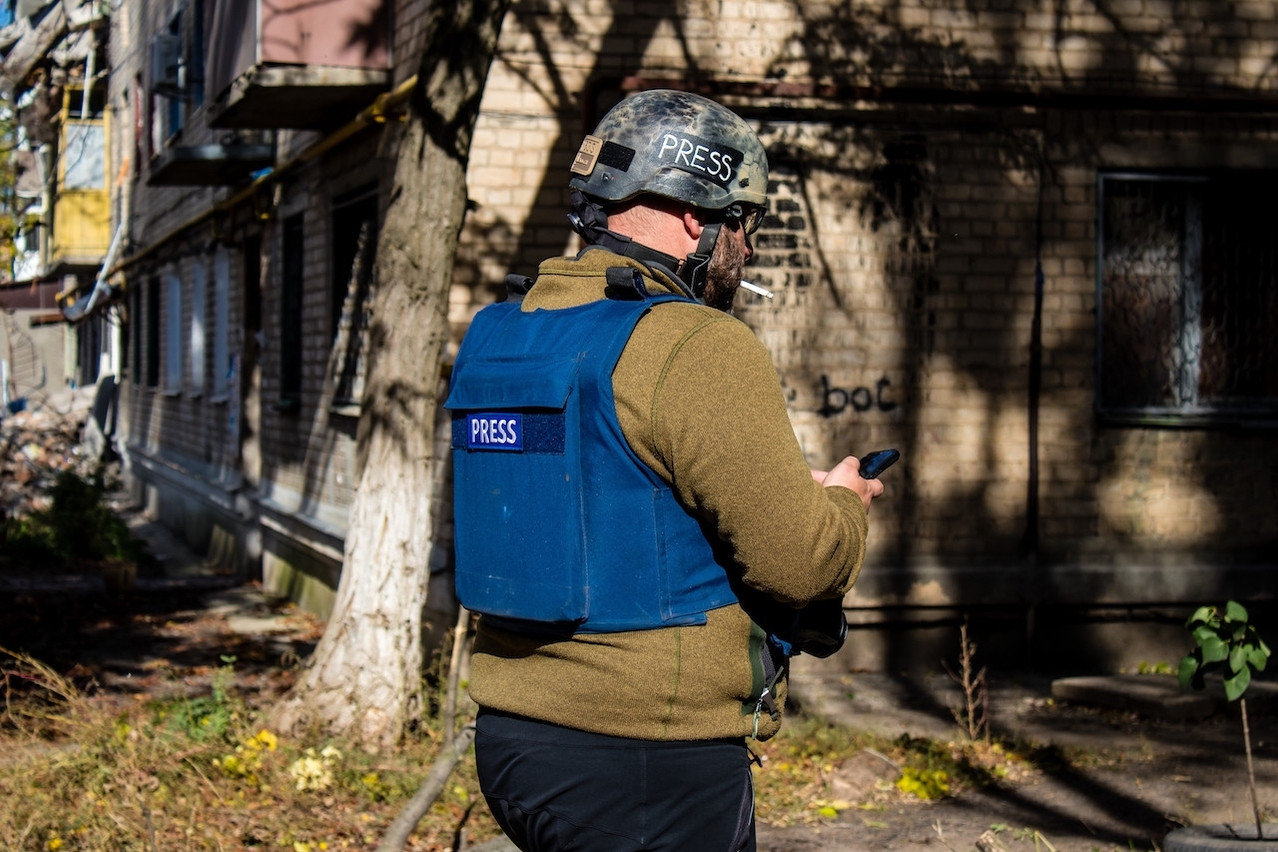
Luxembourg’s ambassador to Unesco, Nadia Ernzer, will be at a high-level conference in Vienna on 3 and 4 November to present the grand duchy’s support for the safety of journalists and media professionals. Titled Safety of Journalists: Protecting media to protect democracy, the conference is being organised in cooperation with the Office of the UN High Commissioner for Human Rights (OHCHR) and will see foreign ministers, key stakeholders from international organisations, civil society and academia convene at the Palais Niederösterreich.
The aim of the conference is to enhance the implementation of the UN Plan of Action on the Safety of Journalists, first launched in 2013, which aims to prevent attacks, protect journalists at risk and hold accountable those responsible for attacks on journalists. Participants will also be looking to increase political commitment and resources towards improving the safety of journalists.
Indeed, between 2006 and 2020, over 1,200 journalists have been killed around the world, with close to 9 out of 10 cases of these killings remaining judicially unresolved, according to the UNESCO observatory of killed journalists. 2 November was actually chosen as the date for the UN resolution as it was marked as the day that French radio journalists Ghislaine Dupont and Claude Verlon were kidnapped and executed by an armed group in Mali.
A free press is an essential basis for democracy and beyond for peace and global development, Unesco quite rightly argues.
Political bias
On the other hand, the media also has a responsibility to report accurately and fairly, without succumbing to sensationalist headlines to attract more clicks. As demonstrated by the Santa Monica Observer story on the attack on Nancy Pelosi’s husband, which freshly appointed Twitter boss Elon Musk was overly eager to retweet (and later delete) with his own observation, fake news and unwarranted speculation continues to be a blight.
Of course, newspapers have always had a certain political leaning in their reporting. Readers of The Guardian know they will probably get a distinct left-wing bias in the stories that the newspaper choses to cover, just as subscribers who view articles behind The Daily Telegraph paywall know that the paper is usually very conservative. But when the likes of the Daily Mail, whose readership far outstrips both the Guardian and Telegraph, publishes opinions from a satirical fake Tory MP on Twitter as though they were authentic, then it is no wonder that Wikipedia says that the paper has “been criticised for its unreliability, its printing of sensationalist and inaccurate scare stories of science and medical research…”. Indeed, in February 2017, editors on the English Wikipedia banned the use of the Daily Mail as a reliable source.
Society as a whole must remain vigilant against all types of pressures, including economic ones, that can be applied to media professionals
But that does not detract from the fact that the media has been used as a scapegoat for all sorts of ills by those whose worldview is upset by decent reporters – be it Donald Trump, who had it in for news organisations after they pointed out the relative paucity of the crowds at his inauguration, the Tory party in the UK labelling some media as part of its imaginary “anti-growth coalition”, or German covid deniers shouting “Lügenpresse” (“lying press”) at journalists covering their marches.
Added pressures
But pressure on the media does not just come from conspiracy theorists. Traditional media is struggling to deal with the competition from social media for attention, especially among the young who like their news in short, sharp messages.
Read also
And competing for advertising has also led to pressure being applied by corporates and institutions, even in Luxembourg.
“Even if journalists working in the grand duchy are not directly exposed to the risks of a battlefront in our country, society as a whole must remain vigilant against all types of pressures, including economic ones, that can be applied to media professionals,” reads the statement from the National Commission for Unesco, released in association with the national Press Council.
So, as we remember the likes of Ghislaine Dupont and Claude Verlon and the other 1,200 or so journalists killed for just doing their job, we must remain vigilant and do all we can to protect media professionals, the vast majority of whom took up a career because they thought they could make a difference.