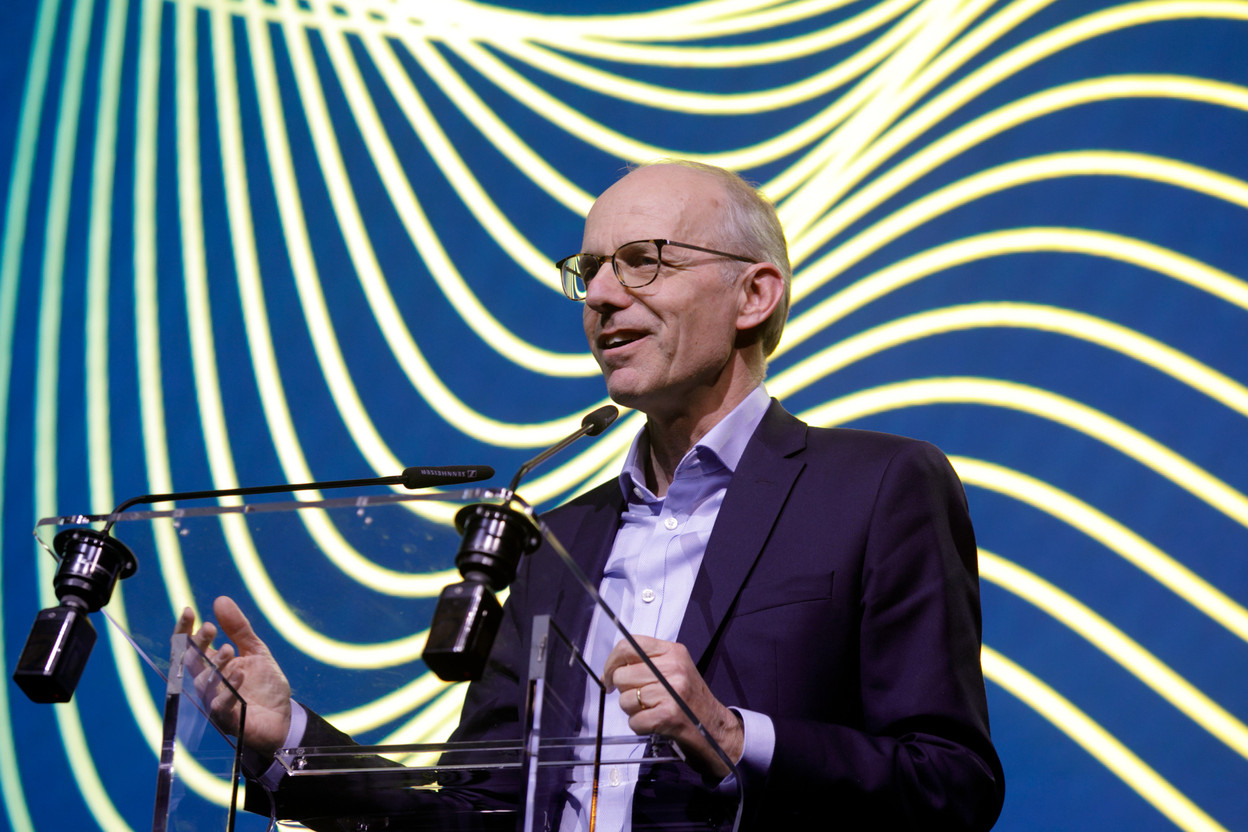
“I’m pleased to hear the minister say that competitiveness is at the forefront of the new government,” said PWC managing partner 
This--competitiveness--was the theme of the day, following the news that Luxembourg fell to 20th place in the 2023 “World Competitiveness Yearbook,” its lowest ranking in 10 years.
“Competitiveness is at the heart of my political action,” said economy minister 

Michele Cincera, economics professor of at the Solvay Brussels School of Economics and Management-ULB, also wants more government money put towards new products and services for business to sell. “There is a lack of business investment in R&D in Luxembourg. If the government increased its funding in this area, the country would be able to innovate in terms of better quality, high value-added services, thereby stimulating demand and economic performance. R&D is essential for developing new products and services, giving a competitive edge.”
Read also
Productivity, “something that helps everyone”
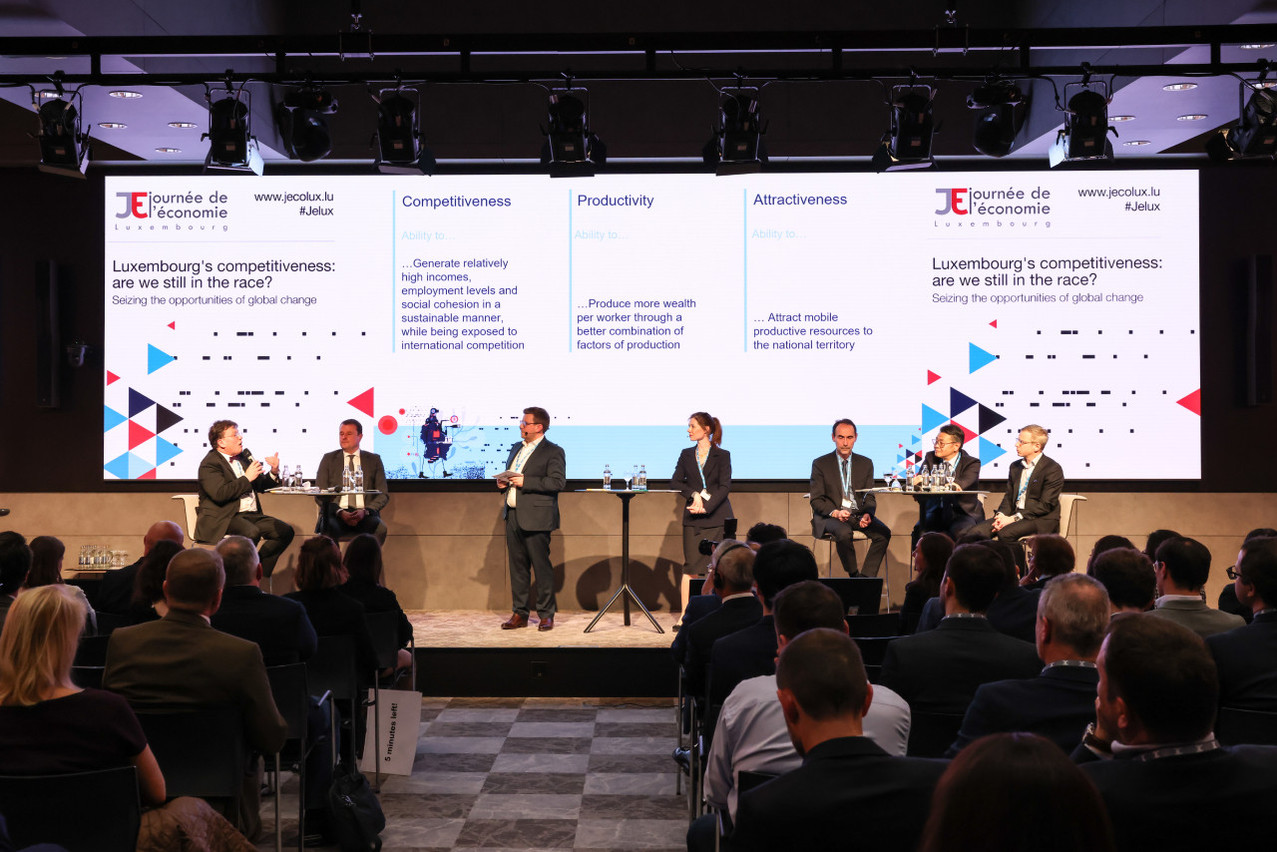
At the first round table, speakers discussed the prospects for the country in the face of increased competition and unfavourable market conditions. 
Cargolux CEO 
Forson also had a word about the cross-border workers and their role in the Luxembourg economy (they make up 47% of the workforce): “They are paid in Luxembourg money. What we give them, it goes back to their country, where they spend it.”
The CEO of HSBC, 
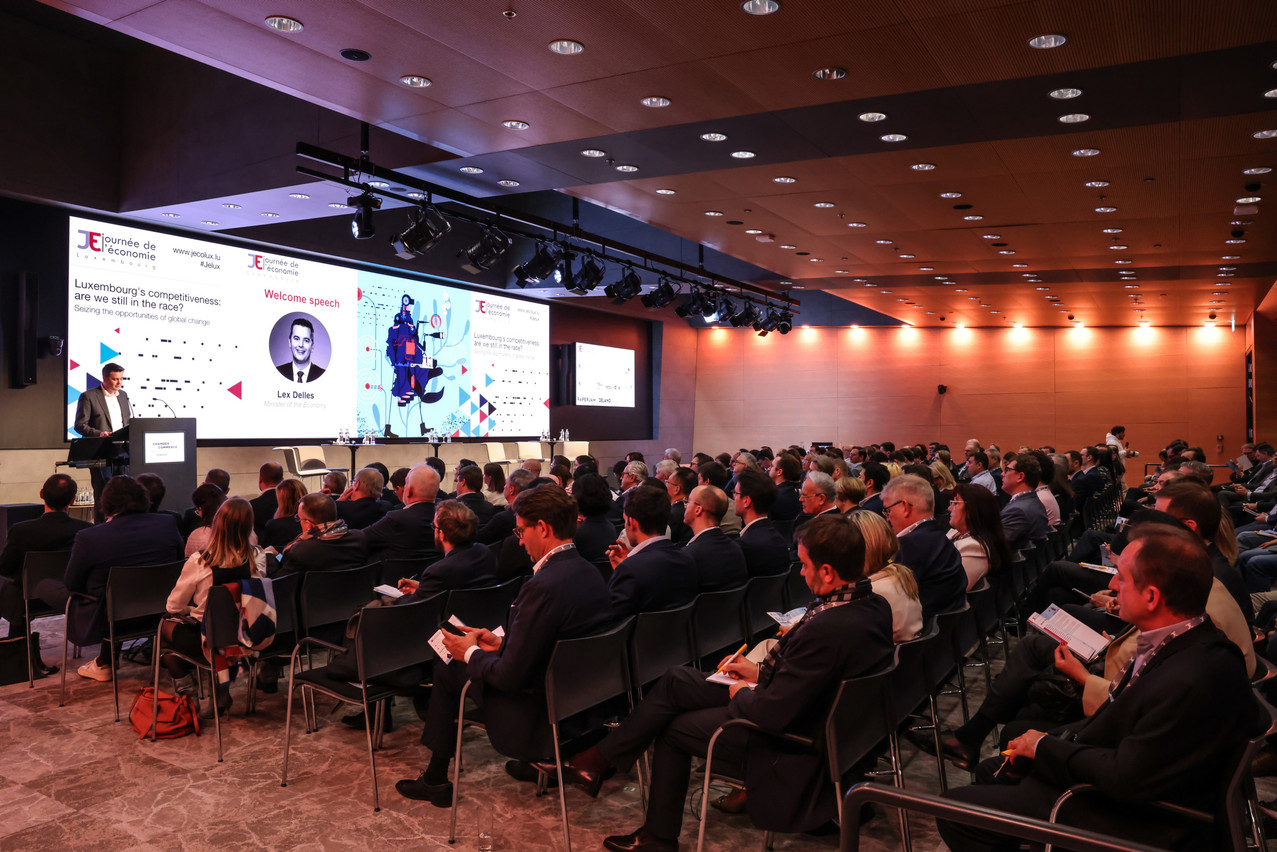
Around 200 people attended the Journée de l’Économie 2024. Photo: Marie Russillo/Maison Moderne
“It took us a year and a half to get support”
At the second round table, innovation and the technological future were discussed in--again--the context of maintaining Luxembourg’s competitiveness.
Christophe Timmermans, CEO of Solarcleano, gave an account of his company’s experience of financial support in Luxembourg. He emphasised the importance of state support for innovative startups, particularly in the high-tech sector, and spoke of how Solarcleano has benefited from funding assistance through mechanisms such as those offered by the Société nationale de crédit et d’investissement (SNCI), via which his company has overcome financial obstacles and sustained its rapid growth. “In France, a similar startup would not have access to the same financial advantages granted by the state,” he said.
The founder and CEO of Digital Minds, Emilie Allaert, addressed the challenges of financing and regulating innovation, particularly in the financial sector, outlining the need for investment and the impact of high labour costs in holding back investment in new technologies. She highlighted the slowness and complications of R&D support: “It took us a year and a half to get support… it’s complicated when you’re just starting out.”
The discussion also explored how policy needs to adapt to support innovation. Participants highlighted the need for more flexible regulation and faster, more accessible financial support for innovative companies. “It’s hard to find a bank,” said Allaert, “because as soon as they see ‘technology’ in the statutes, it’s a problem.”
Timmermans criticised Europe’s regulatory framework: “Regulation is holding us back. It takes so long… entry to market is an obstacle course.”
This article was originally published in Paperjam. It has been translated and edited for Delano.