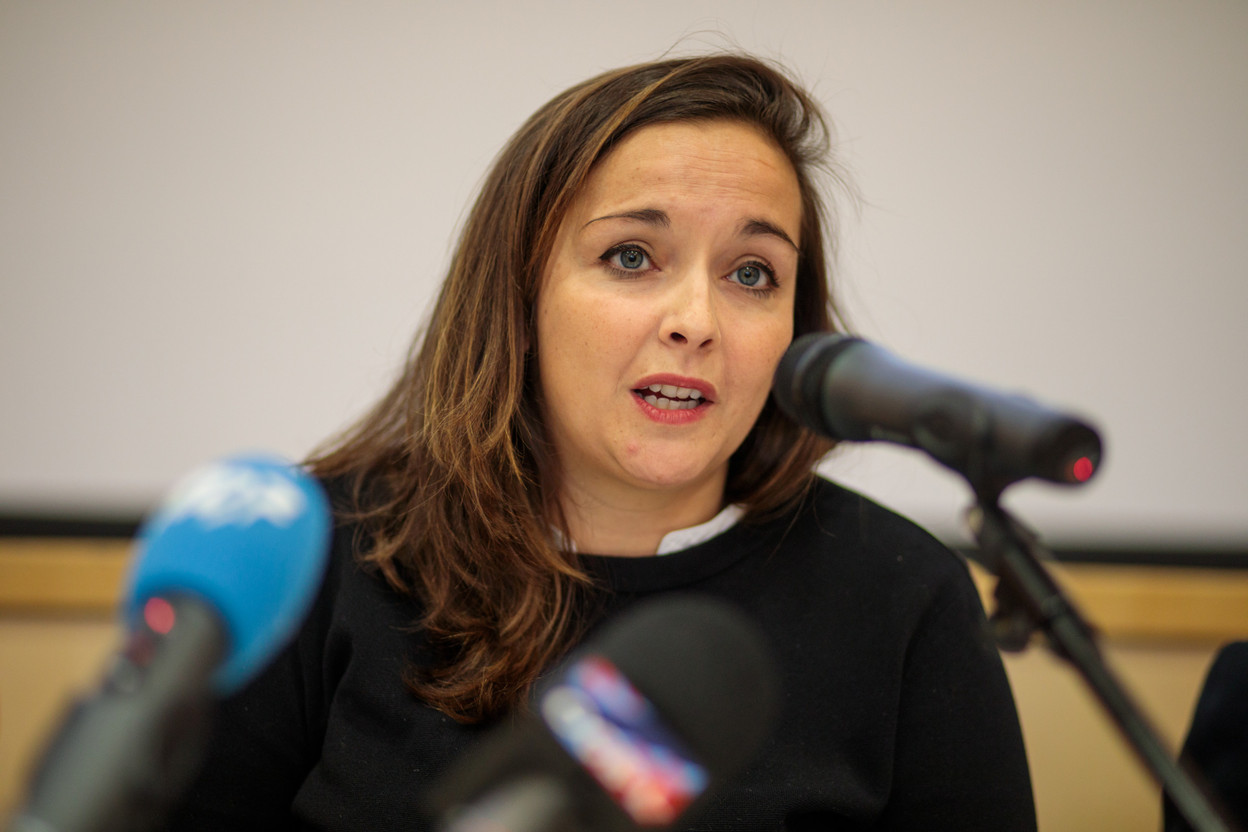
“Detrimental” was the word that Fedil president 
At the same event, attendees were shown figures from a report published three months earlier by the Social Security General Inspectorate (IGSS). Namely, the report recorded a 0.8% rise in the absenteeism rate over the course of 2022, from 4.4% to 5.2%. This represents a historically high level: ten years ago it was 3.7%.
In the same report, the cost of absenteeism is put, for the first time, at over €1bn (€1.034bn, to be precise). In 2020, it was €900.8m. Between those years--2020 and 2022--the cost to the National Health Fund (CNS) has fallen, noted the IGSS, while employer contributions have increased. In Luxembourg, employers are obliged to cover the salary of an employee who is unable to work for the first 13 weeks of their absence, after which the CNS takes over.
This €1bn is a “shocking record” in the eyes of Fedil, but the shock experienced by the business federation doesn’t stop there. “The real cost of absence is much higher,” writes Philippe Heck, Fedil’s legal and social affairs adviser, in Écho, an online publication associated with Fedil. He claims that the IGSS report has overlooked several factors, including overtime worked by employees called upon to compensate for the loss of a colleague; the use of temporary staff; and compensation paid to customers in the event of delayed or even cancelled orders due to staffing problems.
With this in mind, Detaille used the podium at the January event to address employees: “A healthy and positive attitude at work is not a gift to the employer,” she said. “It’s simply respect for the employment contract.”
“An employee’s attendance is a prerequisite for the quality of their work,” she continued. Being present at the workplace also, she said, “shows respect” to colleagues.
Heck, for his part, says this: “A number of companies tell us that certain employees--particularly those working part-time--are regularly unable to work at set intervals in order to minimise travel costs.”
Although not mentioned by name, cross-border commuters are clearly on Fedil’s radar. The IGSS reports a higher absenteeism rate for cross-border commuters than for residents (5.6% compared with 4.8% in 2022). This rate breaks down to 6.3% for women in 2022 (versus 5.3% a year earlier) and 5.2% for men (versus 4.5%).
Four proposals
Via Heck, Fedil has made four wishes for what could be done about absenteeism.
No indemnity on day one. Fedil suggests abolishing the indemnity paid to employees on their first day of absence. Such a measure, in the federation’s view, would “make it possible to combat repeated and abusive absences for a day’s work, which generally cause the most disruption in companies.” The idea here, it appears, is to financially penalise employees who take short periods of time off.
(In 2022, the average length of absence was eight days. The IGSS data does not provide an exact figure on the proportion of one-day absences.)
Medical counter-examinations. The current policy is that, before an employer can take action against a sick employee, two doctors (at least) must conclude that there is no justification for incapacity for work--i.e., carry out a so-called “counter-examination.” The Fedil is campaigning for legislation that “clarifies the rules established over the years by case law” and “provides employers with a clear legal framework” in this area, so that employers are empowered to take such action.
In passing, the Fedil deplores the fact that “many doctors are reluctant to carry out such counter-medical examinations in order to avoid any risk of contradiction between professionals.”
Administrative controls. Fedil has called the CNS service responsible for checking on employees who are off work at home “unresponsive” and “ineffective.” Heck claims that an employer who asks the CNS (via an online form) to visit an employee’s home “only receives a response once [the employee] has returned to work--or no response at all.”
A freeze on bonuses. Another financial attack would see bonuses turned into “presence” bonuses, “in order to reward employees who are almost never unable to work during a defined reference period.” This means that employees who practice absenteeism, as well as sick employees, would be financially punished.
“Some internal or sectoral collective agreements already provide for bonuses where the amount is reduced according to the number of days absent. The bonus is completely abolished when a certain threshold is exceeded,” says Heck.
Employee perspective
Such talk, naturally, hasn’t gone unnoticed by the Chamber of Employees (CSL). “It’s no fun to--once again--put the spotlight on employee illnesses,” says CSL president 
“We could also talk about presenteeism,” she points out. “In our Quality of Work Index, we look at employees who go to work when they are ill for fear of reprisals. For both the employee and the company, this is counter-productive in the medium- and long-term.”
Earlier this month, the CSL reported that the proportion of people wishing to change employer rose from 19% in 2020 to 27% in 2023. A recent jobs.lu survey put the number at 46%. “Generally speaking, we can see that working conditions in Luxembourg have deteriorated over the last ten years,” says Back. The risk of burnout (found the CSL study) has risen from 29.4 (out of 100) in 2014 to 39.2 now. “These phenomena show that people are increasingly unwell, which is also expressed in psychological illnesses such as depression and burnout.”
As for Fedil’s proposals, Back doubts their effectiveness. She calls the idea of abolishing the indemnity paid to employees on their first day of absence “a real provocation.” The UEL made the same proposal, she points out, during the last tripartite meeting, but the government didn’t bite. “With such a measure,” she says, “we run the risk of causing more illnesses. It would lead those who can afford it financially to stay off work, while people at the bottom of the pay scale or on average salaries would have to go out to work.”
Freezing bonuses as a punishment for repeated absences is also “unacceptable” to Back. “Employees who are already ill would be penalised twice over,” she observes, adding that this measure has not proved effective in the construction sector, where it has already been adopted via sectoral agreement.
As for medical checks, Back sees a problem in terms of ethics and professional conduct, with doctors being put out to tender “when we already have a shortage.”
This article was originally published in Paperjam. It has been translated and edited for Delano.