1. Regenerate the city rather than expand it
In Luxembourg, sustainable construction starts with making better use of land. To 
2. Pay more today to spend less tomorrow
Sustainability also means looking beyond the purchase price. “We still think in terms of immediate costs,” laments Sandra Huber. When buying, “you look at the price, you look at the floor area”: future energy consumption or maintenance costs are still seen as secondary. Yet a more energy-efficient home may cost more initially but prove cheaper in the long run. That is the crux of the matter: getting people to accept a higher price today in exchange for savings tomorrow, so that the additional cost associated with more sustainable choices can be seen as a worthwhile investment.
3. Making sustainability more appealing
To change this mindset, buyers must be given a tangible incentive to choose a more energy-efficient home. Sandra Huber calls for financial incentives that can more effectively distinguish sustainable projects from more conventional builds. Banks also have a role to play: in her view, they still take too little account of a property’s environmental performance in their lending criteria.
4. Decarbonisation without a stabilised framework
Low-carbon construction also means having to navigate a regulatory framework that is still in flux. A property development project can take ten or fifteen years to complete, whilst calculation methods and requirements may change as the project progresses. “Every regulatory change has an impact,” emphasises Sandra Huber, in terms of both costs and timelines. This carries a real risk: having to redo part of the project or encountering difficulties at handover. In the absence of stable rules, stakeholders must choose between waiting for greater clarity or moving forward now whilst anticipating future requirements as best they can.
5. Coping with the latest heatwaves
Following a summer characterised by extreme heat, sustainable building also means preparing homes for such spells. Among the solutions, Sandra Huber cites underfloor cooling. The principle is simple: cool water circulates through pipes embedded in the floor, allowing the floor to absorb some of the heat from the room and gradually lower the temperature. “You’ve already achieved a difference of a few degrees,” she explains. It’s a gentler solution than conventional air conditioning, whose environmental impact is more controversial.
6. Developing sustainable materials supply chains
Another challenge will be to establish supply chains capable of providing more sustainable materials on a large scale – something that is still difficult to achieve on a widespread basis today. Sandra Huber cites the example of materials recovered from projects for reuse elsewhere. This is a commendable approach, but it is sometimes more expensive than using new materials: dismantling, cleaning or refurbishing requires more labour. “It’s an economy that will have to organise itself,” she sums up.
7. Giving office furniture a new lease of life
The challenge will also extend to existing office buildings. In Kirchberg, which has developed over several decades, some buildings are now ‘technically outdated’, observes Sandra Huber. The district could therefore become ‘a real major part’ of the forthcoming commercial property refurbishment programme. In the city centre or around the railway station, heritage protection further complicates the picture. Some listed buildings cannot be insulated or converted in the same way as conventional buildings, creating a tension “that is not always compatible with environmental objectives”.
8. Align the entire value chain
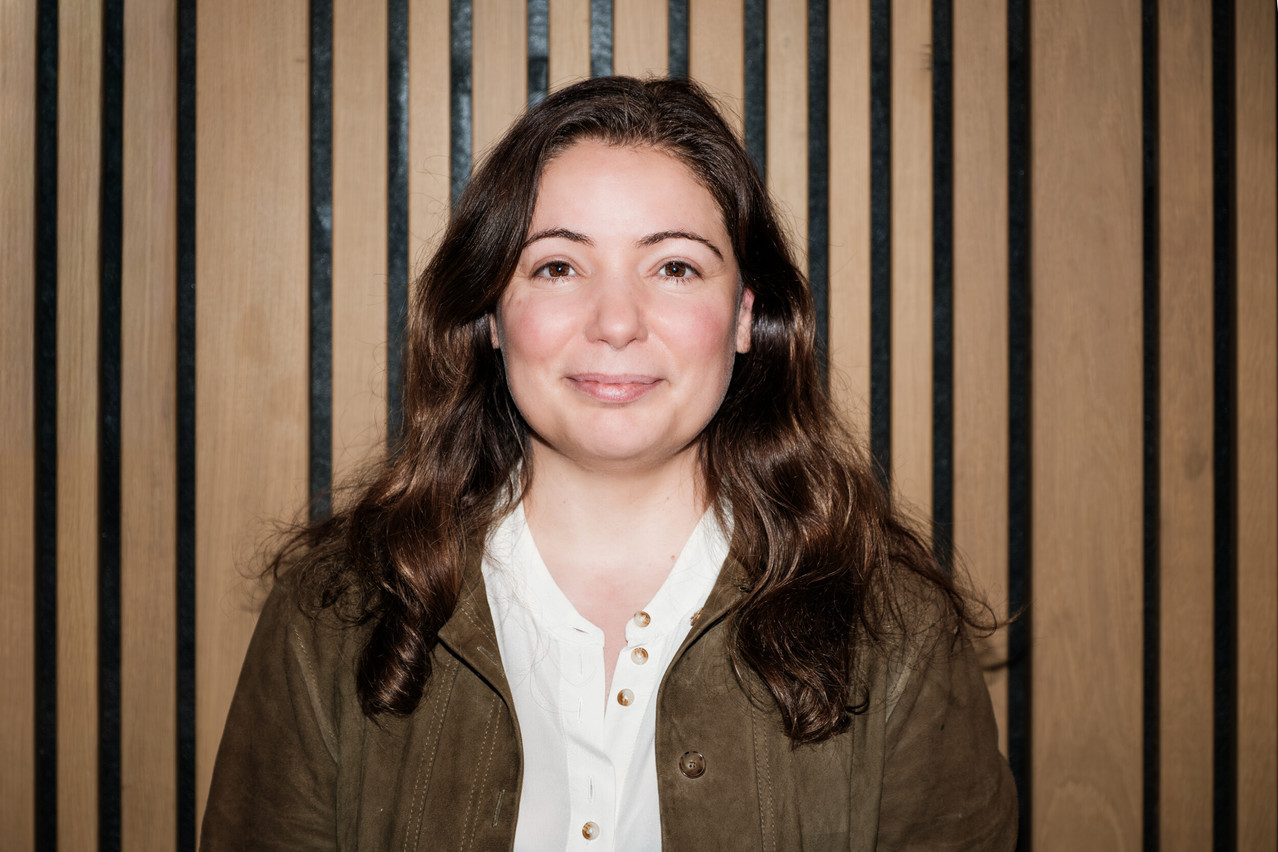
Ultimately, “the whole ecosystem will have to work in unison”, explains the CEO of IKO Real Estate. Developers, investors, property owners, banks and operators will need to pool their expertise more effectively to bring these transformations to fruition. “If we all stick to our own little areas, we won’t succeed,” she concludes.
This article was written for the supplement Living & Workspace from the October 2026 issue of Paperjam magazine, published on 16 September. The content is produced exclusively for the magazine. It is published on the website to contribute to Paperjam’s comprehensive archive. Click on this link to subscribe to the magazine.
Is your company a member of the Paperjam Club? You can apply for a subscription in your name. Please let us know via club@paperjam.lu