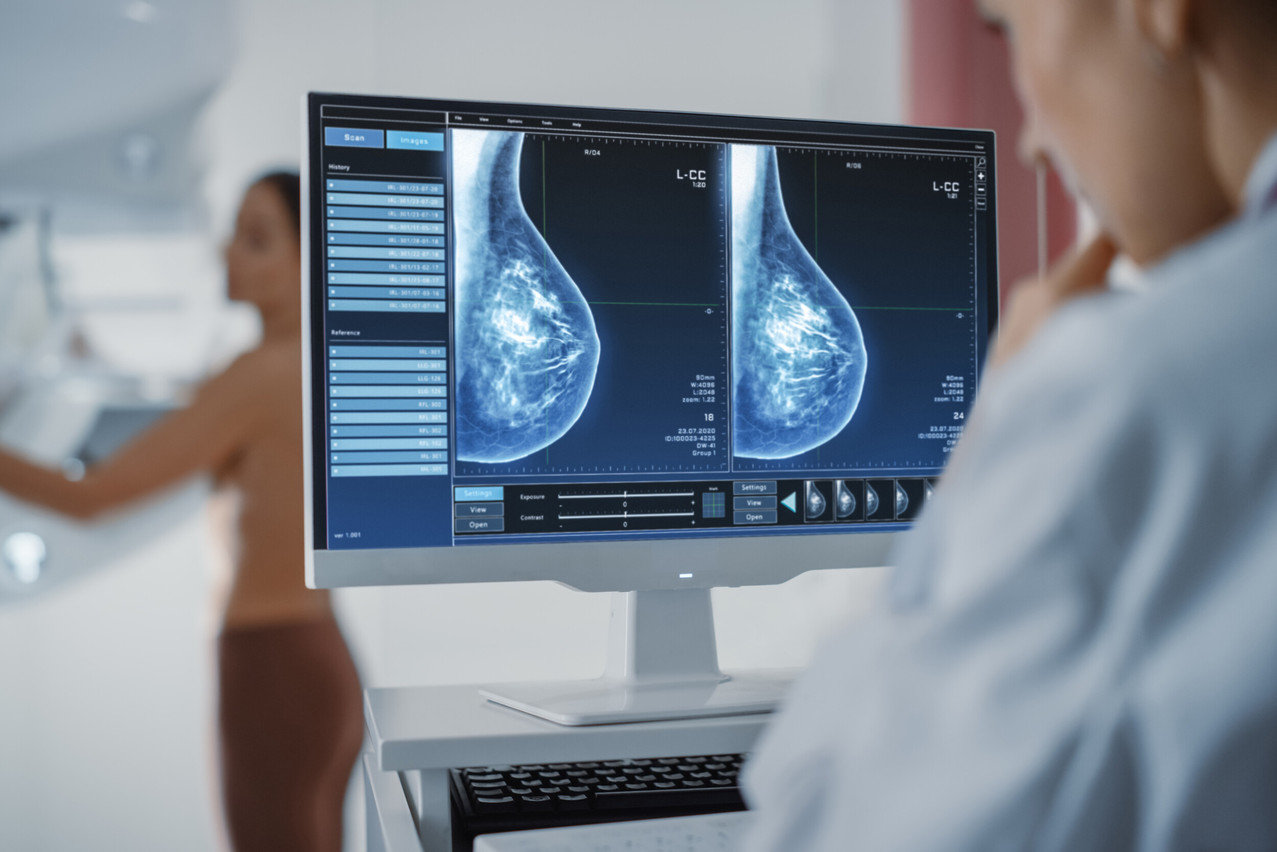
With a participation rate of 59% between 2011 and 2018 and a drop to 52.4% in 2022, the mammography programme remains below the European standards of 70% or even 75%. This performance is all the more worrying given that the trend has been downward for several years.
The government is stalling. In her parliamentary response published on Tuesday 14 April, the minister of health 
For behind this official figure lies a less clear-cut reality. If opportunistic screening – carried out outside the official programme – is taken into account, overall coverage is estimated to be ‘around 70%’, though this cannot be measured precisely due to the lack of appropriate coding. This statistical blind spot obscures the true assessment of public policies and fuels the debate over the need for more detailed monitoring.
A growing sector
On the ground, however, activity is increasing in absolute terms. The total number of mammograms carried out under the programme has started to rise again, exceeding 26,000 in 2025, according to data presented in the ministerial response, compared with 21,750 in 2024. This trend stands in contrast to the difficulty in encouraging more women to take part in the organised scheme.
Luxembourg is now looking to its Nordic neighbours to understand what is holding things back. Proactive outreach, free access, accessibility, technical quality and trust in the healthcare system are cited as key factors for success. But the minister also highlights a less tangible element: “A strong culture of prevention”, which is difficult to impose by decree.
Analyses are currently underway. A European project called ‘Lluminas’ is due to produce its initial findings in 2026, whilst a focus group launched in 2025 aims to identify barriers to screening. The results are expected in the coming months, with the hope of turning these findings into concrete measures. Against this backdrop, the extension of the programme to women aged 45 to 49 could change the game. But here too, we will have to wait until the end of the first full cycle of invitations to gauge the real impact. In other words, not before the end of 2026.