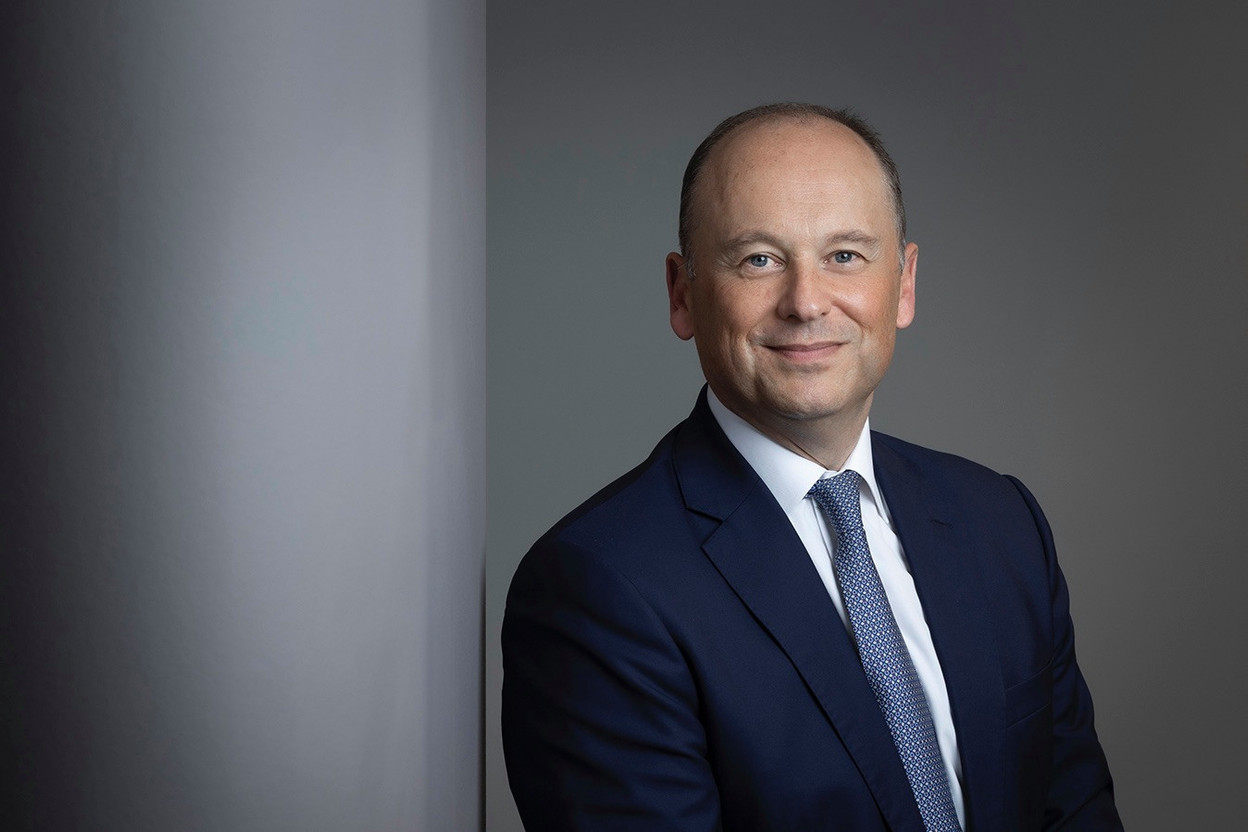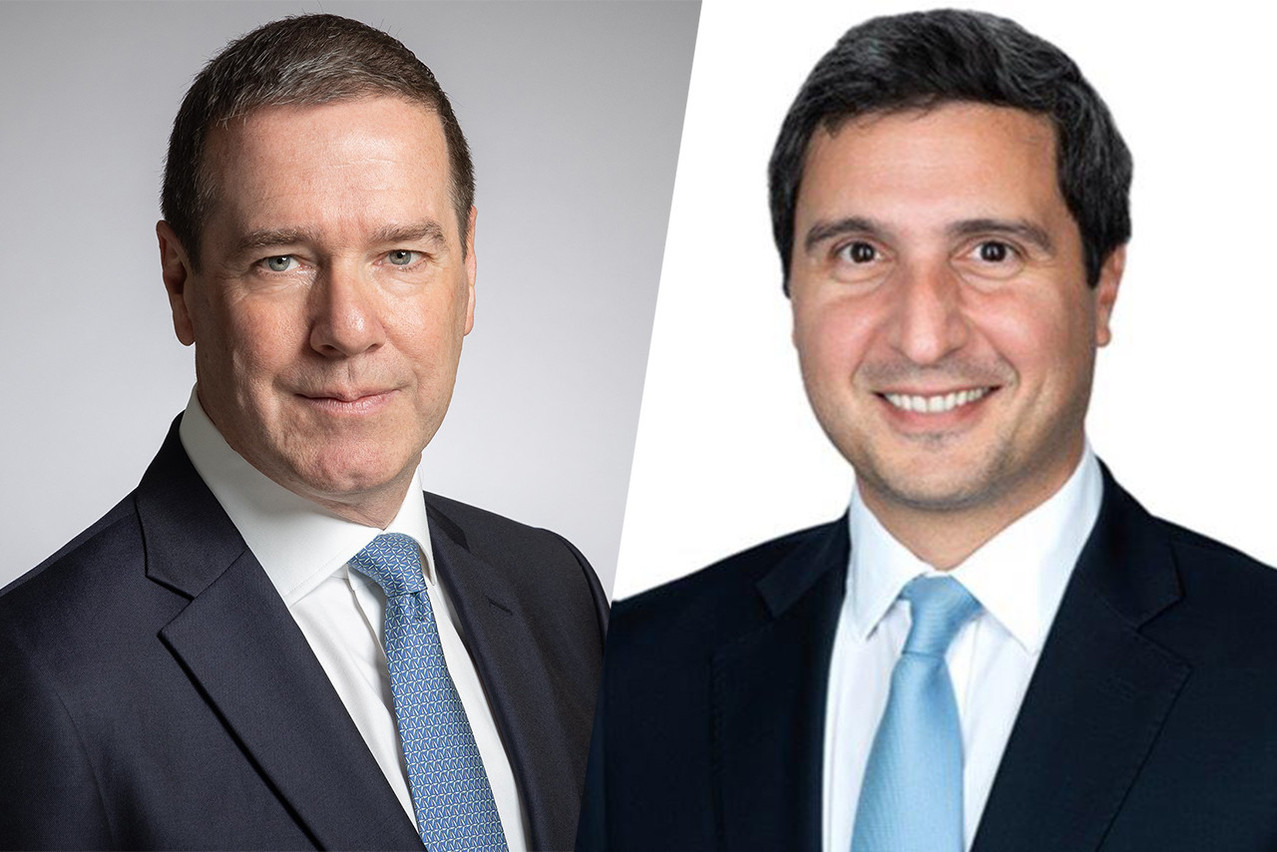
“We are really proud to pioneer an important advancement in portfolio management,” 
Moreover, Crawford added, clients benefit from “one optimised portfolio with greater operational efficiency and a much lower administrative burden.” The “total portfolio approach” offers “actively managed exposure to both liquid and illiquid assets.”
Globally, “90% of all companies generating over $100m in revenue are private,” Crawford pointed out. According to Apollo Academy, that figure stands at 87% in the US and rises to 96% in Europe. “So we’re giving clients access to both liquid companies and the private companies--the illiquid companies--which has to be a good thing for enhanced diversification.”
Blackrock chair Larry Fink’s 2025 annual letter advocated for a shift in the way portfolios are built, explained Fabio Osta, head of the alternatives specialists team, EMEA wealth at Blackrock. “Traditional” portfolios today consist of 60% stocks and 40% bonds; Fink argued for the addition of private markets to portfolios, saying that the future standard portfolio could look something more like 50% stocks and 30% bonds, with the remaining 20% allocated to private assets like real estate, infrastructure and private credit.
“We actually expect that both credit and infrastructure will be the fastest growing asset classes by 2030,” said Osta. “Today, these two asset classes--infrastructure and credit--represent 20% of the market. By 2030, they will represent 30%. And from that perspective, in infrastructure, we see huge opportunities related to artificial intelligence, related to the energy space and the energy transition in particular. In credit, we expect the credit market to double in size by 2030, from $2trn to $4.5trn by 2030.” Through this partnership between Blackrock and Quintet, the investment manager offers the bank’s clients access to private markets in a way they believe is efficient.
“Taking into account [clients’] risk tolerance and preferences, we are recommending an allocation of 15% to private markets within a strategic asset allocation approach,” Crawford added. “We would continue to monitor and rebalance those investments as appropriate on behalf of our clients, so, delivering that fiduciary oversight and risk management that is very important within our wealth management space.”
Clients need to pass a “suitability analysis”
Exposure to private markets, however, may not be suitable for every client. “This is a discretionary mandate that is specifically for clients that request it,” noted Crawford. “It is specifically for clients that have the knowledge and experience and risk tolerance for private markets investments. There is an important suitability analysis that Quintet does to determine eligibility and ensure that the right clients are investing in this solution.”
Education “remains really critical,” Osta added, sharing Blackrock’s perspective when it comes to private markets.
Impact of the Eltif 2.0 regime
The revised European long-term investment fund (Eltif) regime has brought with it a broader scope of eligible assets, a broader definition of “real assets,” the possibility to set up fund-of-fund strategies or master-feeder structures, the removal of minimum investment thresholds for retail investors and more flexible portfolio compositions.
“The regulation is very supportive of the ability to create an integrated portfolio approach for our clients,” said Crawford. Evergreen Eltifs--open-ended investment products that allow investors to subscribe and redeem their capital periodically throughout the life of a fund--allows Quintet to effectively manage the exposures in portfolios. “It remains critical to apply manager selection skills in this space, because more and more funds are entering the Eltif market.”
The updated Eltif regime “now offers different types of structures, which are creating more appetite and interest from the non-professional segments,” added Osta. “A major innovation related to Eltif 2.0 is that it allows the creation of evergreen, of semi-liquid vehciles that you can wrap into an Eltif and ultimately offer to mass affluent clients, as well as ultra-high-net-worth clients in a very efficient way. The evergreen and semi-liquid nature of those vehicles allows for rebalancing in terms of portfolio management that we think is a game-changer in the way you can allocate to private markets.”
Continuation of a partnership
This new solution is the result of a partnership between Quintet and Blackrock announced in mid-2023, noted Crawford. “Historically private markets have been done as satellite investments by clients. This is one of the first times where we’ve been able to develop a fully integrated asset allocation model to allocate to both liquid and illiquid markets and actively manage that exposure. It’s been very important for us, within that partnership with Blackrock, to get their advice on portfolio construction, and on an ongoing basis in terms of balancing our allocations going forward on behalf of our clients.”