
The Bell & Ross adventure launched in 1994 by Carlos Rosillo--who describes himself as a “passionate collector”--and his childhood friend Bruno Belamich proves that whilst developing a business between friends can be a risky bet, it is not impossible. Especially if fate intervenes with a crucial encounter, that of Helmut Sinn, creator of the German watch brand Sinn in 1961. Sinn took a liking to Belamich, who was working for him as a designer, and gave them access to his industrial base for the launch of their first collection. “It was thanks to him that we were able to get started in watchmaking,” explains Rosillo, the Ross of Bell & Ross. Since then, the brand has grown and established a very distinctive--even unique--design: a circle in a square.
This “circle in a square” has a history. From the outset, aeronautics in general and aircraft instruments were a source of inspiration for the two designers, who shared a love of professional watches, Tool Watches. These sources of inspiration were reflected in the brand’s first models, which featured round dials. “One day, I challenged Bruno by asking him to accentuate our particularity even more. He came back with the concept of the circle in the square, which served as the basis for the BR 01, released in 2005, a distinctive, daring and highly differentiating watch. We have appropriated a territory that from the outset was the one that inspired us, but in a way that is now obvious to everyone.”
A unique and differentiating design
Quite soon set about creating a city counterpart to this highly instrumental watch. “We softened the square, made it rounder and integrated a bracelet, whilst retaining its characteristic shape. This is how the BR 05, the other pillar of the brand, came into being six years ago.” It’s a pillar that has enabled the development of urban and elegant designs.
Design is a cornerstone of the brand. “We are fortunate to have an integrated design studio that ensures the consistency of the design and therefore of the brand. We control all the creative aspects as well as our communications. What has enabled us to develop our specificity, despite limited resources, is what I call the union of skills. The key to success is being able to federate the four pillars of the profession, which in my opinion are design, engineering, the master watchmaker and the professional user. At the centre of our logo is the ampersand. This ampersand represents our philosophy: mixing skills to make objects that are like no other, neither in design nor in movement.”
The technical innovation card
Design is not everything. Bell & Ross also plays the technical innovation card and intends to pursue a policy of moving up the technological range, in terms of movements, complications and materials. “We were lucky enough to have a very high technical level right from the start. We used very good movements, but they were not manufacture movements. Today, we are developing our own movements with the help of Kenissi.”
Kenissi is an independent company created in 2010 on the initiative of Tudor, which offers high-end automatic movements and has signed a number of partnerships, including with Chanel. Chanel has acquired a stake in Kenessi and in Bell & Ross. “On very limited series, the movements are made to measure. We have a highly differentiating design, but the brand should not be reduced to this design alone,” continues Rosillo. “There’s also a lot to see under the bonnet.”
The blend of this simplicity of design with a technical statement is what attracts customers to the brand, believes Rosillo. “Our customers buy a timepiece that is bold, original, differentiating and uncluttered. Our design sets us apart. So it’s no coincidence that many renowned architects are our customers. Norman Foster and Jean Nouvel are just two examples. Amongst the celebrities who love our brand, I would also mention Bruce Springsteen, who is surprisingly loyal to us.”
The brand releases models at a steady pace. It’s a carefully considered “supply and creation” strategy. “My partner, Bruno Belamich, is an extremely creative person. He has the ability to create while remaining consistent. He’s a goldmine. I think that if you don’t want to become complacent, it’s important to surprise through creativity, especially when the market is in a bit of a slump as it is at the moment. It’s creativity that wakes you up. What’s more, the market needs constant innovation. The downside is that sometimes we move so fast that a new model doesn’t have time to catch on. Our highly distinctive design compensates for this.”
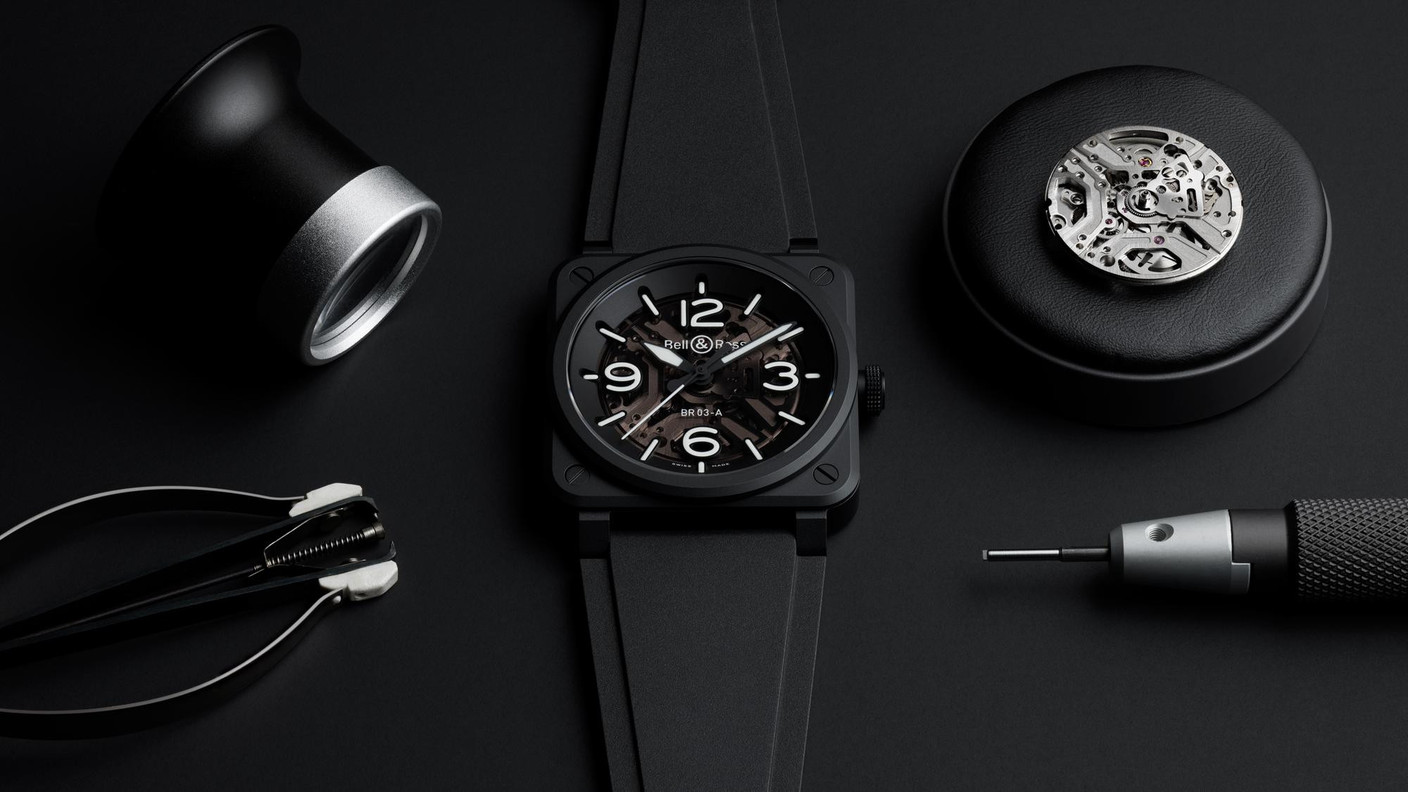
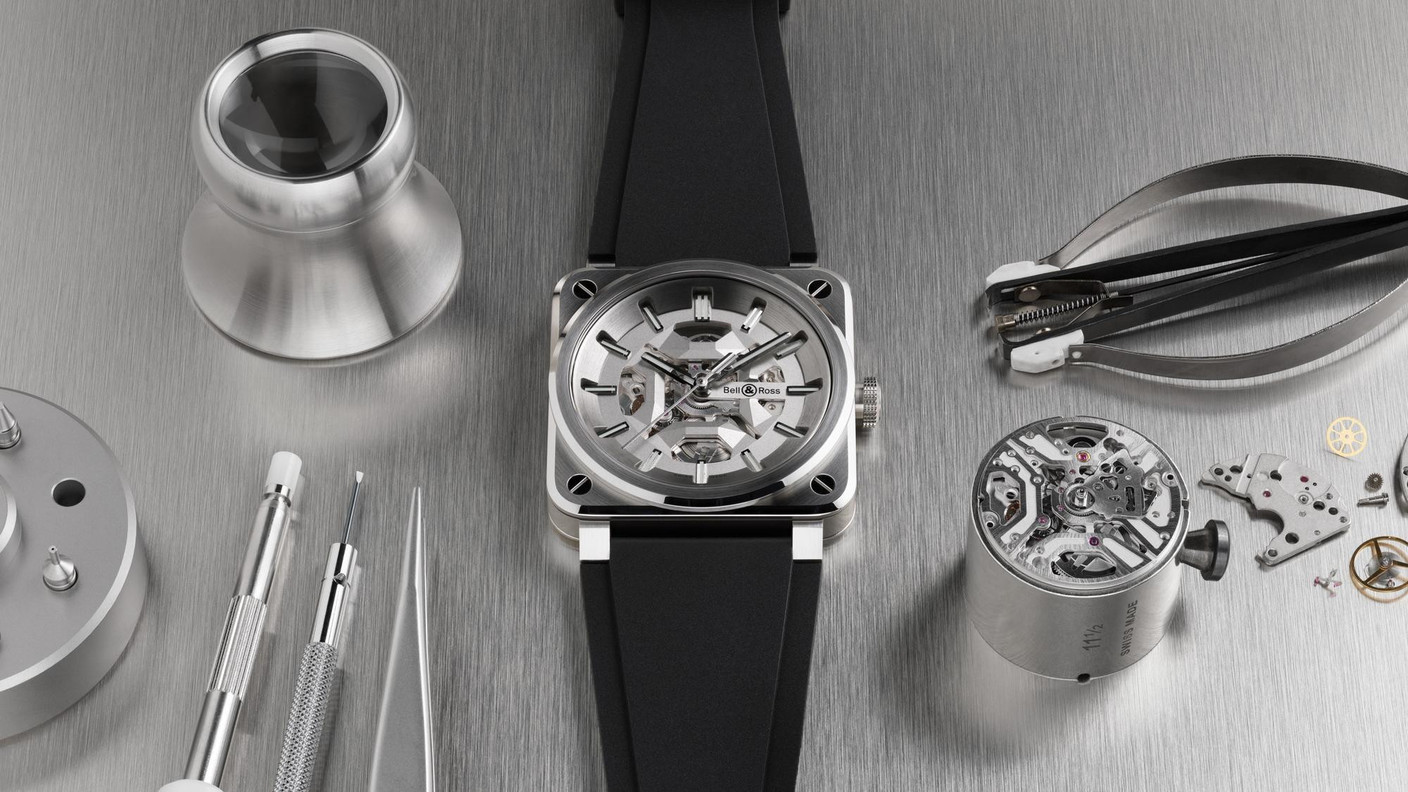
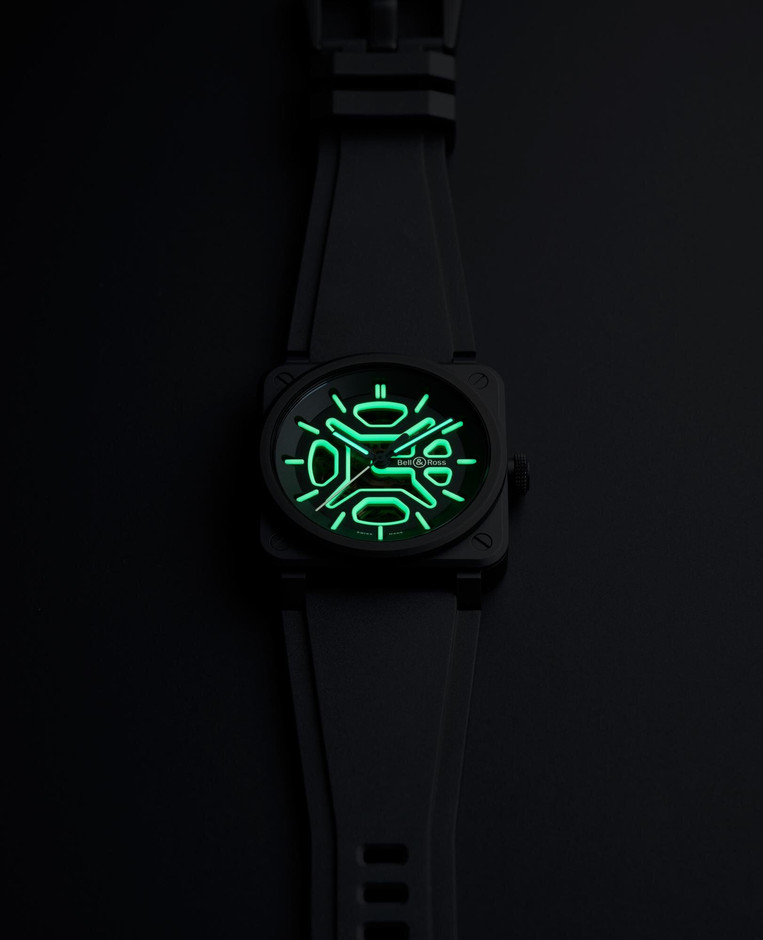
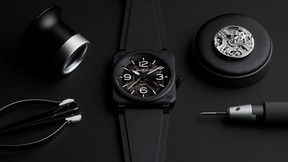
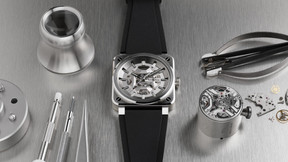
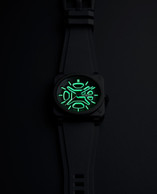
Fittingly, Bell & Ross is adding two new models to its catalogue. The BR 03 Skeleton is the counterpart to the BR 05 Skeleton. This model comes in three versions: the Black Ceramic, which combines the concepts of skeletonisation and transparency, the Skeleton Grey Steel, a limited series of 250, and the Skeleton Lum Ceramic, which pushes the concept of luminescence to its limits by highlighting the contours of the cut-outs with green. “Three models that bear witness to a fundamental trend that we have had for some time in our creation: there are no limits to technical sophistication.”
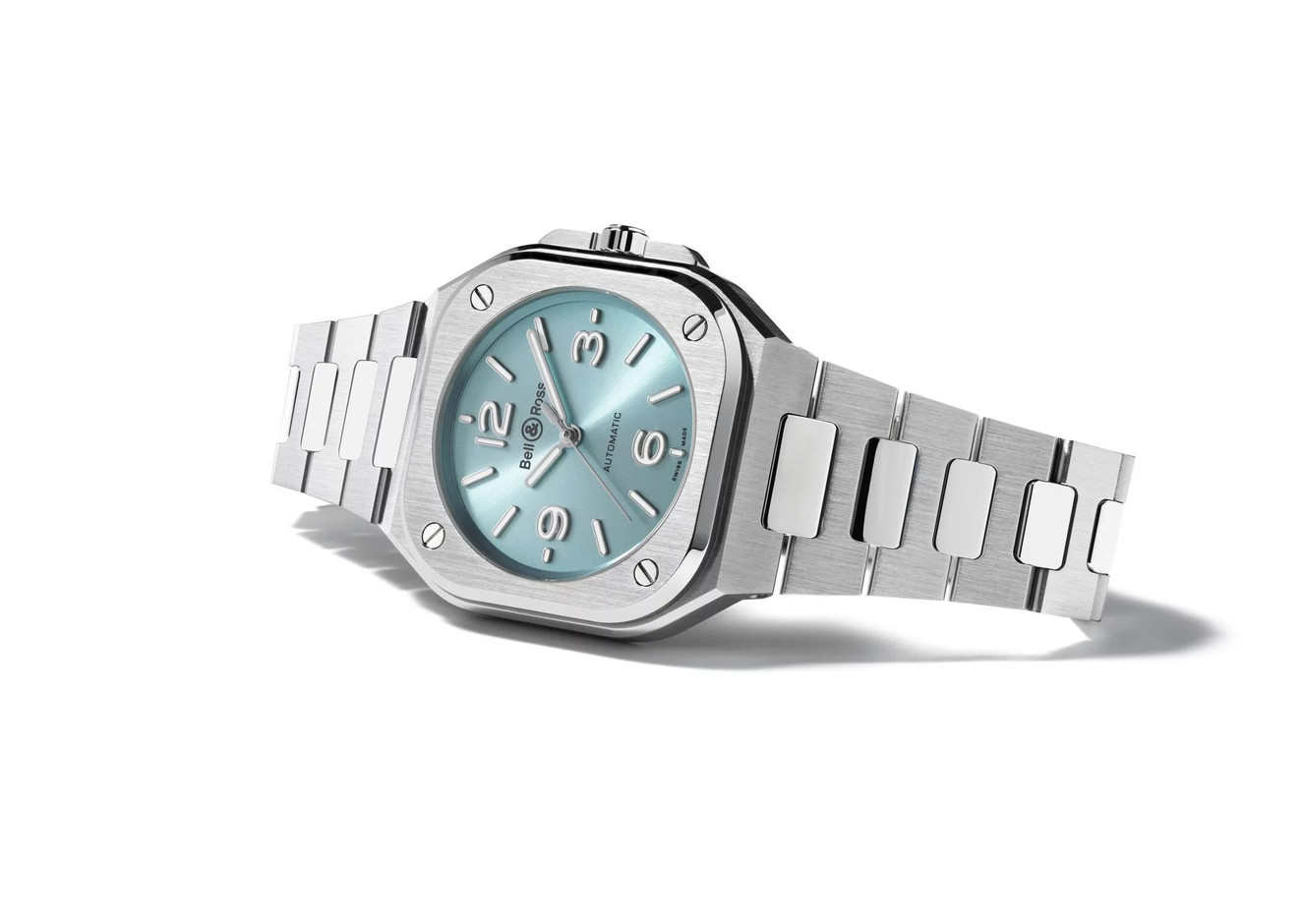
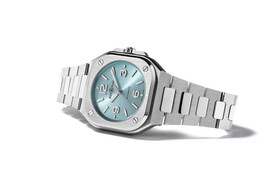
Bell & Ross is also playing on two current trends: the reduction of cases and the return to fashion of integrated bracelets. These two trends have been combined in the BR 05, which is now available in a 36mm size and 40% thinner. “This is a model for smaller wrists. It’s not a gendered watch. Four colours are offered, two of which are perhaps more suited to women, the mother-of-pearl dial and the Ice Blue dial.”
An exhibition of Bell & Ross models highlighting the brand’s aeronautical roots is currently running until mid-June at the Les Ambassadeurs boutique in the Luxembourg city centre.
This article was originally published in French.


