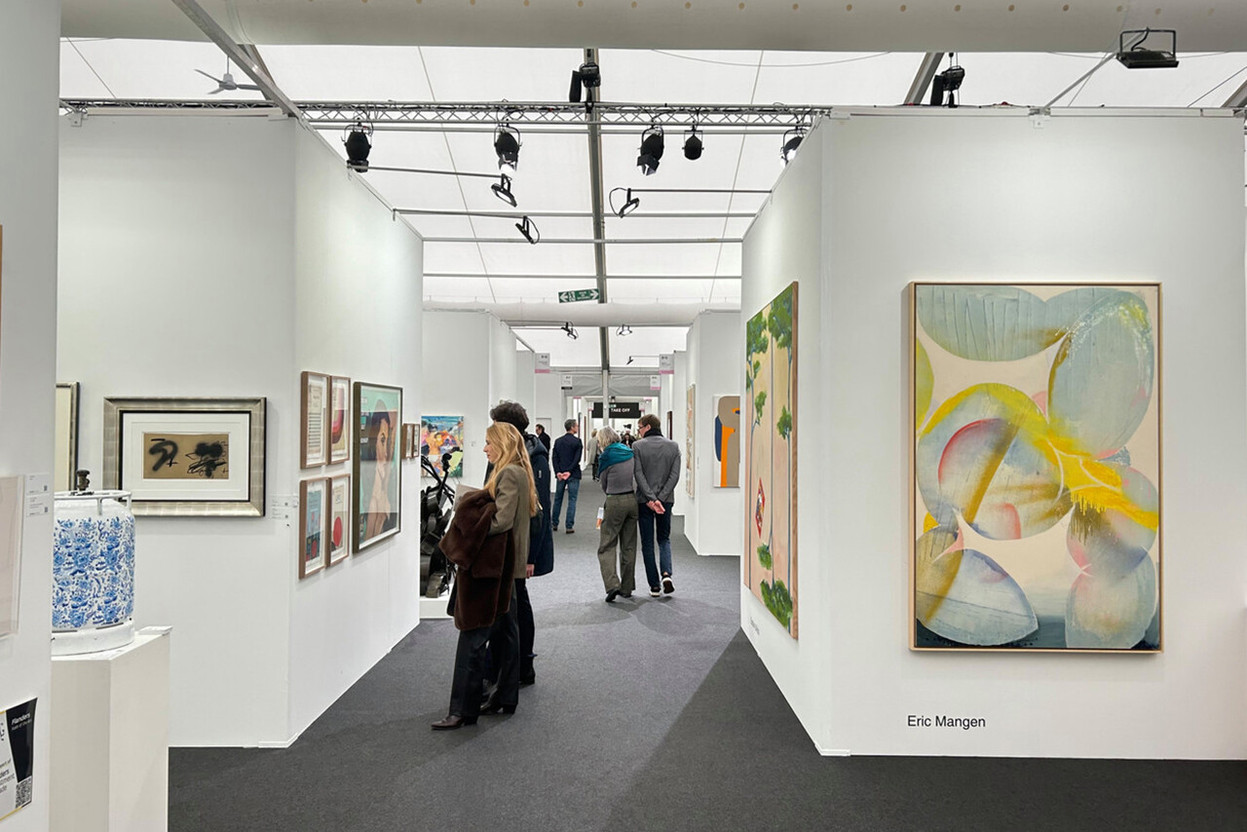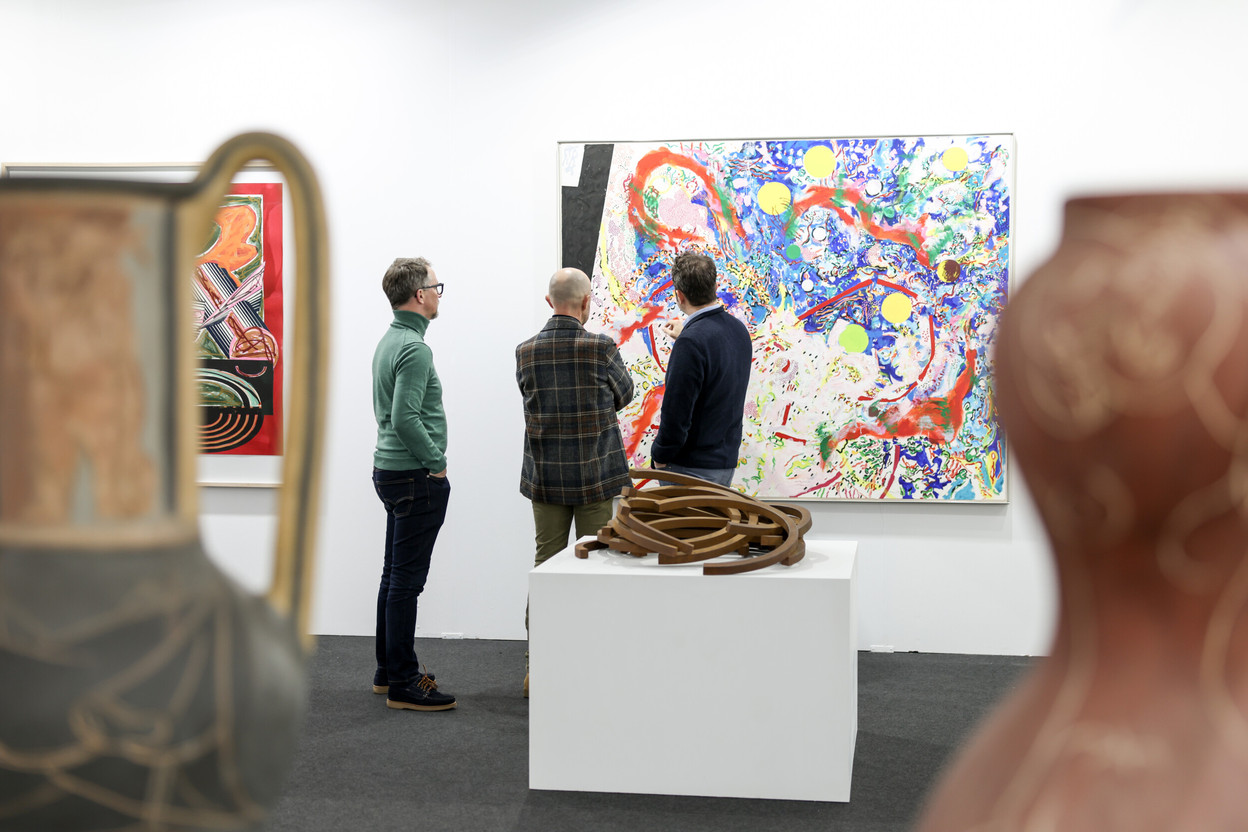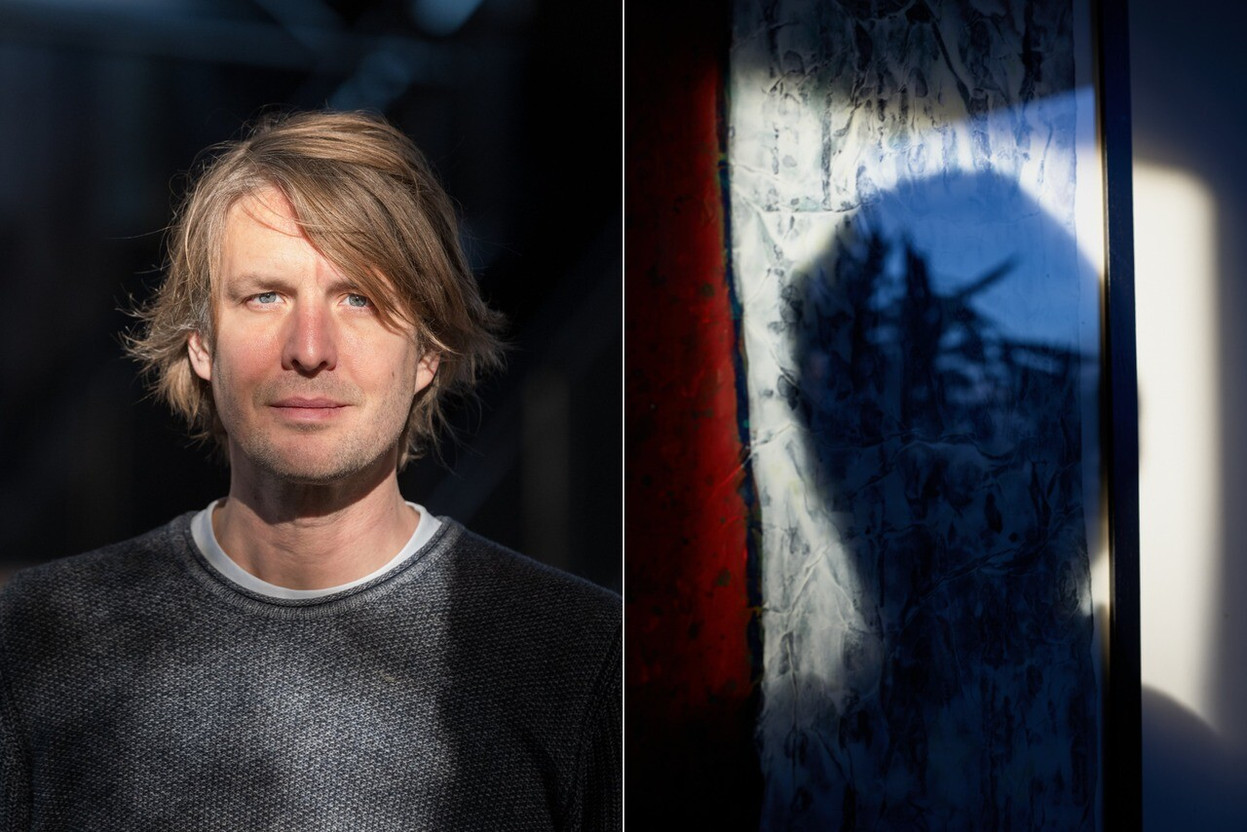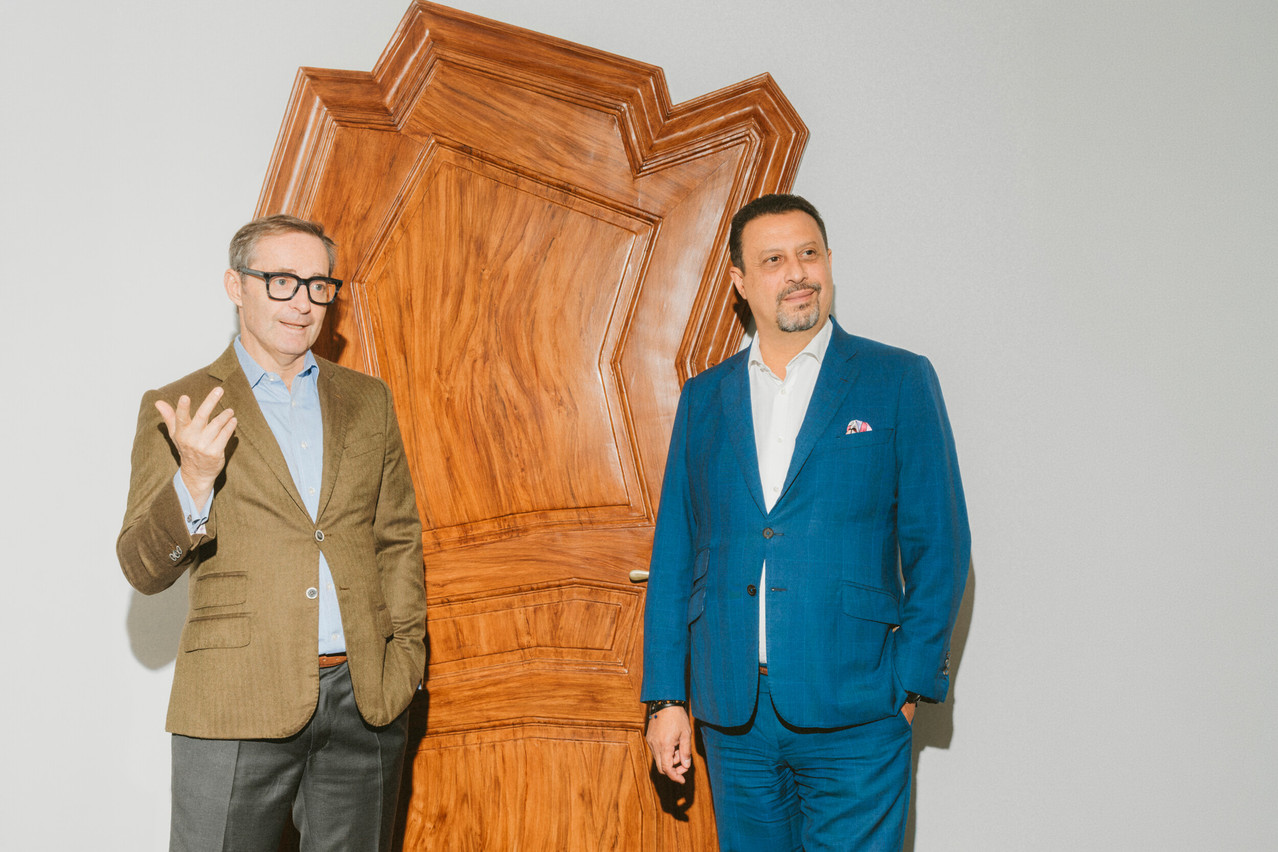
Many players in the financial sector support the arts in Luxembourg. Is it out of passion or as a strategic move?

Art is often presented as a safe haven. Is it a risky investment?

F. B. – “By definition, a safe-haven asset loses very little, if any, of its value, and may even gain a little each year. Yet some artists’ values plummet completely, whilst others experience the opposite trend. It is, above all, a matter of passion.
In 2021, Fatah Boudjelida, you expressed regret that Luxembourgish collectors were mainly buying abroad. Has this trend reversed?
F. B. – “I still regret it. But some gallery owners are now telling us that collectors from Luxembourg are much more likely to visit galleries in Luxembourg. Before, we would often come across them in Paris or Knokke. I think Luxembourg Art Week has certainly contributed to this improvement.
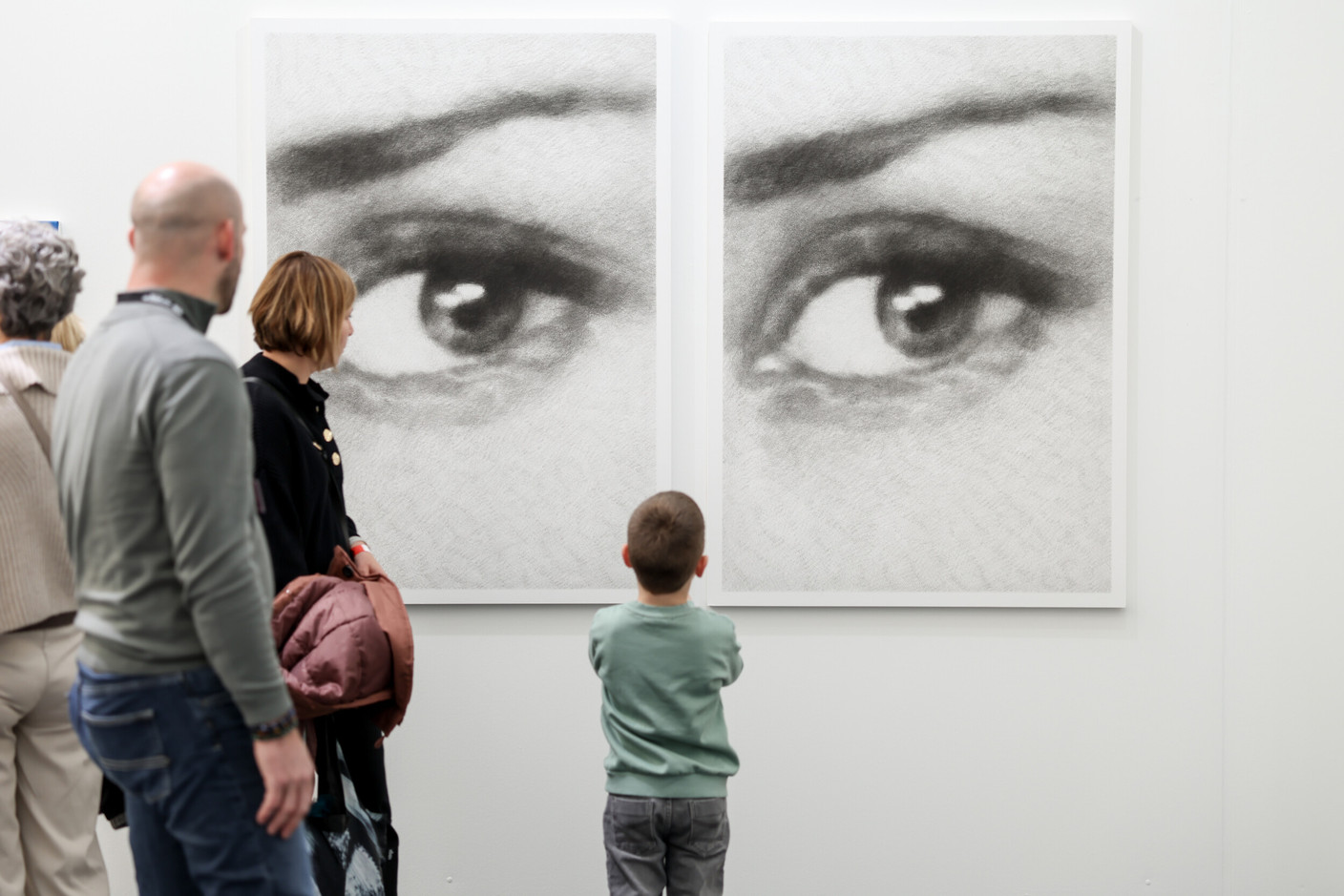
At an art fair, there is sometimes almost an invisible glass wall in front of the stands. That is precisely what we want to break down.

How is the fair funded?
K. O’D. – “There are several sources of funding, but it is essentially the galleries that finance it by renting square metres for their stands. Added to this is public and private support, through sponsorship. The reality of a fair like the one in Luxembourg is that the likelihood of it ever turning a profit is relatively slim. It’s actually a question we ask ourselves from time to time: does its current structure really make sense, or should it be changed?
You sit on the board of directors. Do you offer your artistic advice to the director, 
F. B. – “She is the one who runs the fair and is responsible for its day-to-day running. We hold around four board meetings a year, and our discussions mainly concern the budget.
K. O’D. – “We have always refrained from interfering in the artistic direction, as we know our limits: we know what we are capable of and what we are not. There are some excellent curators in this field, and it even gives us the opportunity to make new discoveries.
Could you remind us what the Patrons Club is, and what it has become?
K. O’D. – “The aim was to encourage Luxembourgish companies to get involved – even if the term sounds very ‘financial’ – in the art world, by committing to purchasing a work during Luxembourg Art Week, and to form a group of companies around this initiative. As discussions progressed, we realised quite quickly that it was difficult to formalise this to the extent of having a charter or a written commitment. It therefore became more of a moral commitment: companies say ‘yes, we’ll do it, we’re interested’.
78 per cent of exhibitors are from abroad this year. What attracts foreign galleries?
K. O’D. – “Firstly, Luxembourg is a market that is showing a certain dynamism. Secondly, galleries are attuned to what other galleries are doing. In the hierarchy of art fairs, Art Basel Paris operates on a completely different level: many galleries wouldn’t be able to get in, and even if they did, they’d be lost in the crowd, invisible. We see ourselves as a good regional fair.
With ‘Collecting 101’, the fair is showcasing works priced at under 4,000 euros. Is this a gateway to collecting?
F. B. – “If we want to open up the fair to more than just collectors and the discerning public, we can attract people who will take an interest in art, or even start a collection. Marking these works with a sticker helps to avoid any sense of awkwardness when entering a stand. It’s a good springboard for future collections: this is how we inspire a love of collecting.
K. O’D. – “At an art fair, there is sometimes almost an invisible glass wall in front of the stands. Visitors hesitate to go in, thinking to themselves: ‘Am I walking into a place where everything costs 100,000 euros, at the risk of looking ridiculous?’ We want to break down that glass wall.”
The fair comes at a price
For its 12th edition, Luxembourg Art Week is launching its first prize, the Contemporary Art Prize, supported by Société Générale Private Banking Luxembourg. It will recognise a work exhibited at the fair, originating from the Greater Region or the Benelux, chosen from among ten nominees. The jury, chaired by Olivier Gérard, Director of Société Générale Private Banking Luxembourg, comprises collectors and heads of institutions. The winning work will be added to the bank’s collection. The prize was awarded on Thursday 19 November to Lucas Leffler (Lee Bauwens Gallery).
This article was written for the December 2026 issue of Paperjam magazine, published on 18 November. The content is produced exclusively for the magazine. It is published on the website to contribute to Paperjam’s comprehensive archive. Click on this link to subscribe to the magazine.
Is your company a member of the Paperjam Club? You might be eligible for a magazine subscription in your company’s name. Please let us know at the following address: club@paperjam.lu.