You’ll no doubt be sipping (in moderation) an Aperol Spritz if the sun comes out. Perhaps you’ll be munching on a Mentos at Findel, slipping a Samsonite suitcase into the boot of the car for that long weekend away, or listening to Spotify whilst running to recover from the ING Marathon. These everyday actions connect millions of people to industrial empires that all share a Luxembourg address somewhere within their capitalist architecture – and, since spring 2026, a new obligation: to comply with the European duty of care.
In April, the Dutch NGO Somo updated its CSDDD Datahub, a map of the groups covered by the revised version of the Due Diligence Directive. Of the 1,447 global groups identified, just under 30 have their parent holding company registered in the Grand Duchy. Not thirty companies that manufacture or sell from Luxembourg – thirty structures whose capital control centre is based here, in limited liability companies (Sàrl) with sometimes derisory capital, family-owned limited partnerships (SCA) or investment fund limited partnerships. This is the Luxembourg mechanism in all its simplicity: an address, a company registration number, a manager and billions of euros in assets on the floor below.
Over 400 million as part of the transfer to Luxembourg
Take Aperol, for example. The brand is owned by Davide Campari-Milano NV, a company listed on the Milan stock exchange. Its controlling shareholder is Lagfin SCA, a limited partnership with share capital registered in Luxembourg. At the end of this chain stands the Garavoglia family, with Luca having chaired the group’s board of directors since 1994, at the age of 25, having only just graduated from Bocconi. His fortune is estimated at around $4bn. He is the heir who transformed a Milanese bitter into a global phenomenon, having acquired Grand Marnier from the Marnier-Lapostolle family in 2016, and Wild Turkey from Pernod Ricard in 2009. Since the AGM in April 2026, two other family members – Alessandra and Alessandro Garavoglia – have also joined Campari’s board of directors. The Luxembourg SCA is the vehicle for this intergenerational transfer of assets.
What Lagfin’s annual report, filed with the Commercial Register on 5 May, reveals goes far beyond Campari’s sole control. The SCA directly owns a dozen US property companies – LLCs with addresses in Chicago, New York, Miami and San Francisco – as well as French real estate investment companies (SCIs) and a property in Monaco, which was sold in December 2025 for €68.2m. From Luxembourg, the Garavoglia family manages a transatlantic property empire, in addition to its control of the world’s sixth-largest producer of premium spirits.
The report also reveals that between 2019 and 2024, the Italian Guardia di Finanza conducted an in-depth tax audit of the 2019 cross-border merger through which control of Campari was transferred from Italy to Luxembourg. Lagfin chose to settle the dispute so as not to put Campari’s share price – its “main asset”, in its own words – at risk, for a total amount of €405.4m, payable in instalments until September 2029. This reassessment of a Luxembourg domiciliation transaction is, by implication, an illustration of what the CSDDD intends to regulate: the traceability of decisions taken by parent holding companies.
Business implications that are often far removed from Luxembourg
Mentos works on the same principle, with the same approach – more or less. C+F Confectionery and Foods SA, based in Luxembourg, is the parent company of Perfetti Van Melle Group BV, the Dutch firm controlled by the Perfetti family. Giorgio Perfetti, whose fortune Forbes estimates at around $4bn, is the heir to a family business founded in 1946 in Lainate, on the outskirts of Milan. The brothers Ambrogio and Egidio Perfetti took over their father’s confectionery workshop. Today, the group sells sweets in 150 countries under 35 different brands – Mentos, of course, but also Chupa Chups, Fruittella, Alpenliebe and Happydent. The supply chain includes animal-derived gelatine, gum base, and sugar cane from Latin America and Asia. It is precisely this type of supply chain – agricultural, globalised, opaque – that the CSDDD aims to make traceable.
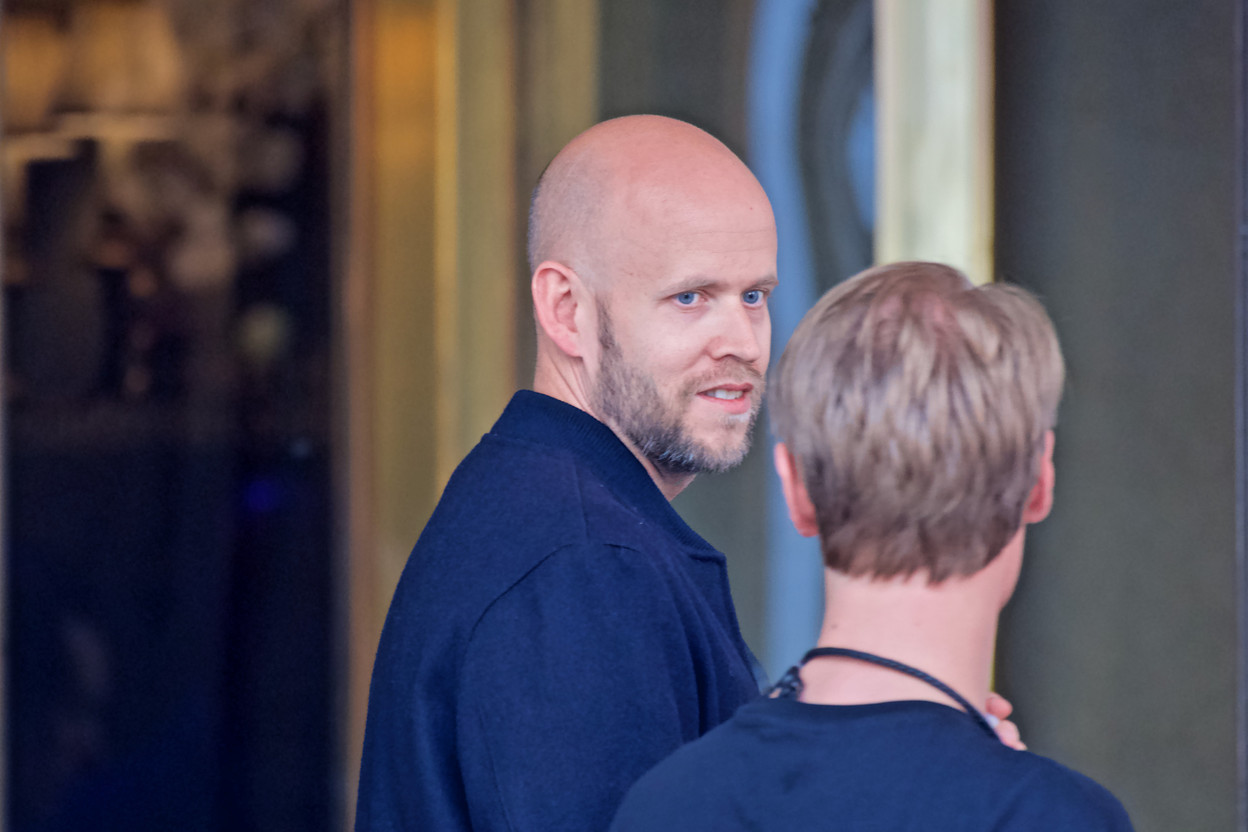
Spotify Technology SA is registered at 161 Rue du Kiem, Strassen. This is the legal domicile of the streaming platform used by around 600 million people worldwide every month. The founder, Daniel Ek, a Swede whose fortune is estimated at several billion dollars, took his company public on the New York Stock Exchange in 2018. Music seems intangible. But data centres consume energy, electronic equipment contains minerals extracted in high-risk countries, and artists sign contracts in jurisdictions where the rights of cultural workers are poorly protected. The CSDDD does not spare digital platforms.
Samsonite International SA, the luggage manufacturer whose red wheeled suitcase is perhaps the most photographed sight at airports, is also headquartered in Luxembourg – despite being listed on the Hong Kong Stock Exchange and having factories in Asia. ArcelorMittal SA, the world’s leading steel producer with a turnover of $68bn, is completing its headquarters in Kirchberg – the global headquarters of the Mittal family group, where Aditya, the son, has been running global operations since his father Lakshmi handed over the reins in 2021. Subsea 7 SA, the giant of subsea oil infrastructure, is also based in Luxembourg – whilst being listed in Oslo and sending its vessels to the Gulf of Mexico, the North Sea or off the coast of Brazil.
Behind some of the other names on the list lies not a family but a fund. Carlyle Cyan Partners SCSp, a Luxembourg-based limited partnership, owns the Flender Group, a German manufacturer of industrial equipment for the wind power and mining sectors, which it acquired from Siemens in 2021. PAI Partners manages Refresco via Pegasus Topco sàrl – the world’s largest independent bottler, the company that produces soft drinks and fruit juices under private labels for all European supermarkets, without anyone knowing its name. Cinven is behind Synlab, the European leader in medical diagnostics, which delisted from the Frankfurt Stock Exchange in 2024 amid the quiet of leveraged buyouts.
The unexpected billionaire on this first list
Ardagh Group SA is included in the Somo list, with its headquarters in Luxembourg. But its Irish founder, Paul Coulson, who had built this glass and metal packaging empire over 25 years of successive debt, walked away in November 2025 with €108m in his pocket, after his bondholders converted $4.2bn of debt into equity. The group is now owned by its former creditors. Their identities are not public.
The most striking case on this list is that of a limited liability company (sàrl) whose name is unknown to any consumer. L1R Invest1 Holdings sàrl, 161 Rue du Kiem, Strassen, with a share capital of €12,500 and no employees. Its annual accounts for the 2024 financial year, filed with the Luxembourg Commercial Register on 30 May 2025, show a single significant item on the assets side: €690m in an equity investment, namely in Distribuidora Internacional de Alimentación SA, a Spanish supermarket chain operating under the DIA brand. The stake is 77.70%. In the notes to these same accounts, there is a sentence that few Luxembourg financial documents state so explicitly: “Two of the company’s beneficial owners are subject to sanctions.” The company states that since 2022–2023, the voting rights of these ultimate beneficial owners have been frozen, their dividends withheld, and all control removed — measures approved by the relevant regulators. L1R Invest1 Holdings is itself a direct subsidiary of LetterOne Investment Holdings SA, headquartered at 2 Boulevard de la Foire in Luxembourg.
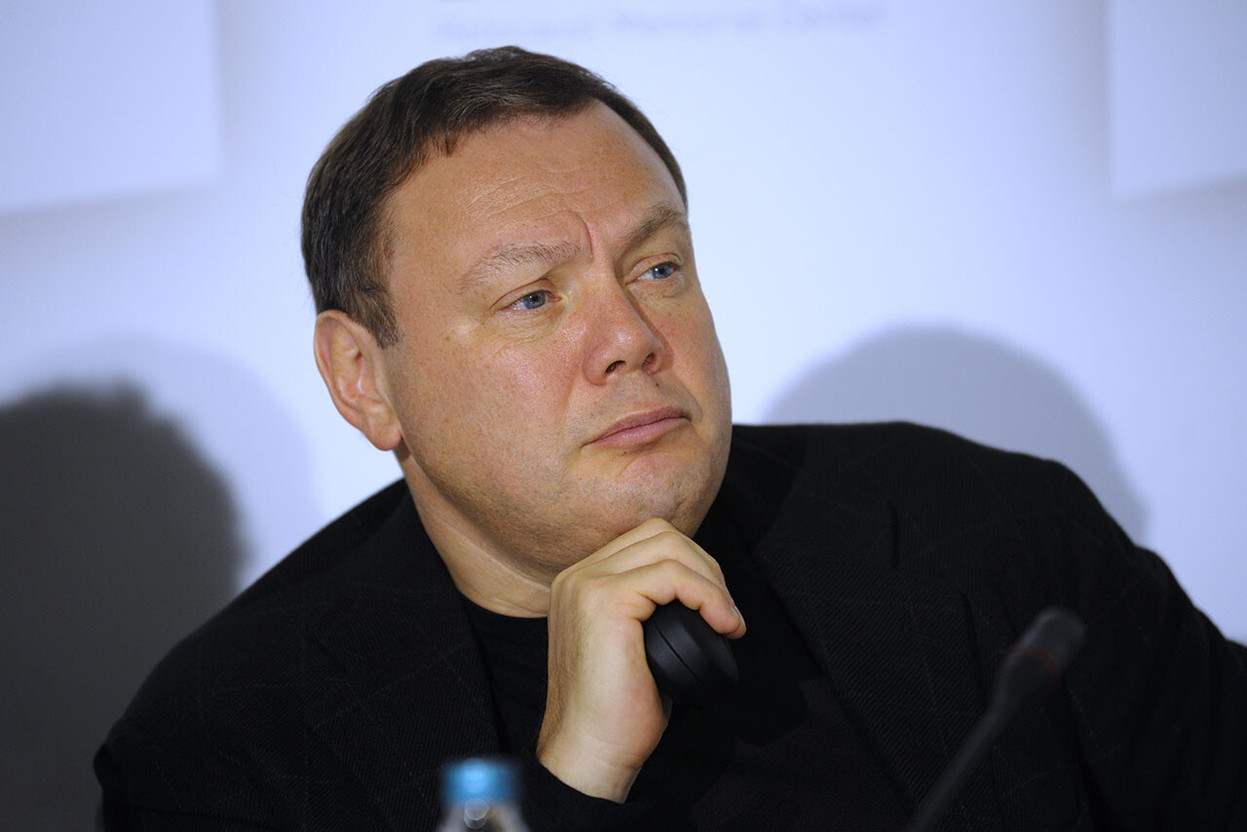
According to the Commercial Register, Andrey Kosogov, one of the co-founders of LetterOne and Alfa Group, is reported to indirectly hold more than 47% of the shares, and Mikhail Fridman nearly 38%. Mr Fridman was ranked 150th on the Forbes list of the world’s richest people in February 2025, with a fortune of $13.3bn. He remains on the European Union’s sanctions list, despite two judicial annulments handed down by the General Court of the CJEU – the latest in September 2025 – and a $16bn international arbitration claim filed against the Grand Duchy itself. In this case, Luxembourg finds itself in a position that is uncomfortable to say the least. The CSDDD Directive adds another layer: the Luxembourg-based entity controlling DIA is also subject to the duty of care.
ArcelorMittal is already well advanced
In practical terms, the CSDDD will require these Luxembourg-based entities to identify and address the adverse impacts of their activities on human rights and the environment – throughout the value chain, right down to second- and third-tier suppliers.
Some have already made a start. ArcelorMittal, which has been subject to the UK Modern Slavery Act and the German Supply Chain Act (LkSG) for several years, has certified 42 of its production sites under the international ResponsibleSteel standard, implemented supplier audit procedures, and established a complaints mechanism accessible to any affected community worldwide. For the steel giant, the CSDDD is an evolution, not a revolution.
For others, the task looks set to be more challenging. Perfetti Van Melle will have to trace its sugar supply chains all the way back to sugar cane plantations in Latin America and Asia. Kernel Holding, the world’s leading exporter of sunflower oil, will have to exercise due diligence in farming areas directly exposed to the war in Ukraine. Spotify, whose US stock market filings make no mention of the issue, will, for the first time, have to report on the impact of its operations on artists’ rights in countries with weak social protection.
The directive also grants victims the right to compensation and allows any civil society organisation to bring legal action in the Member State where the group is based. In Luxembourg, for activities taking place thousands of kilometres away. A limited liability company with no employees on Rue du Kiem may not have known this yet. It knows now.
And that is a cause for concern. As evidenced by this week’s parliamentary response to a question from the former Minister of Justice,