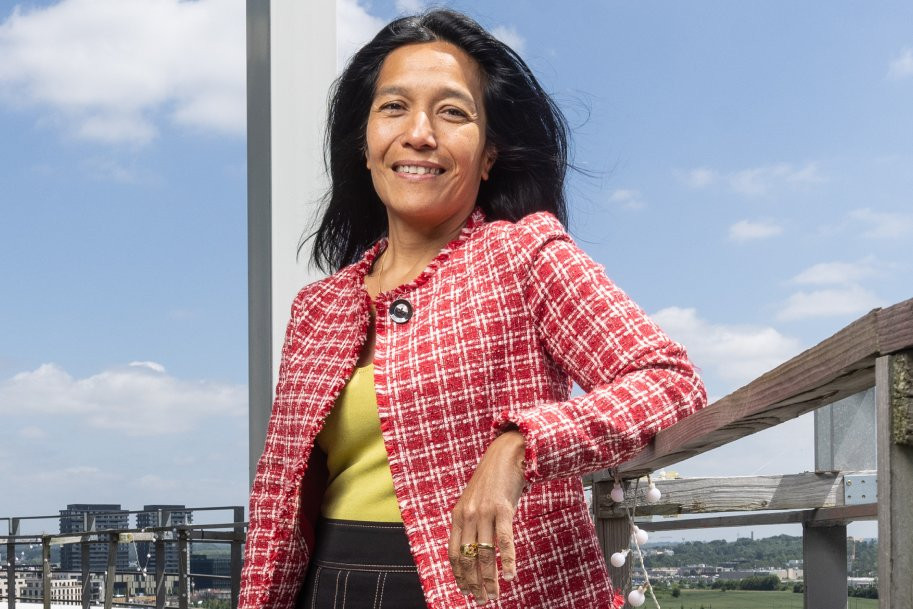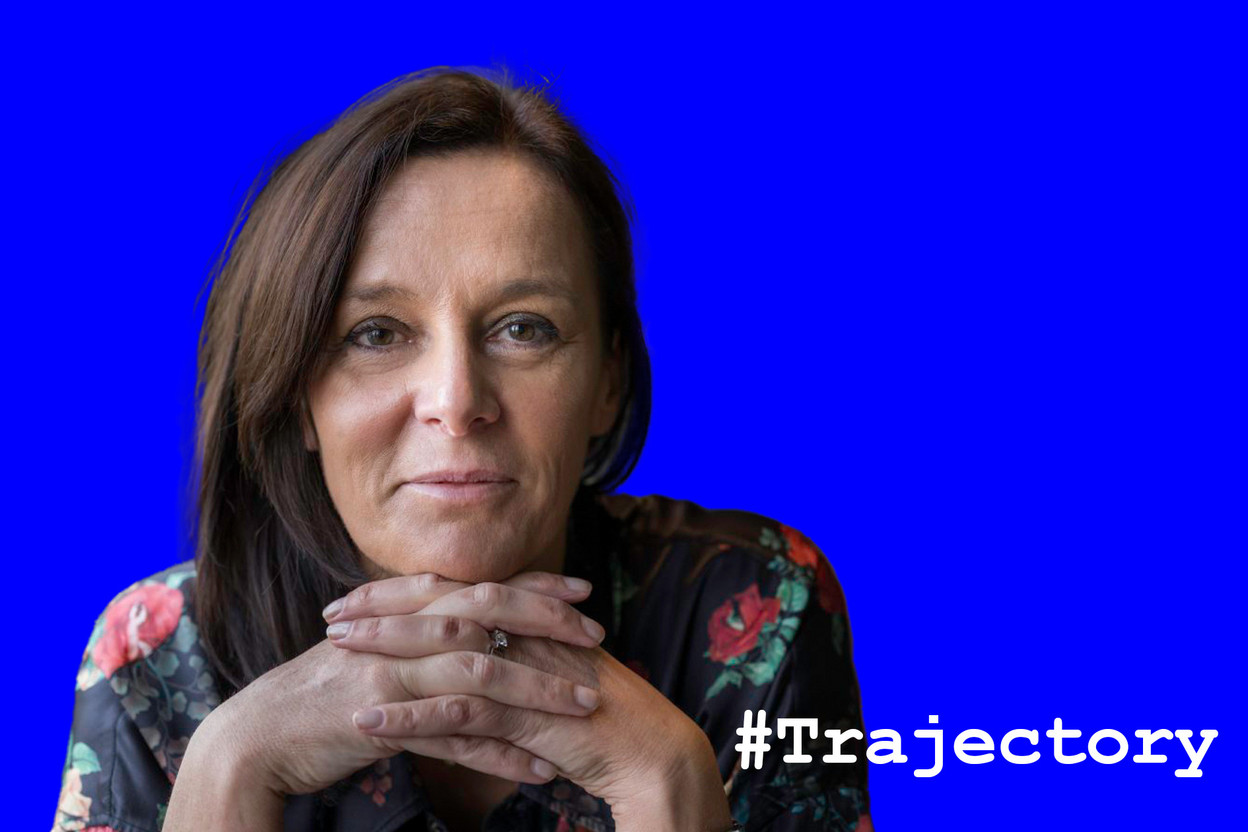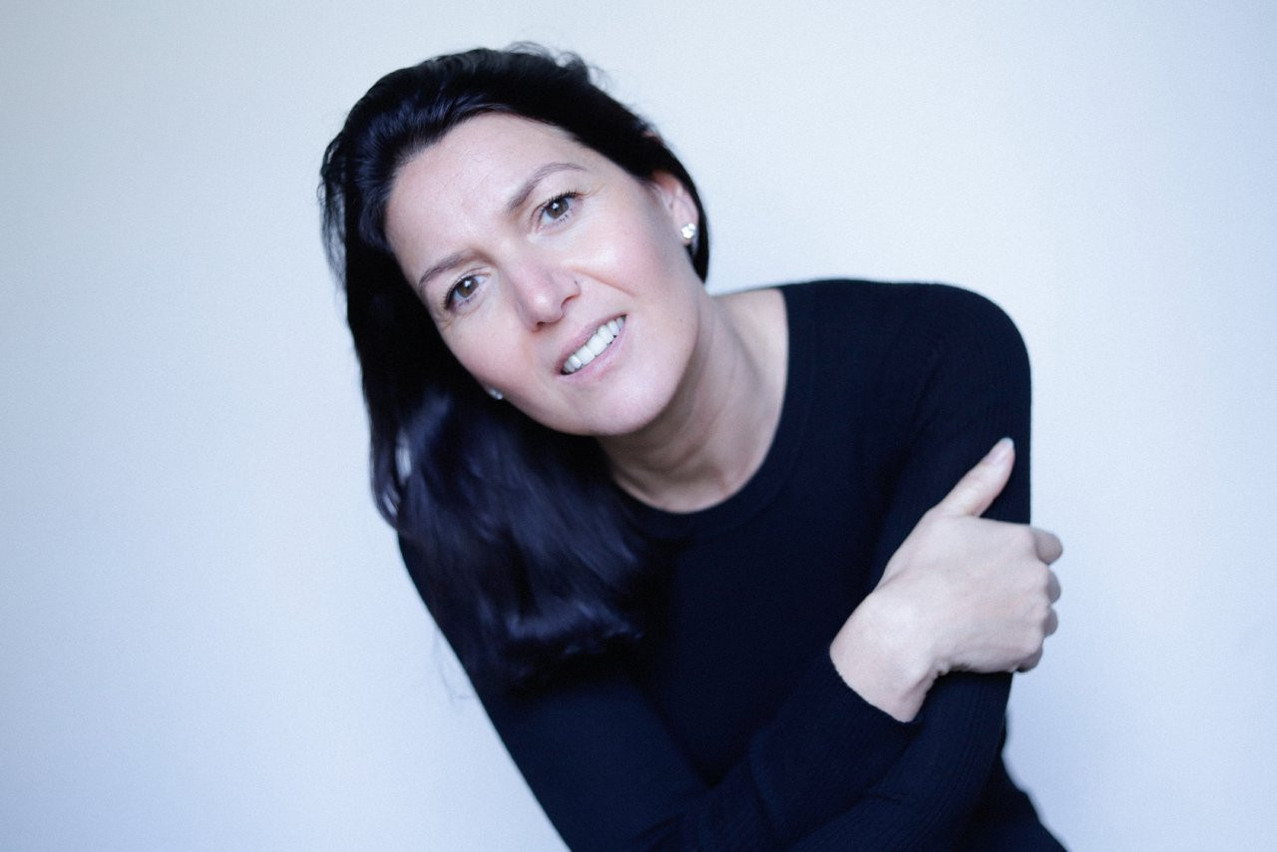
Between boardrooms and theatre stages, her itinerary is surprising. Anne-Catherine Grave, associate since May at AlphaOmega Corporate Solutions in Luxembourg, has a solid career in finance behind her: EY, Arendt, Bedell (now Ocorian) and Deloitte Luxembourg, where she was a partner. A classic high-level career path, until the day a major health problem prompted her to review her priorities and return to her artistic impulses.
A graduate of the Cours Florent in 2024, she now combines her responsibilities as an executive with her life as an actress, claiming this dual identity as a strength. Grave tells us about her career, her choices, her sacrifices and the energy that drives her to never give up.
How she clicked
“Acting has always been a passion,” says Graves. “Originally, I was more inclined towards film. I came to the theatre for professional reasons. I love passing on, giving and sharing. Paradoxically, I didn’t enjoy it very much when I had to give talks in front of 100 or 200 people. Fear and stress prevented me from doing something I loved. I started with a week’s intensive training at the École de l’Art Oratoire in Paris, followed by two years of improvisation in Luxembourg. After a while, I got bored. I love the richness of text and I wanted to move towards that. When I was a teenager, I dreamt of going to the Cours Florent, but I come from a family of shopkeepers and farmers, and at home people talked to me about having a ‘normal’ job. I put that dream on the back burner.”
I was having a great career when a major health problem brought me close to death,” she says. “I made myself two promises: never again to put my health at risk because of a job and to do something I’d always dreamed of doing but had never done, for fear of what people would say. I took up acting again and joined the Cours Florent. I graduated in 2024, after three years of classes in Brussels. At first, I wasn’t working because I had resigned from Deloitte, where I was a partner. Then, a former client asked me to join his group and supported me during my first year: “When you’re ready, I’ll be waiting for you and we’ll go.” I headed for Crestbridge while continuing my lessons in Brussels three times a week: 10 hours of lessons, 18 hours on the road, around ten hours of rehearsal… plus work. That’s 70 hours per five days over two years. It was intense.”
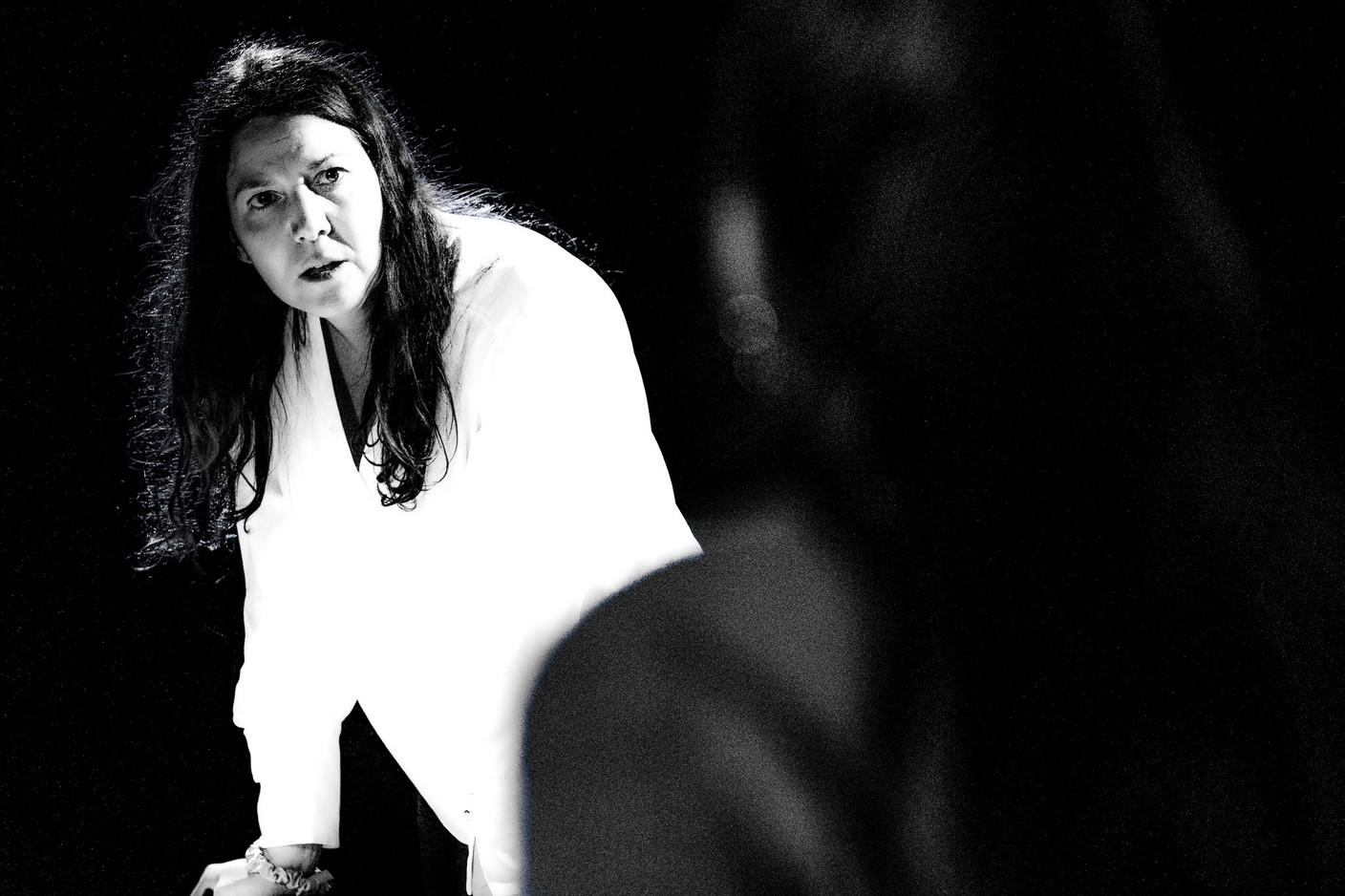
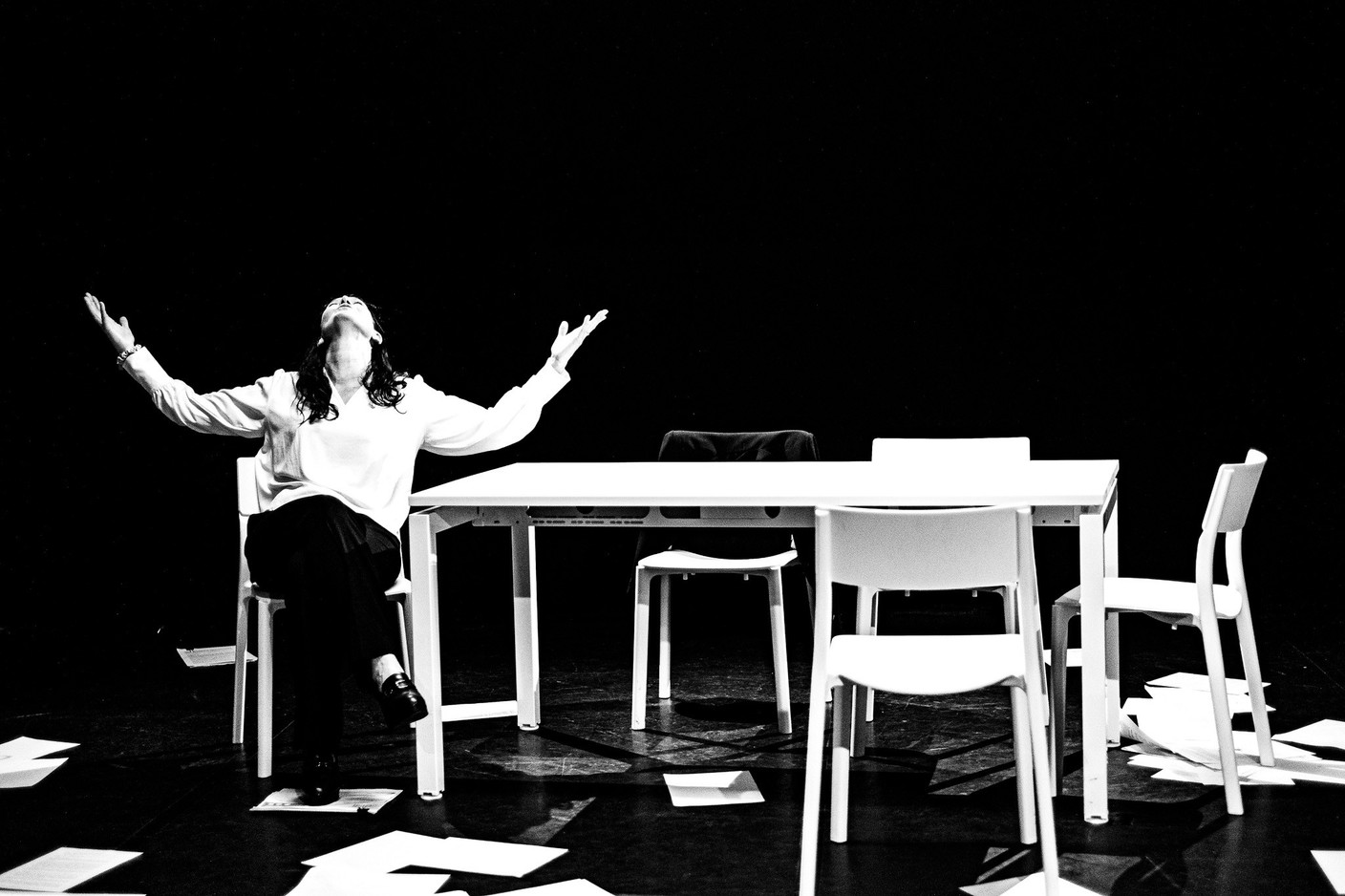
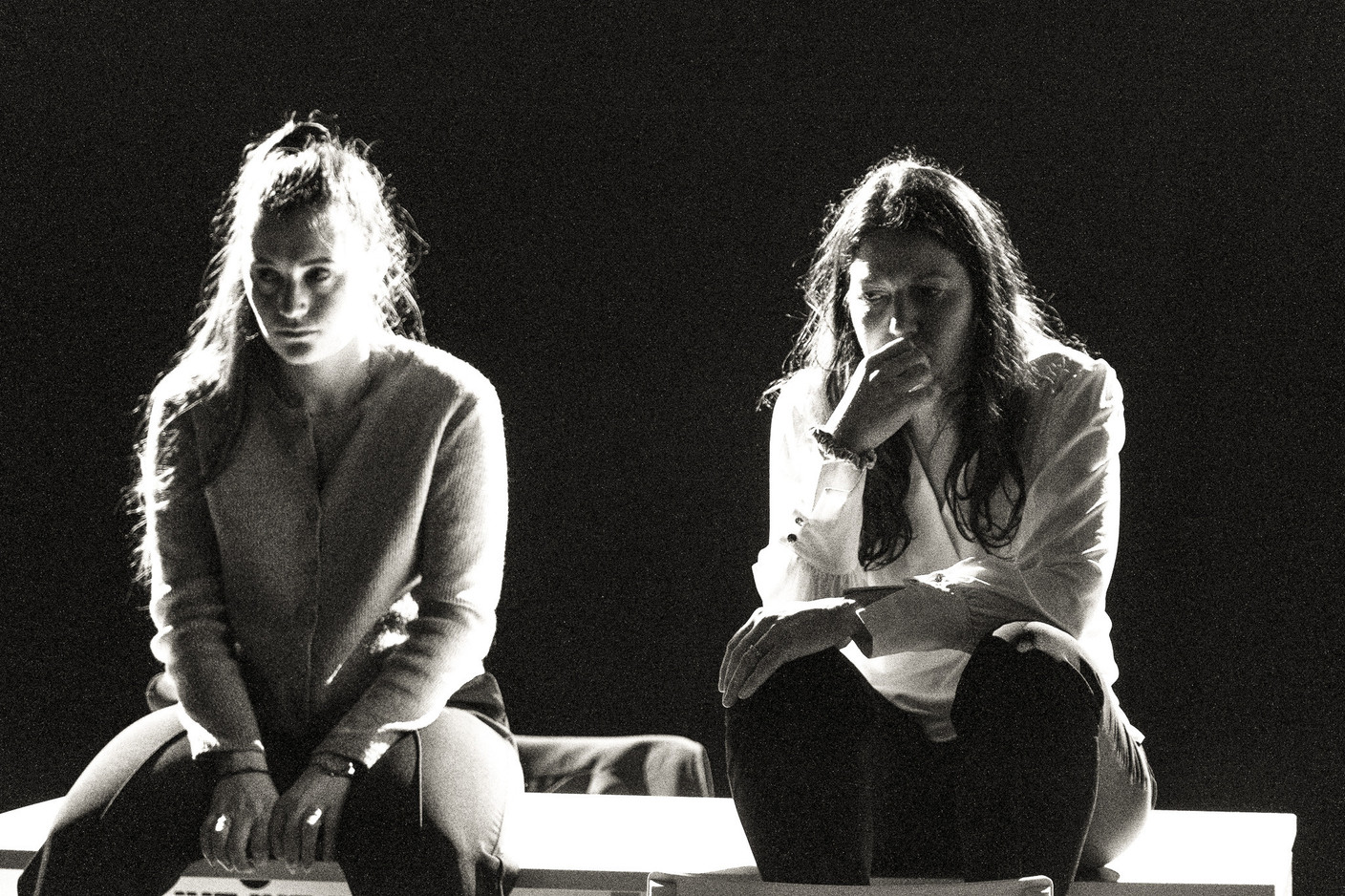
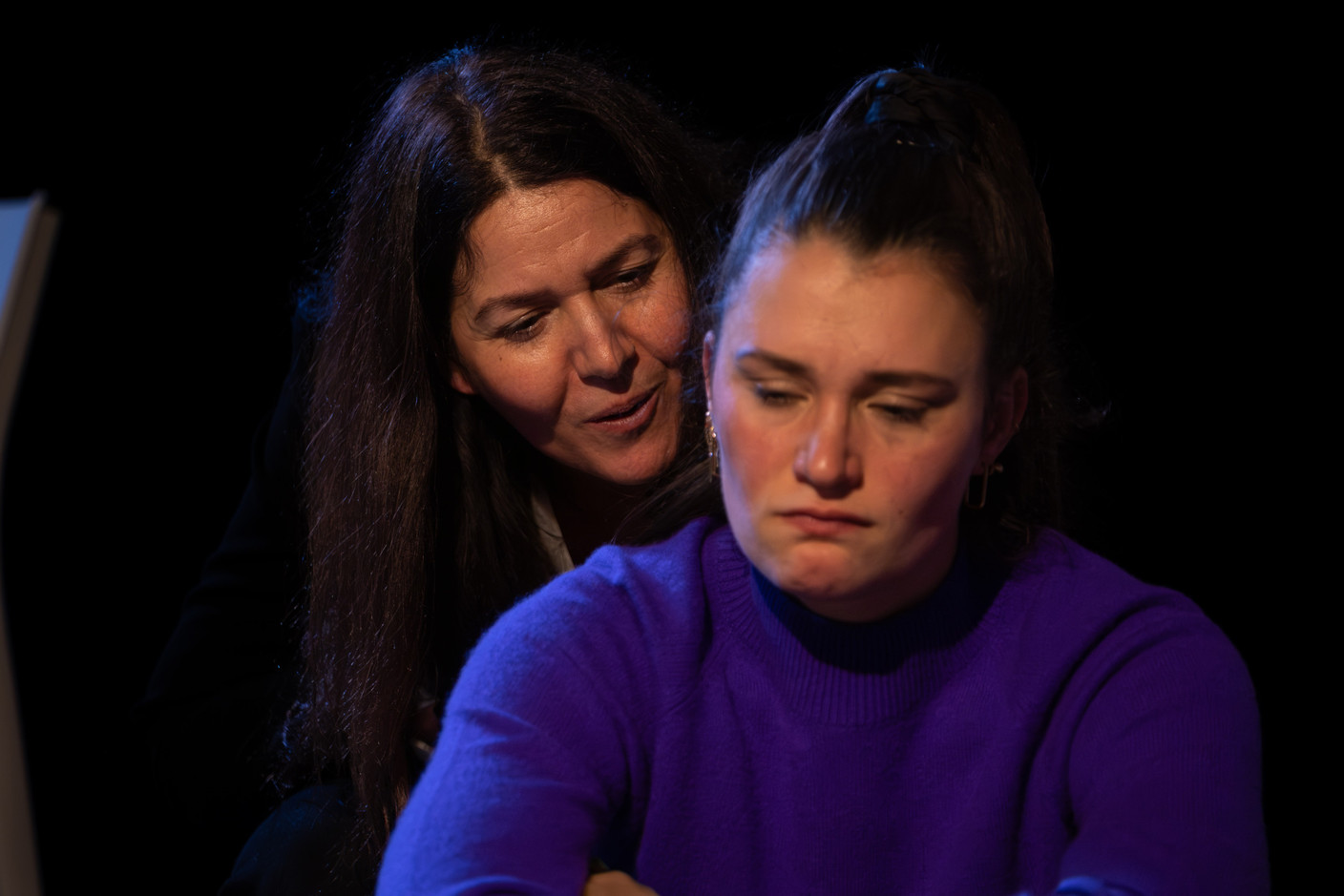
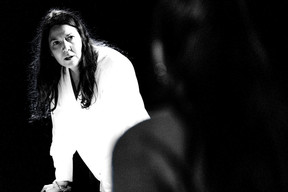
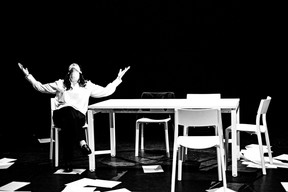
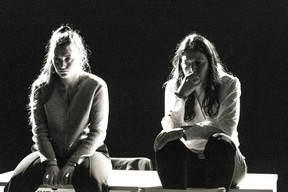
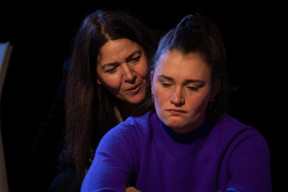
“In Brussels, the Cours Florent specialises in theatre, so there’s no mixing with film (except as an option),” she explains. “These are two different pleasures: in the theatre, it’s a ‘one shot,’ you don’t cut, you don’t repeat. There’s the presence of the audience, the expected or unexpected reactions, and that’s stimulating. That’s when something clicked for me: I knew I was in the right place.”
Shelled shells
“It was complicated at first,” says Graves. “My role as an executive had given me armour. I could ‘feel,’ but I couldn’t ‘pass the bar’: I couldn’t convey my emotions. It took me a long time to take it off. What changed everything was “Sœurs” by Pascal Rambert, the first play I produced and which I’m going to perform in Luxembourg and Belgium. I discovered Pascal Rambert’s writing, which I loved, and there was that moment when the boundary became blurred: the character and I became one. I was him, he was me.”
“To be an actress,” she continues, “is to slip into the skin of a character, to explore a version of yourself that eludes you, a mysterious and unknown other self. Theatre gives me that freedom. You give, you receive, you nurture and you are nurtured. It’s an experience that is both overwhelming and dizzying.”
Two worlds
“The great divide with finance is real,” says Grave. “On the one hand, everything is quantified (profitability, chargeability), on the other, the human element is central. For a long time, I saw them as opposites. Then I said to myself: I don’t have to choose. I want to put one at the service of the other. Finance helps me to pitch, build budgets, sell and broadcast as a producer; this rigour, this square, structured and disciplined side that finance requires is invaluable to me.”
“Inversely,” she continues, “I try to bring the human side into finance. With the sensitivity I’ve developed in the theatre, I’ve learned to listen better, to read non-verbals, to perceive things in a voice or a look. It’s a real asset. Theatre has also given me self-confidence and greater mastery of public speaking. I set up a company, Fin’Art, to put finance at the service of art and art at the service of finance, and take advantage of the strengths of both worlds.”
Flexibility
“Emotionally, it’s intense,” she says. “When you’re acting, you’re in a special state of mind. Then, suddenly, you have to go back to very down-to-earth things. These deviations create emotional peaks, which are sometimes difficult to manage. My days are full. I’m very lucky: my partner has known me for 20 years and has completely accepted my dual role. He’s associated with an actress, and that’s a given. I negotiated for 75%: a day and a half for the theatre, the rest for finance, with flexibility for rehearsals, shows or castings. I’m very lucky because not everyone accepts this. For it to work, you need people who trust you and believe in you. That’s what I experienced at Crestbridge, with Dean Hodcroft, and that’s what I experience today with Antoine Capone, at AlphaOmega Corporate Solutions. He’s a musician; that must help.”
“His” piece, her audience
“In anticipation of the performances of ‘Sœurs,’” she continues, “I have received many messages from former employees and colleagues: enormous support. Many see it as an example that you can be a company director and have a passion on the side. It puts a little pressure on me: people know me in finance, not yet in the artistic world. But it’s the culmination of a year and a half’s work. There’s some apprehension, but also the joy of being able to produce and perform. It’s a sacrifice, of course. I’m married with two daughters. When I was travelling back and forth to Brussels for three years, my husband was exceptional, he took on everything. I could never have done the Cours Florent without him. I’m happy to be at this stage. The most important thing is to make a beautiful text known, the one that decided me to make it my profession, and to pass it on as best I can.”
Her singing career
“I’ve always loved the arts: skating, sculpture, painting, pottery… even my first job, as a tax specialist, had its creative side. The first gateway was singing: it lifted me up when I wasn’t doing well. After my lung infarction, I went back to it to regain my breathing capacity. Singing in front of people still leaves me too naked, unlike theatre, which doesn’t pose a problem for me. However, I’m going to release an album at the end of the year, under the name ANNA. An incredible encounter: I worked with Thomas Monica, the guitarist of -M-, on one of his tours, who is also a producer. We went from a five-track EP to a 10-track album. The talented and renowned cellist Mathilde Sternat has provided musical accompaniment for most of my tracks. We’re currently finalising the mixes in London with Ian Capel, who used to work with Alain Bashung.”
Sensitivity
“By removing the shell for theatre, you can’t put it back on: my sensitivity is laid bare, and that has to be accepted. People have always been important to me. I’ve had to part company with people who didn’t perform, but never against my values. Today, I no longer accept any compromise on human values. There’s no choice to be made between performance and people: if employees feel good, they work well, the company does well, and customers are satisfied. Unfortunately, it’s sometimes harder to get people at the top to listen, but I’m not going back. That’s also why I left the big structures: I don’t fit into the mould any more, and I don’t want to. I joined AlphaOmega Corporate Solutions because we share the same vision: to put people at the centre of our business.”
Her “oxygen”
“Acting is a job of resilience,” says Graves. “You’re told no all the time. At the age of 20, being turned down in the midst of self-development is violent. Even at 50, your morale takes a beating. So I set myself a game: one ‘no’ is worth three e-mails in the back. I fall down, get up again and keep going. It’s a tough road: learning to perform a play is complicated enough, but selling it is another job altogether. In this business, which is supposed to be very human, you mustn’t think that everyone is. It’s also a very closed circle. Sometimes I think that the world of finance isn't so bad. My experience has shown me that if you work hard in finance, you succeed. In the arts, that’s not necessarily the case. Work is obviously a prerequisite, but there are also many other parameters that don't depend solely on you. My age and experience give me the strength not to give up.”
“I couldn’t choose between my activities,” she says. “I love my job in finance, but art is my oxygen. My work in the world of finance allows me to live out this passion. It’s a great opportunity. If I gave up on the arts, I’d lose myself. Going back is impossible.”
“Sœurs,” by Pascal Rambert, directed by Joffrey Roggeman, with Nikita Adamski and Anne-Catherine Grave, 17 October at the Altrimenti; 14, 28 and 29 November at Théâtre Le 10; 16 November at Théâtre de Liège.
This article was originally published in French.