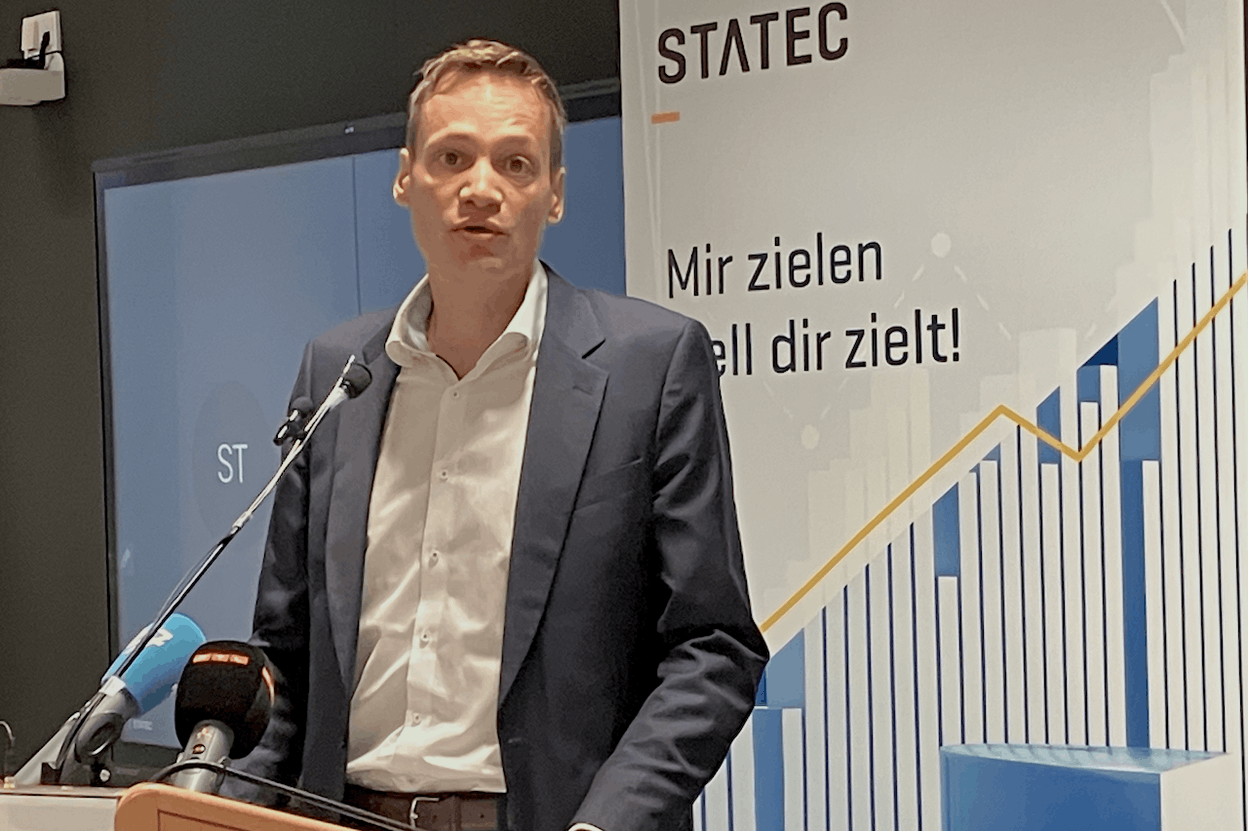
Salaried employment growth remained very moderate in the first quarter, according to national statistics bureau Statec. Levels were structurally well below what would be needed to naturally balance the accounts of the pension system, said Statec director Tom Haas when presenting the first business report of the year. In 2024, growth reached 1.3%, the lowest level since 2009.
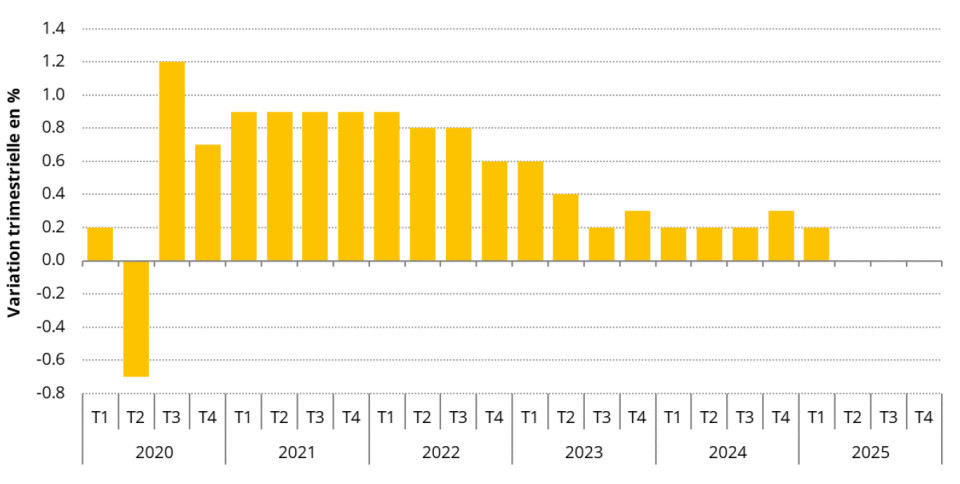
Evolution of job creation since 2020. Source: Statec
Trade, transport, accommodation and food service activities (+0.6%), as well as administration and other public services (+0.9%) show the strongest quarterly increases compared to the fourth quarter of 2024. By contrast, the construction, information and communication, and professional and support services sectors recorded a fall in the number of employees in the first quarter of 2025. Over 12 months, it is also once again the administration and other public services (+3.7% year-on-year) sectors that are the most dynamic branches in a year-on-year comparison.
Public sector is driving employment
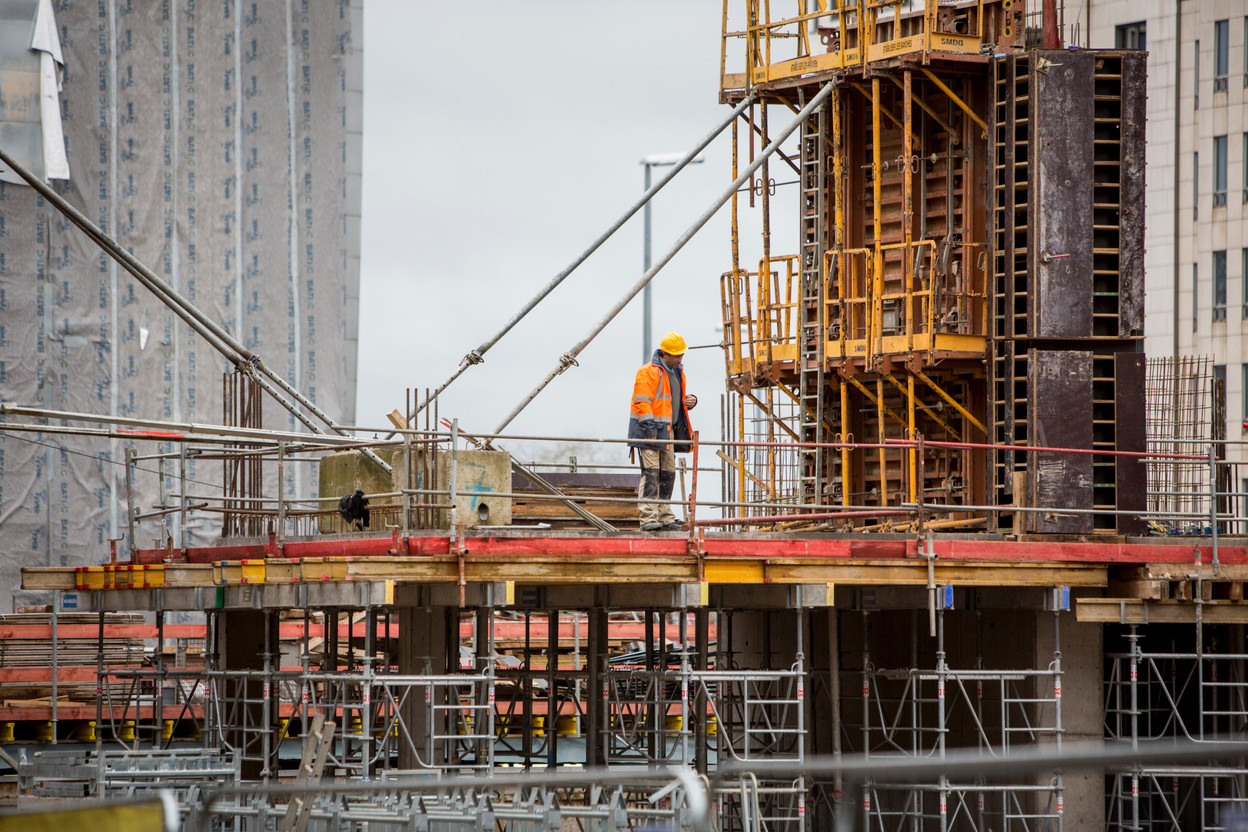
The public sector employed 110,558 people, making it the country’s largest employer, ahead of the trade, transport, accommodation and catering sector (106,390 people). Within this sector, central government services and social work activities--excluding accommodation for the elderly and disabled--recorded the most favourable growth, notes Statec. On the other hand, the construction sector saw a marked fall of 3.3% in the number of employees over the year, particularly in the construction of residential and non-residential buildings. The sector now employs 48,436 people.
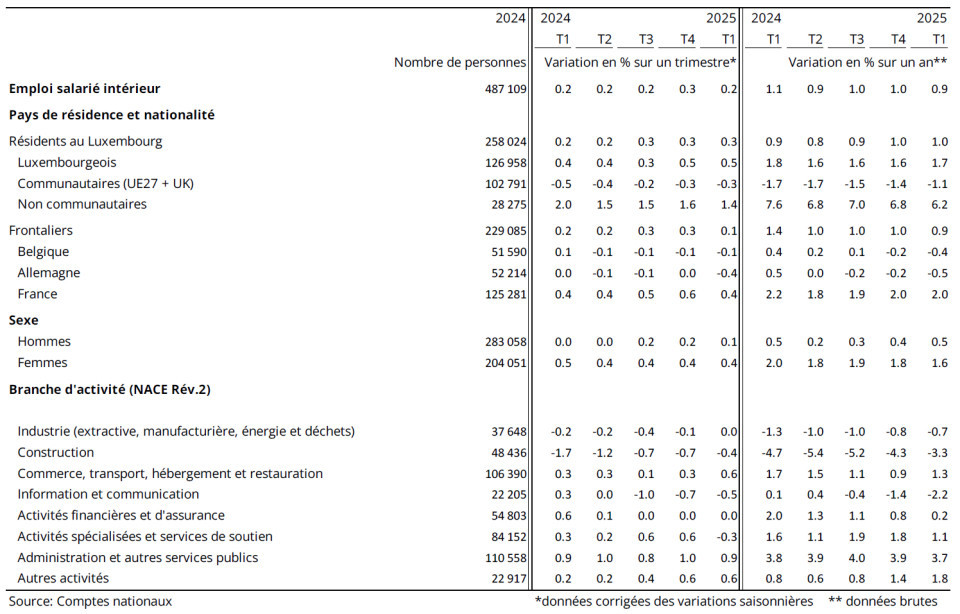
Employment trends by place of residence, nationality and sector of activity. Source: Statec
In the first quarter of 2025, Statec counted 258,024 resident workers (+1% over one year) and 229,085 cross-border commuters (+0.9% over one year). Whilst the country still attracts French cross-border commuters (125,281 people, up 2% year-on-year), it is less attractive to Germans (52,214 employees, down 0.5% year-on-year) and Belgians (51,590 employees, down 0.4% year-on-year). Among resident workers, 126,958 are Luxembourg nationals, 102,791 are EU and UK nationals, and 28,275 are non-EU nationals. The number of non-EU nationals rose by 6.2% in one year.
This article was originally published in French.