Luxembourg's economic activity showed a rebound at the beginning of 2024, yet the labour market continued to face challenges, the grand duchy’s statistics bureau Statec has said. In a report published on 22 July 2024, Statec noted that the employment growth slowed to 0.8% annually in June, the lowest rate since the financial crisis of 2009-2010, and significantly below the historical average of nearly 3%. The slowdown in employment was widespread across most sectors, with notable declines in construction, specialised, scientific and technical activities, and the financial sector.
Sector-specific employment trends
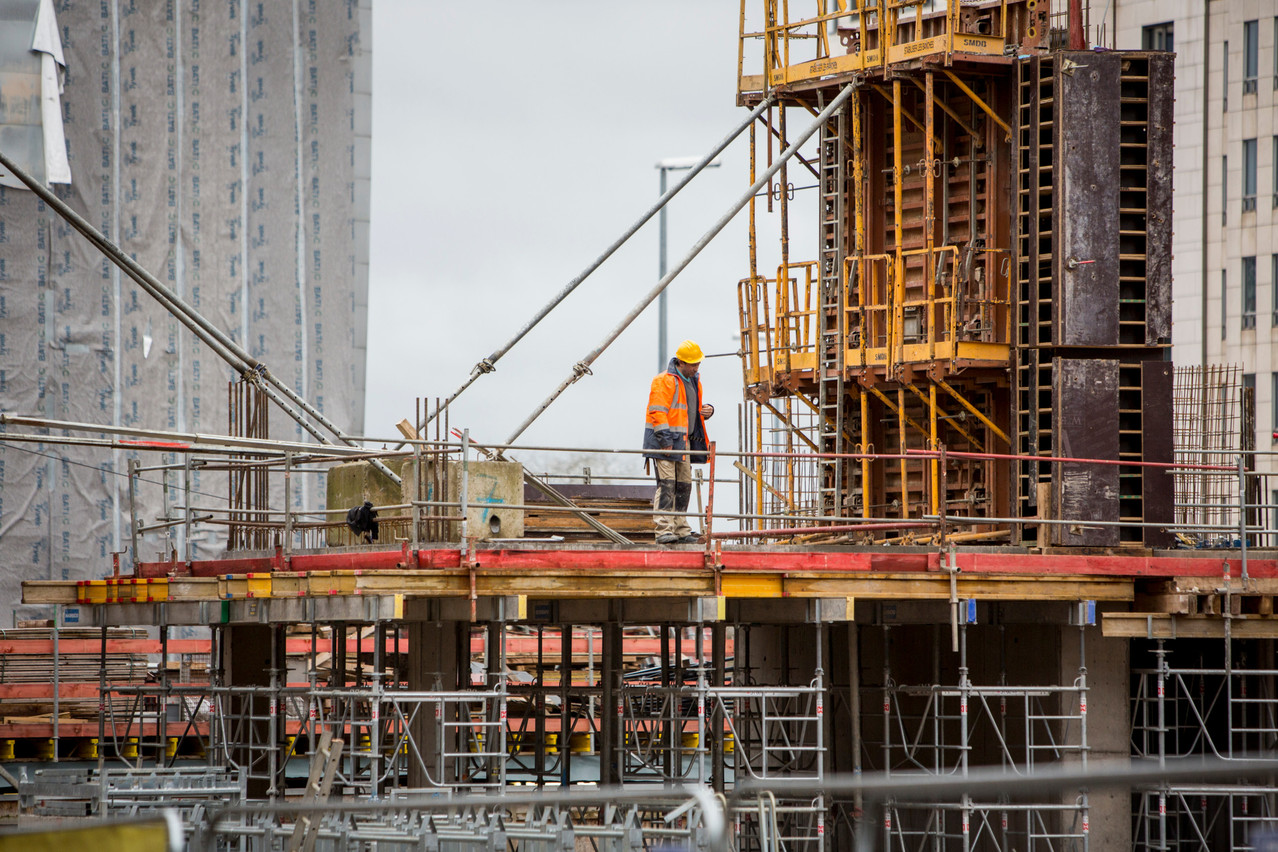
The construction sector experienced severe job losses, with approximately 3,300 positions lost since October 2022, representing more than 6% of total employment in the sector. Despite worsening conditions throughout 2023, preliminary data for the second quarter of 2024 indicated a potential stabilisation, with a 60% reduction in job losses due to bankruptcies compared to the first quarter.
In the specialised, scientific and technical activities sector, a significant contributor to the slowdown was the decline in employment at the main centres, which had previously enjoyed robust growth averaging 12% annually since 2015. Employment in this area fell by nearly 2% year-on-year at the beginning of 2024. The financial sector’s deceleration was largely attributed to a slowdown in fund management, which grew by 2.6% year-on-year in April 2024, down from an average annual growth rate of 8% since 2015.
Unemployment rate
Despite ongoing employment challenges, the overall unemployment rate has not risen significantly since late 2023 and even saw a slight drop at the start of 2024 before increasing again to 5.7% by the end of spring.
This trend may be due to a rise in inactivity or unreported unemployment, said Statec in the report. There has been a noticeable divergence between the active population (the sum of resident employment and registered unemployed, which has stagnated since November 2023) and the total population (which has continued to grow). Additionally, national employment agency Adem reported a decrease of 500 registrations from non-compensated unemployed individuals between November 2023 and May 2024, suggesting that some discouraged jobseekers may have shifted to apparent inactivity due to the expiration of benefit entitlements and limited job prospects.
Statec forecasts an average of 1.3% employment rate for 2024, the lowest growth rate since the 1.0% recorded in 2009. For 2025, a modest rebound is anticipated, with employment growth projected to reach 1.7%. Unemployment is expected to rise slightly to 5.9%, up from the 5.8% anticipated for 2024.
Housing market
In the first quarter of 2024, Luxembourg saw an increase in residential transactions for the first time in two years. Sales of existing apartments grew by 25% quarter-on-quarter, aligning with the upward trend in house transactions observed in the fourth quarter of 2023. However, sales of new apartments remained stagnant at historically low levels. Real estate prices stabilised in the first quarter, showing a slight decrease of 0.3% quarter-on-quarter, following declines of 2.1% in Q4 2023 and 6.6% in Q3 2023. Prices for new apartments fell by 2.3% over the quarter.
Inflation
Since the beginning of the year, inflation in the eurozone has stabilised around 2.5%. Although inflation for food and non-energy industrial goods has decreased, energy prices have stagnated, and service prices have shown signs of slight acceleration. Service inflation increased to 4.1% in May and June, up from 4.0% from November 2023 to March 2024. In Luxembourg, service inflation slowed to 3.8% in June from 4.7% in January 2024, following the impact of three wage indexations in 2023.
Tax revenue
Tax revenues excluding social contributions collected by the Luxembourg government in the first half of 2024 rose by 11.4% year-on-year. This increase was driven mainly by higher corporation tax receipts in Q2 2024 and an increase in VAT rates. The substantial rise in corporation tax, up 32% year-on-year, was attributed to balances related to previous fiscal years for a few companies, which nearly doubled compared to the previous year, while advance payments increased by 9%. Growth in personal income taxes slowed to 8.2% year-on-year, down from 12% in 2023, reflecting lower inflation and adjustments in tax brackets. VAT revenues increased by 9.6%, benefiting from the rise in VAT rates. The subscription tax benefited from higher asset valuations in investment funds. Conversely, registration duties on real estate and housing related transactions continued to decline, down 23% after a 52% drop in 2023.