
“Our central hypothesis is that transit through the Strait of Hormuz will gradually resume in the short-to-medium term,” said Lilia Peytavin, global market strategist at J.P. Morgan Asset Management, in an interview on 14 April 2026.
This expectation is driven by significant geopolitical pressures, particularly from the United States as it approaches midterm elections (see chart 1), and the economic vulnerabilities of major Asian importers like China and India. She noted that 80% of the traffic through the Strait of Hormuz normally goes to Asia, particularly China and India.
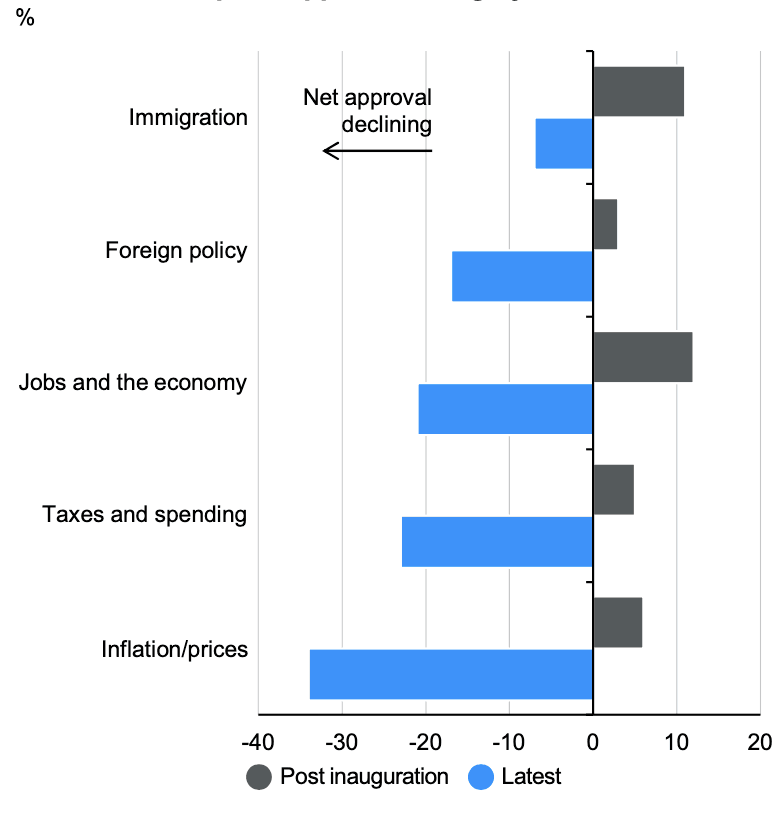
Chart 1: Trump net approval by key issues Sources: The Economist/YouGov, J.P. Morgan Asset Management.
Oil to stay high into 2027
“There’s a difference between political negotiations—which the market may anticipate—and the actual physical transit stream that isn’t materialising.” Even under JPM AM’s optimistic scenario where transit resumes, energy prices—particularly oil—are expected to remain elevated through 2026 and potentially into mid-2027. “There is no oil or gas production capacity elsewhere today capable of fully offsetting the loss of Hormuz.”
This is due to several factors: physical infrastructure damage that will lower production post-conflict, a historical trend of long-term production dips following geopolitical supply shocks (see chart 2), and the necessity for nations to refill strategic reserves to higher levels for energy security. Consequently, the base case for oil has shifted from $70 per barrel to approximately $85 per barrel, according to Peytavin.
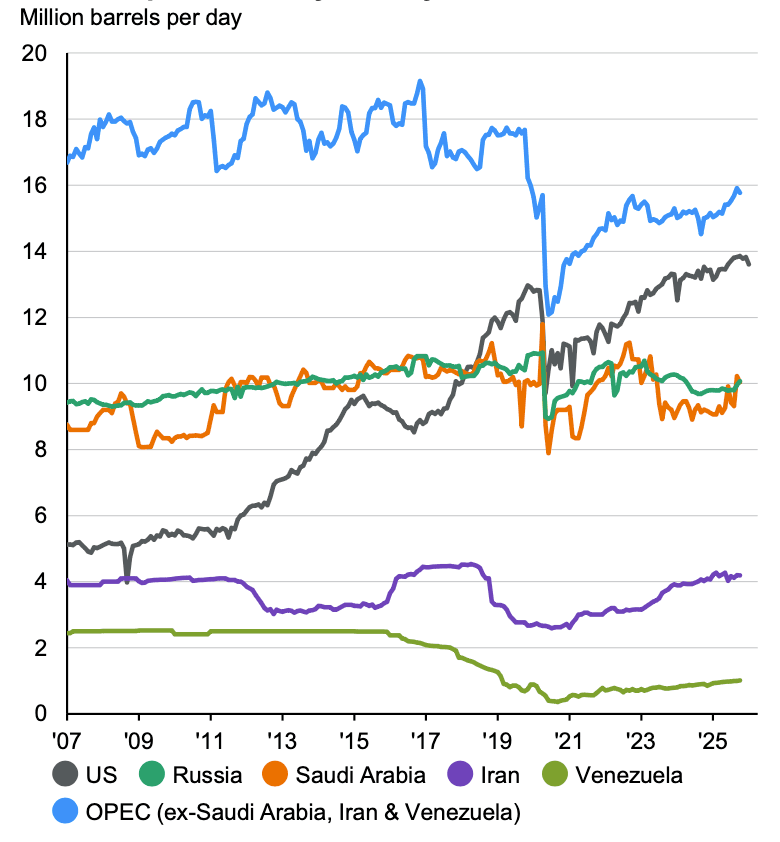
Chart 2: Oil production take years to recover after a shock Sources: EIA, LSEG Datastream, J.P. Morgan Asset Management.
The gas market faces winter supply risk
Beyond oil markets, gas presents a different risk profile because it is highly seasonal given its importance for heating. While European storage levels currently benefit from lower demand during warmer months, gas storage must be replenished between April and October to meet winter heating requirements.
Given the current lower-than-historical level of gas inventories (see chart 3), if transits do not resume, gas prices could increase significantly, forcing demand destruction for the upcoming winter. Currently, gas prices have risen moderately, sitting slightly above coal prices, which encourages industrial substitution. However, a failure to restore transit would lead to a “very significant” escalation in energy costs.
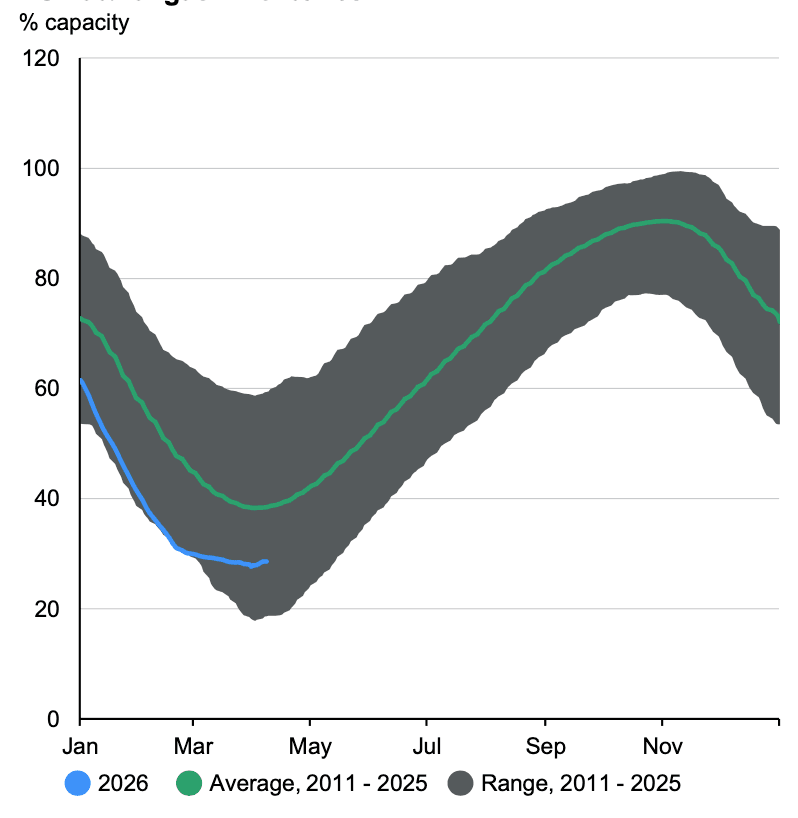
Chart 3: EU natural gas inventories below historical levels Sources: Gas Infrastructure Europe, LSEG Datastream, J.P. Morgan Asset Management. Guide to the Markets - EMEA. Data as of 8 April 2026.
Inflation and central bank policy
These energy dynamics feed directly into inflation and central bank policy. However, this current environment differs substantially from the 2022 crisis. Central bankers, particularly at the ECB, still carry the “scars” of past errors, such as the 2011 rate hike at the onset of the sovereign crisis and the late response to rising inflation in 2022 when rates were still negative.
However, the risk of “second-round effects”—where energy costs drive wage-price spirals—is more limited today. The labour market is weaker than in 2022, with PMI employment indices below 50 suggesting contraction and lower job vacancies. Furthermore, real wages are no longer deeply negative (see chart 4), meaning there is less pressure for “catch-up” wage demands.
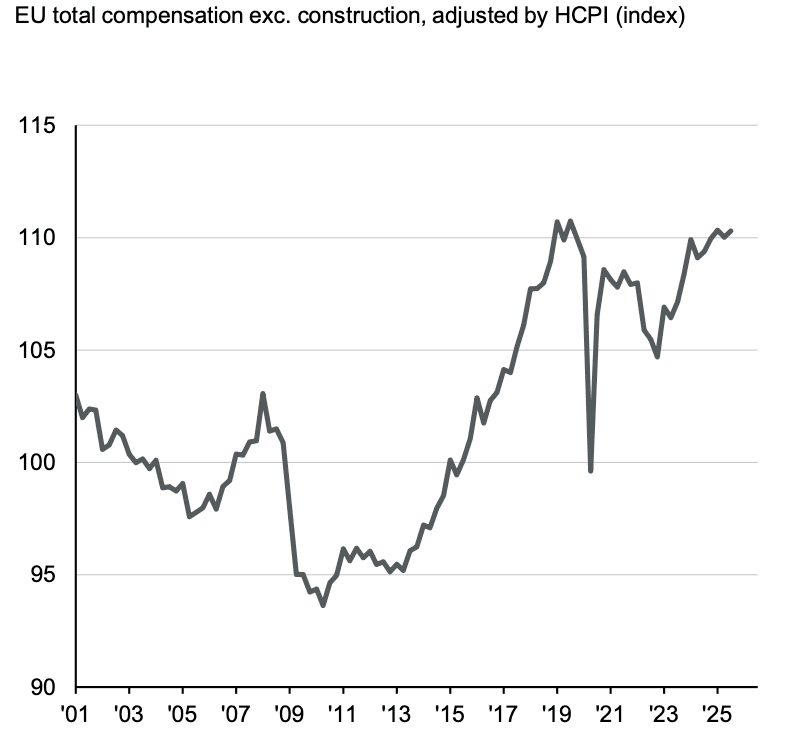
Chart 4: Real wages have rebounded Sources: Haver Analytics, J.P. Morgan Asset Management. Data as of 13 March 2026.
Core inflation in Europe is around 2%. As a result, companies find it harder to pass on cost increases to consumers, who are more attentive to price changes than they were during periods of galloping inflation. In terms of policy, the ECB may raise rates once in 2026, a shift from earlier market pricing of three hikes prior to the ceasefire announcement.
Earnings-per-share revisions excluding energy and financials in Europe have been negative since the beginning of the year

Meanwhile, the Fed is managing a dual mandate of employment and inflation. US core inflation may see a downward trajectory as the effects of past customs tariffs fall out of the data and shelter prices continue to their downward trend. Therefore, Peytavin considers a Fed rate cut as more likely in the second half of the year as growth slows below trend.
European equities mask underlying weakness
The investment stance remains “pro-risk,” favouring equities as a nominal hedge against moderate inflation. There is a notable divergence between macroeconomic vulnerability and equity market performance. For instance, while Europe is energy-dependent, its equity indices have a sector composition that benefits from higher commodity prices (see chart 5).
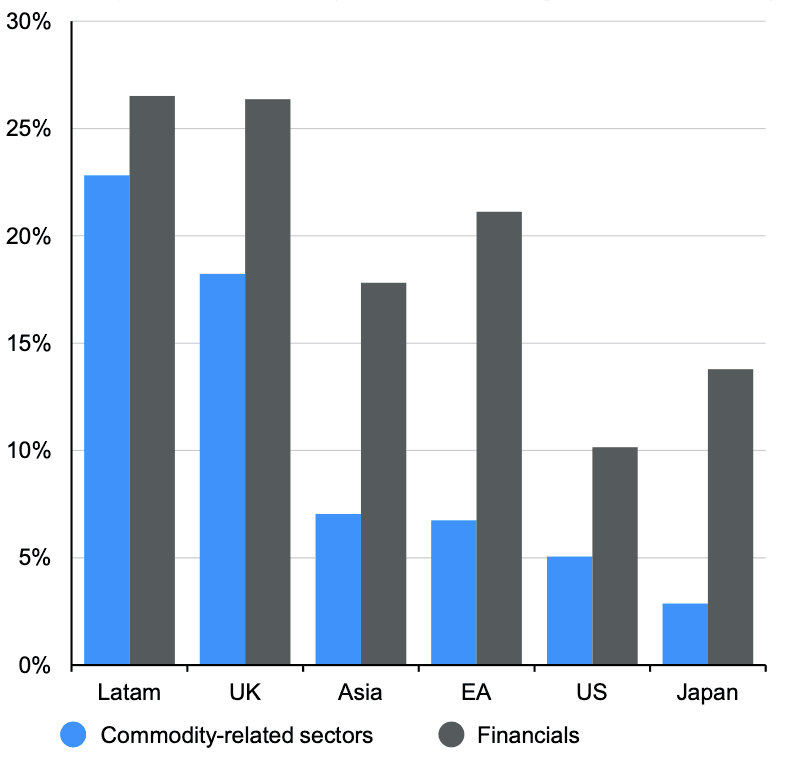
Chart 5: Weight of financials and commodity (energy/basic resources) related sectors in equity markets Sources: LSEG Datastream, Worldscope, J.P. Morgan Asset Management. Past performance is not a reliable indicator of current and future results. Data as of 13 March 2026.
Peytavin added that the UK’s FTSE 100 has been particularly resilient, with earnings-per-share (EPS) revisions rising 4%, against 2% in the US and Europe, since the conflict began due to its heavy weighting in energy and financial sectors. “However, earnings-per-share revisions excluding energy and financials in Europe have been negative since the beginning of the year,” she said.
In a recession, cyclical markets like Europe and Latin America are set to underperform. The UK should hold up better due to its defensive, value-driven mix (energy and financials), explaining its outperformance versus other regions before and after the crisis.
Tech concealing softness in EM Earnings
Questioned on the challenges Asia faces in securing energy imports from the Persian Gulf, Peytavin stressed that its financial markets diverge from its economies. Developed markets like Korea can absob higher cost for energy, but emerging markets (EM) like Bangladesh must cut demand. India is sensitive due to energy’s high budget share. MSCI EM earnings are heavily supported by the tech sector in Taiwan and Korea, though she suggested diversifying into MSCI Europe, for instance, to limit heavy tech exposure.
Big Tech premiums lose ground
In the technology sector, there is a clear move towards diversification. Many “hyperscalers” in the US have seen their valuation premiums over the S&P 500 compress to roughly 5% following concerns about the return on investment for massive capital expenditures. In addition, she argued that this environment calls for “active management” to capture the high dispersion within software and tech sub-sectors.
For fixed income, the outlook is more constructive than in late 2024. With current yields offering an attractive “carry,” bonds across the developed world are well-positioned for either a recessionary slide or a de-escalation of conflict, as both scenarios would exert downward pressure on interest rates. Only a persistent “stagflation” scenario—which is not JPM AM’s base case—would remain negative for the asset class.