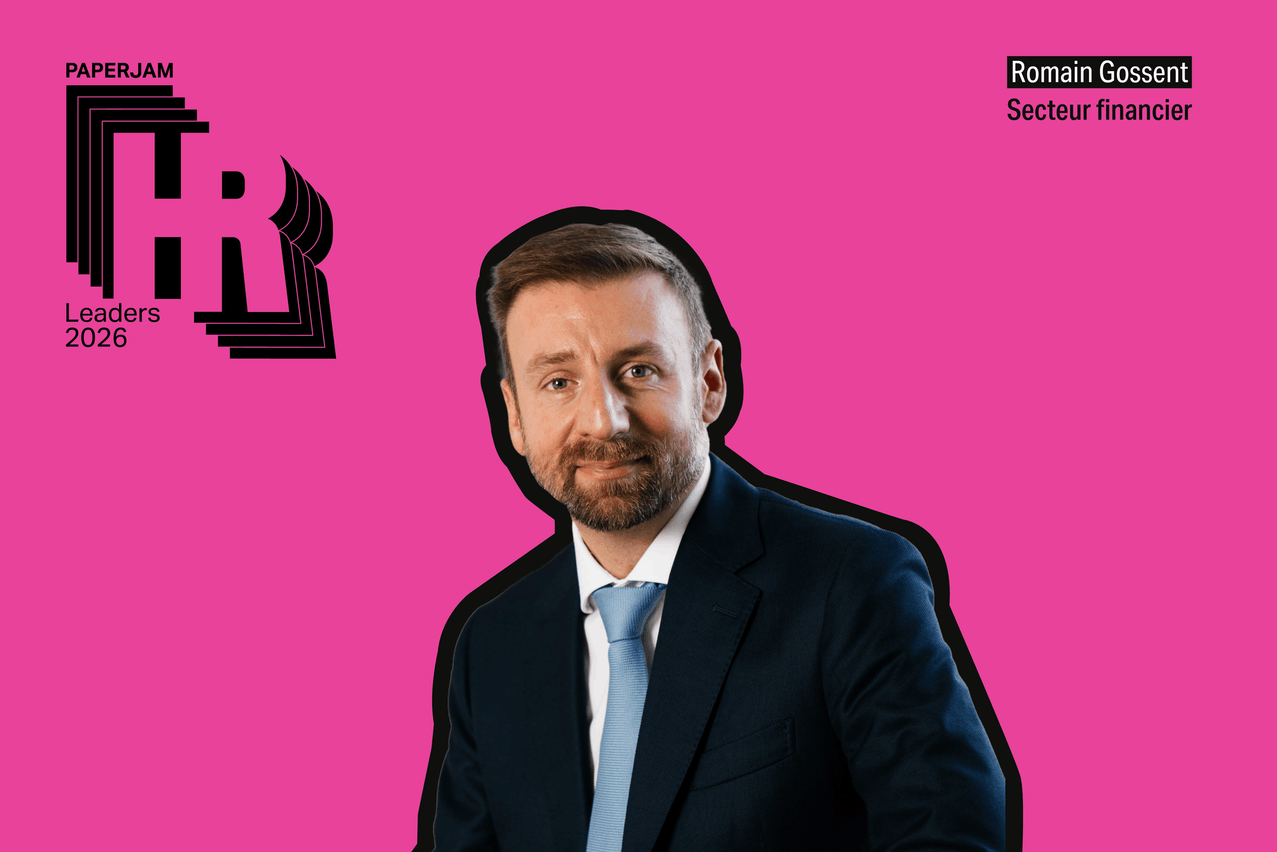
How do you anticipate the key skills your organisation will need tomorrow?

At the same time, geopolitical dynamics are forcing us to continually reassess sustainable investments that make sense for our customers, while the digitalisation of our processes, the rise of cryptocurrencies and new uses are redefining our benchmarks.
In this context, anticipating the skills of tomorrow means first and foremost making agility a collective reflex. It means encouraging innovation and ownership at every level, while maintaining a clear vision of our DNA and our mission: to serve our customers. But serving them in a different way – with greater creativity, adaptability and the ability to reinvent ourselves continuously. We don’t yet know the nature of all the challenges ahead. What we do know is that success will come to those who cultivate curiosity, resilience and rapid learning. Agility is not just another skill: it is the key to success in an ever-changing world.
Which HRD are you and what personal learning has most influenced the way you are an HRD?
“I consider myself to be a deeply empathetic HRD. My career path did not begin with an academic education in human resources, but with a passion for human relations. If I’ve devoted most of my career to this field, progressing from assistant to my current position, it’s because I love people. I learnt structure and rigour in large organisations, then flexibility and pragmatism in a more agile structure where every decision rested with me.
Two key experiences have shaped my vision and approach. The first was the confidence of a director who allowed me to move from the role of HRBP to that of relationship manager. In doing so, I discovered the other side of the mirror, becoming an HR ‘customer’. It was an experience rich in introspection and understanding of business expectations. The second was the liquidation of the bank where I worked, with the negotiation of two redundancy plans and the redundancy of employees with whom I had shared ten years. It was an intense human ordeal, which confirmed to me that empathy and benevolence are not options, but imperatives when accompanying transformations on such a scale.
What simple advice would you give to an HRD just starting out in their career to quickly boost their impact?
“The simplest and most powerful piece of advice I would give to an HRD at the start of their career is to understand the business first and foremost. To be a credible strategic partner, you need to know the rules of the game: what are the markets, who are the customers, what are the constraints? HR recommendations are only of value if they fit in with the company’s economic and operational reality.
Then you have to learn to speak the language of managers. Explain why investing in training and retaining talent is not an expense, but an investment that generates performance: more motivation, less absenteeism and knowing that the cost of replacement is much higher than the cost of retention.
Finally, it is essential to change perspective: we are not managing ‘resources’, we are developing human capital. And like all capital, it can be developed and made to bear fruit. This is where the real impact of an HRD lies: creating sustainable value for the company and for individuals.”
Discover all the finalists in the HR Leaders of the Year 2026 contest on paperjam.lu.
The winners of the contest’s four categories (Institutional, Retail & Hospitality, Services, Financial Sector), as well as the HR Leader of the Year 2026, will be announced on 27 January 2026 at the Tramsschapp during the Paperjam HR Leaders 2026 event. If you wish to attend this gala dinner, you can book a table via this link.