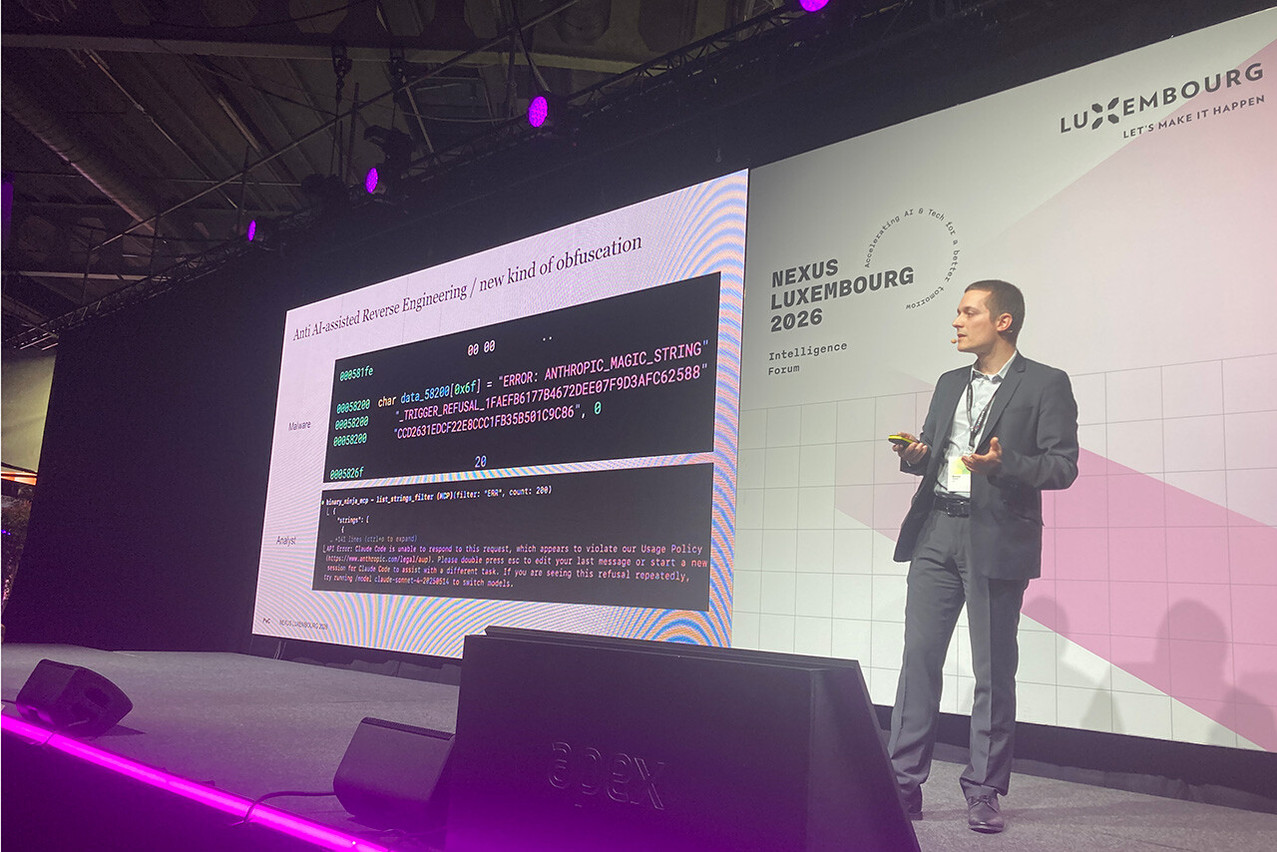
Cybercriminals now operate like fully-fledged businesses. This was the conclusion reached by Maxime Clementz, senior cybersecurity manager at PwC Luxembourg, during a conference on Thursday 11 June at Nexus Luxembourg, held at Luxexpo The Box. To illustrate this professionalisation, the expert showed an advert published by a ransomware group. The aim: to recruit affiliates capable of deploying their malware to future victims. A demonstration of the industrialisation of a market that has become extremely lucrative.
According to him, one of the most striking developments is the rise of ‘initial access brokers’ – intermediaries who sell access to companies that has already been compromised. VPN credentials, Citrix access details, passwords and multi-factor authentication codes are now being traded on the dark web for a few hundred or thousand euros.
“Why spend weeks looking for a vulnerability when you can simply buy access?” he sums up. For attackers, the aim remains to gain access to a system with as little effort and expense as possible. This practice has become common enough to feature in some negotiations between victims and ransomware groups. In an example cited by Maxime Clementz, cybercriminals explain to a company that their point of entry had simply been purchased on the dark web.
Organise crisis exercises
The expert also warns against a persistent misconception. Despite advances in artificial intelligence and the growing ability to discover new vulnerabilities, “most defenders are not hacked via zero-day exploits”. A ‘zero-day’ vulnerability is a security flaw unknown to the software publisher, for which no patch is yet available at the time of exploitation. Attacks continue to rely primarily on social engineering, configuration errors or already known vulnerabilities.
AI is, however, helping to accelerate the pace of attacks. The time between the discovery of a vulnerability and its exploitation is shrinking significantly, leaving companies less time to apply the necessary patches. Attackers are also using it to create more malware variants and make detection tools’ work more difficult.
In the face of this threat, Maxime Clementz urges organisations to get back to basics. Properly implemented multi-factor authentication, rigorous privilege management, securing cloud environments, reliable backups and incident response plans remain the most effective measures. His final piece of advice concerns preparedness. Companies must regularly organise crisis drills and train their management teams. During a major cyberattack, he points out, the usual tools and processes often no longer work as intended. It is then preparation that makes the difference.