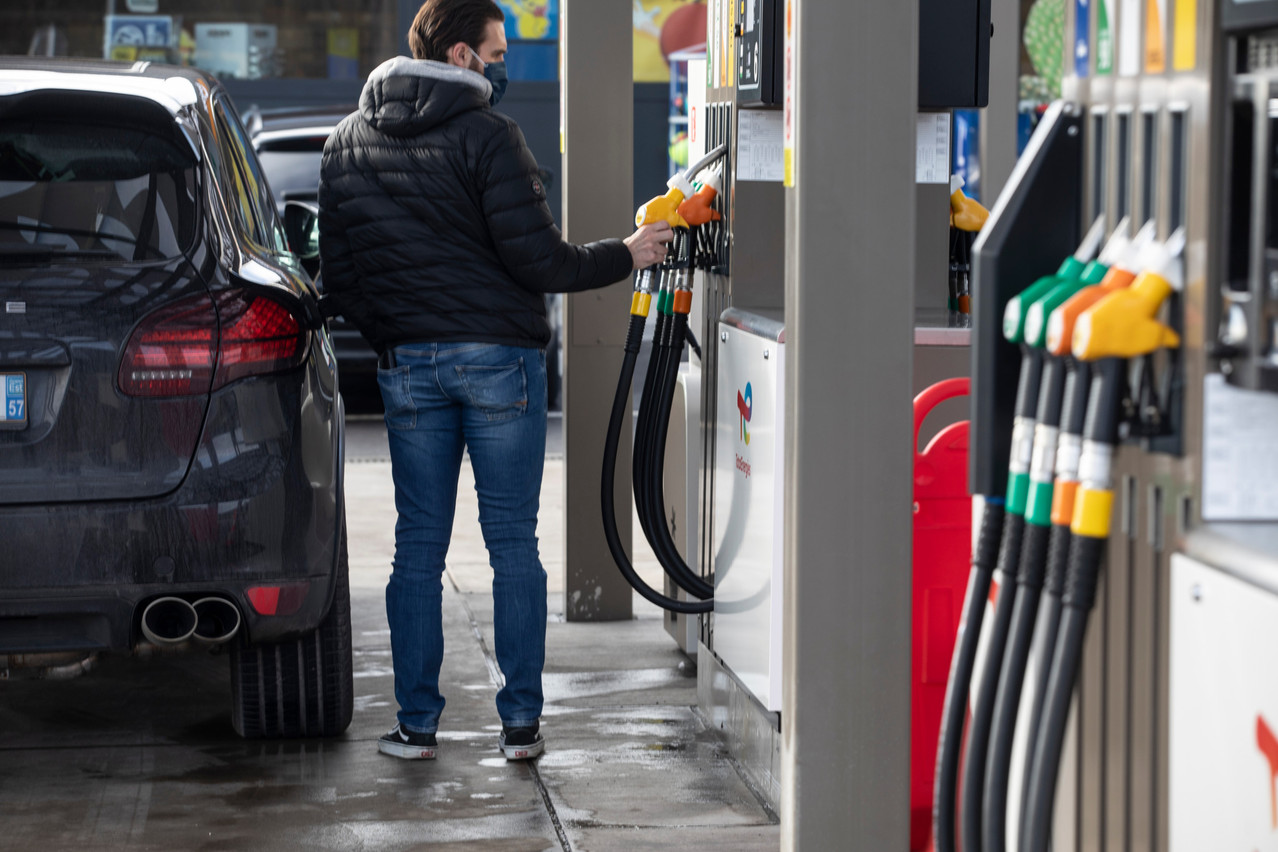
Petrol prices have never been so high in Luxembourg. At the time of publication, drivers paid €2.151 for a litre of petrol 98 and €1.916 for a litre of petrol 95, making it more expensive than at some service stations across the border in France and Germany. The prices currently displayed already include a state rebate of 7.5 cents. The situation is not expected to get any better after the European Union’s decision to cut its Russian oil imports by 90% by the end of the year.
“It seems unlikely that we will find the price levels we have known in the past,” said Romain Hoffmann, president of the Luxembourg “Groupement pétrolier” (GPL), an industry interest group. “There are many factors and we are in a turbulent period with a lot of insecurity.”
Russian oil represents about 27% of the EU’s oil imports. “Since the beginning of the war in Ukraine, I believe that there are already quite a few deliveries of Russian oil that have not been accepted by players in the oil sector. So I think that this embargo decided by the European Union is not a surprise. Now, it is difficult to know if the increase in fuel prices over the last few weeks is an anticipation of the decision of the European embargo,” Hoffmann said.
According to the Centre for Research on Energy and Clean Air (Crea), EU countries have bought more than €54bn worth of hydrocarbons from Russia since the start of the war in Ukraine, including €28bn oil alone.
The price of petrol is determined by several factors, said the GPL president, such as the exchange rate between the euro and the dollar or the demand, linked to the global economic activity.
“Once again, I think it is quite unlikely that we will return to a price level similar to what we have seen in the past. Unless OPEC decides to increase production, which would be a game changer. But it does not seem to be giving any signs in favour of such a strategy. On the other hand, the US has announced an increase in shale oil production. It remains to be seen whether this oil will reach Europe and how this will affect the price. It should also be noted that other factors are affecting economic activity and therefore the demand for fuel. For example: the blocking of containers in China because of covid-19... and therefore raw materials that do not arrive in Europe,” said Hoffmann, adding: “Over the last two years, fuel prices have been exceptionally low.”
A good geographical location
In the event of a worst-case scenario with Russia suddenly and completely shutting off oil supplies to European countries, Luxembourg could count on a favourable geographical location, close to the major Dutch ports and well connected to Belgium and Germany. In such a case, the EU would look for new sources of supply, such as American shale oil, which is however more expensive.
“A lot of the oil comes in via the Netherlands, Belgium and Germany. We are quite well off because of our relative proximity to the ports of Amsterdam and Rotterdam, which are important platforms for oil imports into Europe. We also have good connections with these countries. A good part of the oil arrives by barge in the Liège region, via the Netherlands, before being transported by truck to Luxembourg. Then we also have another part that is transported by rail via Belgium. Another part arrives by ship via Mertert,” said Hoffmann.
Luxembourg has 90 days of oil consumption in stock in Luxembourg and the greater region. This has been an EU obligation since the oil crisis of the 1970s, also in place for member countries of the International Energy Agency.
Consumers and SMEs that use fuel will undoubtedly see their petrol bills rise even further. At the same time, the government is still working on the implementation of the aid measures under the recent tripartite agreement.
This story was first published in French on Paperjam. It has been translated and edited for Delano.