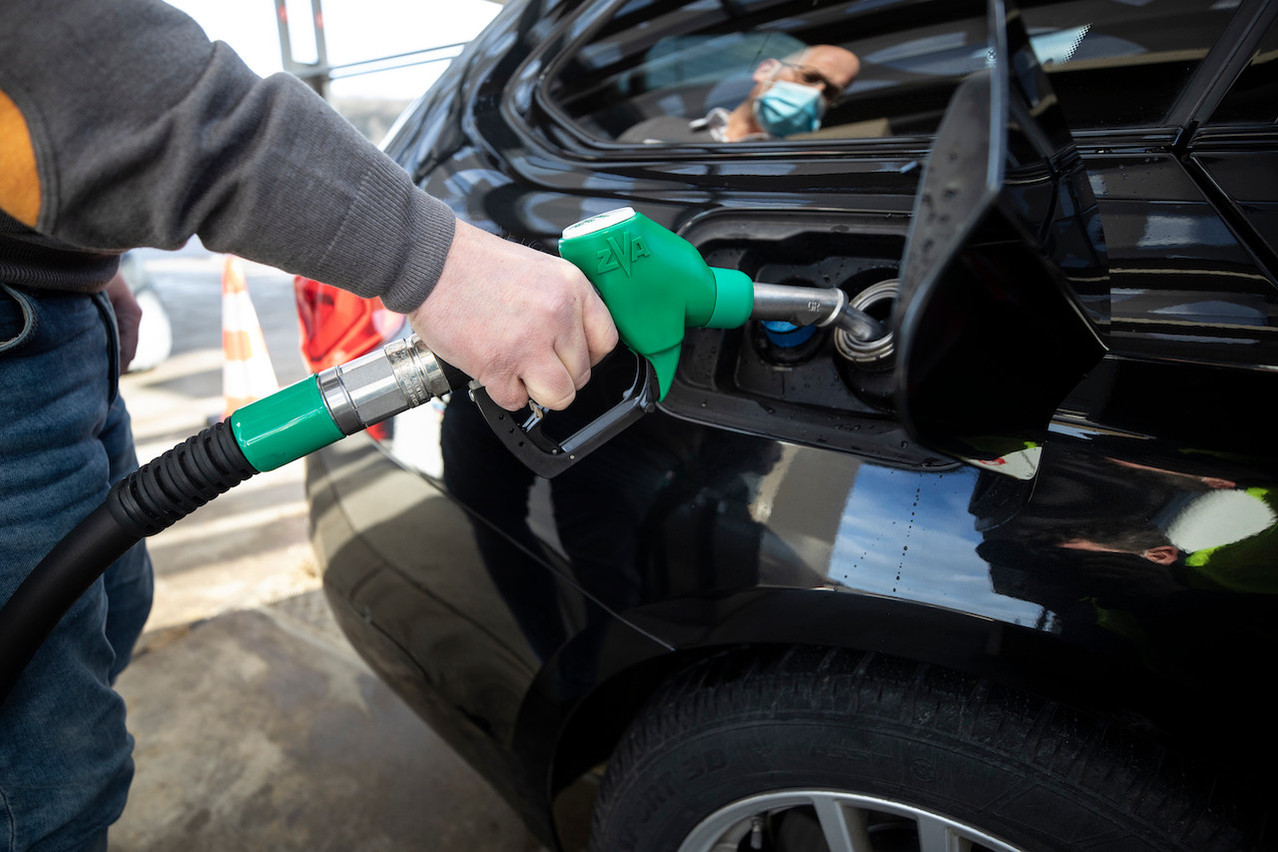
Following calls across the board for an urgent meeting, the government has decided to call the national Tripartite to tackle the record prices in fuel and natural gas. In line with the measures announced following the Energiedësch [energy roundtable] meeting at the end of February, the Tripartite will be tasked with “identifying, together, solutions to relieve both households and businesses of the financial impact of the situation on incomes,” a press statement issued on Thursday morning said.
The Tripartite, sometimes called the Luxembourg model, was first convened in the 1970s to tackle the impact of the steel crisis. It led to successive governments implementing a strategy of economic diversification to steer the grand duchy’s economy away from its heavy reliance on the steel industry.
LCGB warns of “economic and social tsunami”
Earlier on Thursday, the LCGB union had issued an “urgent” call for a national Tripartite meeting of government, employers and trade union representatives to “adopt a package of substantial measures to support businesses, sustaining jobs and strengthening the purchasing power of households.”
Warning that Luxembourg faces an “economic and social tsunami” the union likened the current situation to the 1973 oil crisis by the LCGB union. It wants the Tripartite to “adopt a package of substantial measures to support businesses, sustaining jobs and strengthening the purchasing power of households.”
“As early as 1977, the latter was the crisis tool par excellence that allowed the Government to tie together with the social partners several ambitious packages of economic and social support and recovery,” the union statement said.
The LCGB says it has been “increasingly confronted with disturbing reports from all sectors of the Luxembourg economy” as well as from individuals who are experiencing “enormous pressure on the purchasing power of households”.
In the absence of an improvement in the situation, the sustainability of certain economic activities may be jeopardized, the union suggests.
Turmes rules our VAT or excise duty cuts
Energy minister Claude Turmes (déi Gréng) is scheduled to address parliament on Thursday afternoon about the severity of the fuel and energy price increases. On Thursday morning the minister reiterated his position that Luxembourg’s natural gas, electricity and petroleum supplies were guaranteed. He welcomed a European Commission move to implement an EU-wide regulation that gas storage tanks must be filled to 90% capacity in time for next winter. “That will help us be less reliant on Russian gas,” he said.
Speaking on 100,7 radio, Turmes said that prices would continue to be a problem because they are linked to global markets.
But so far, the government has no inclination to reduce excise or VAT on fuel, Turmes said. “If we did that, we would suddenly be promoting petrol tourism and we would be taking a measure that would serve the entire Greater Region while, on the other hand, not really helping our own budget." Turmes said that overcoming the exceptional current situation would require a very carefully planned strategy.