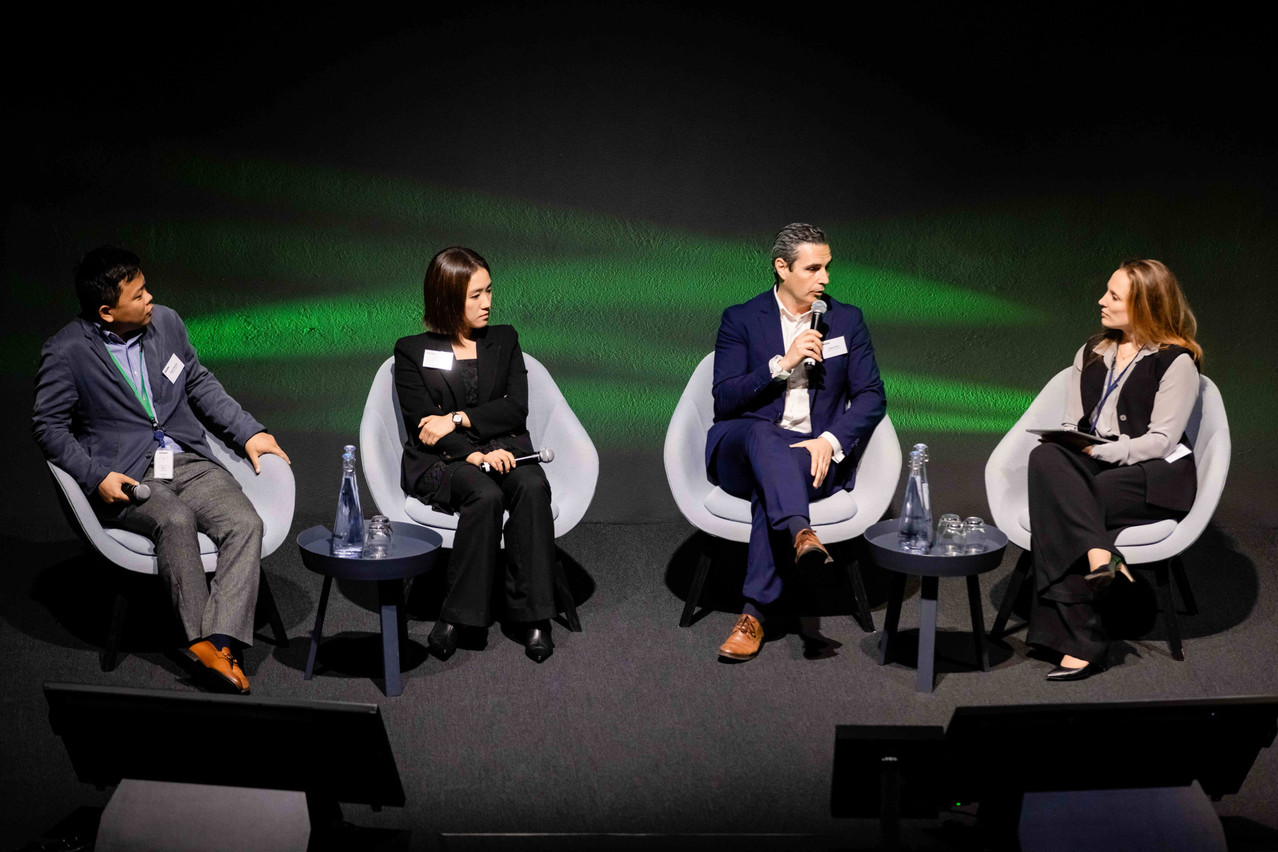
The Deloitte panel “Bridging Traditional Finance and the Digital Asset Economy,” held at the firm’s Luxembourg office on 5 March 2026 during its Digital Assets Conference, brought together experts from BitFlyer Europe, Galaxy Asset Management, and Allfunds to discuss the industry’s transition from experimental blockchain projects to an era of institutionalisation.
Unlike the previous “DeFi boom”—once described in Japan as a “demon world” where high returns came with the risk of sudden collapse—the current cycle is characterised by tangible real-world applications and deeper integration with traditional finance. “It's not a compliance exercise, but rather a reinterpretation and reconstruction of the business model,” said Rikiya Masuda, CEO of BitFlyer Europe.
The stars are aligned
A defining characteristic of this cycle is the simultaneous development of regulation, infrastructure, and market liquidity, noted Su Lee, head of Europe, Galaxy Asset Management. Major financial players, including Goldman Sachs and Citadel, are now actively providing 24/7 liquidity, helping sustain institutional participation even during market downturns.
Lee highlighted that this cycle feels distinct because the industry is “still building” despite price fluctuations, supported by a much clearer regulatory trajectory. This stability is essential as the industry moves towards a market where the value of tokenised assets could grow from several billion euros today to more than €1 trillion in the coming decade. “I'm hopeful that we’re going to see a completely different world in 10 years’ time, where we don't even use the word 'tokenisation', because everything is tokenised,” she said.
Bridging TradFi and DeFi
The panel explored the “convergence” between traditional finance (TradFi) and decentralised finance (DeFi). Rubén Nieto, managing director at Allfunds Blockchain, emphasised the role of major distribution platforms in bridging this gap, noting that Allfunds has developed a dedicated blockchain company to lead this change.
The Luxembourg government should start advertising in London Underground stations to attract companies to Luxembourg, just like Dubai is doing
Participants noted that tokenisation is no longer theoretical but a practical tool for improving efficiency across financial services. The objective, argued Nieto, is not to replace the existing “plumbing” of the financial system—which includes safeguards such as investor protection and cut-off times—but to rethink the value chain through collaboration. By using smart contracts, for instance, firms can address significant pain points, such as high distribution costs and the complexities of reconciling data across siloed legacy operational or legal systems.
Luxembourg’s crypto framework draws praise
As infrastructure and market participation expand, regulatory clarity is becoming an equally important driver of industry growth. Regulatory frameworks like the Markets in Crypto-Assets (MiCA) regulation and the proactive approach of Luxembourg’s Financial Sector Supervisory Commission (CSSF) were identified as primary enablers of growth for the industry.
Given its global activities, Nieto added that several regulators “in some ways are following the path of the CSSF.” The panellists praised Luxembourg’s framework, with some suggesting that the government should more actively market these advantages. “The Luxembourg government should start advertising in London Underground stations to attract companies to Luxembourg, just like Dubai is doing,” joked Lee.
Addressing operational risks
The speakers identified cybersecurity, wallet management, and quantum risk as critical areas of focus for any firm increasing its exposure to digital assets. Furthermore, there is a collective need to educate the market to move past the negative associations of crypto-assets with illicit activities, focusing instead on the security of tokenised traditional financial products. “I see insider trading cases in some large companies in crypto. It's still quite common,” stated Lee. She argued that the crypto industry must adopt the same levels of financial prudence and regulatory compliance as the traditional financial sector.
Looking towards 2026
Panellists expect the conversation to shift from regulation itself to the implementation of regulatory frameworks within new business models. They envision a future where the distinction between public and private networks ceases to be a point of debate, as the industry moves towards a fully collaborative, interoperable space. Ultimately, the goal is a world where “everything is tokenised", and the technology becomes a seamless, invisible part of the global financial infrastructure.