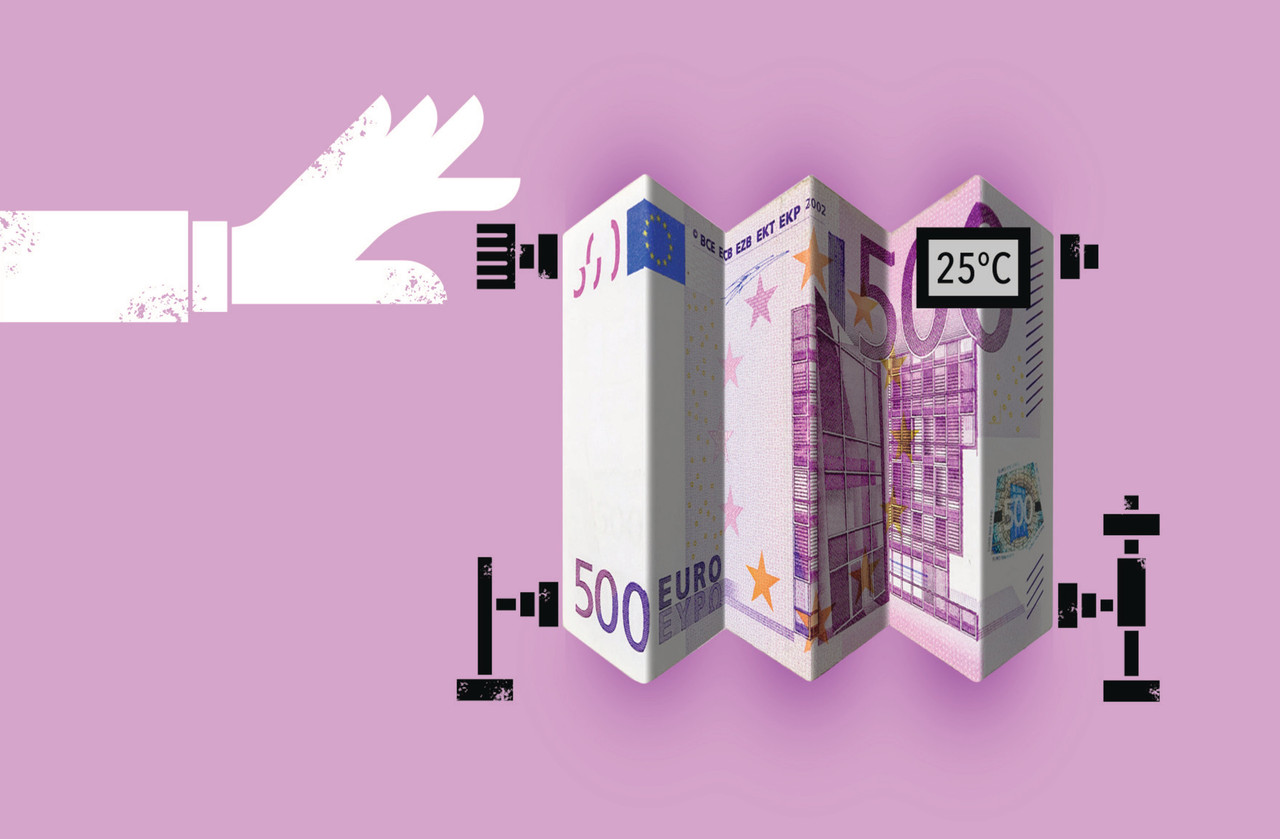
Just as the sanitary crisis that shook the world was seeming to settle--allowing for a more precise damage assessment--Russian president Vladimir Putin on 24 February launched an attack on Ukraine. This human tragedy is, not unlike the pandemic, shining a light on existing flaws and discrepancies in the economic and energy strategies set up by Luxembourg and the EU.
The energy crisis wasn’t born from the Russo-Ukrainian conflict. Instead, it was born from a conjunction of several smaller crises. The pandemic caused a shortage in workers through illness, while the economic rebound following the 2020 lockdown generated a shortage in energy and raw materials. The shortcomings of the EU’s energy transition strategy and inflation due to the shortages exacerbated the issue.
The multi-layered structure of this issue makes it a complex knot for politicians to untangle. Soaring prices directly impact the energy budgets of businesses and households, and accelerate the rise of the cost of living. In Luxembourg, inflation of more than 2.5% triggered an automatic indexation of wages, threatening the viability of businesses and employment rates.
A tripartite meeting between the government, the business unions and social partners was convened on 22 March, lasting until 23 March, as discussions on the energy crisis and its impact on the economy failed to yield results on the first day.
The question of energy supply
The EU needs to rethink where it sources its energy stocks, as the Russo-Ukrainian war highlights. In 2019, the EU depended on imports for 61% of its consumption. The majority came from Russia: the EU bought 46.7% of its solid fuels, 41.1% of its natural gas and 26.9% of its crude oil from the country. For the grand duchy, the dependency rate on foreign energy imports climbs to 95%. Luxembourg only covers a part of its own electricity production (19.3%), but for petrol and gas, it completely relies on external suppliers. For Patrick Dury of the LCGB labour union, that is a strategic mistake: “The EU is dependent on countries that aren’t managed democratically.”
Add a pandemic-induced product shortage and the high volatility of prices due to speculation to the mix, and one geopolitical issue can destabilise the whole supply chain of 27 member states and challenge the EU’s strategy.
To build a resilient structure, the EU must take several steps, one of which is to make sure that it diversifies its portfolio of energy suppliers. “Instead of each country purchasing their own personal energy separately, the EU should also act as one single organisation,” says Dury.
This solution is supported by Gaston Trauffler, head of industrial policy at Luxembourg’s multi-sectorial business federation Fedil: “Instead of a single member state focusing on energy independence, we must find a new balance between cost-effective energy supply and security of supply within the whole of the EU… The right way to go is that each EU member state reviews its role and contribution within the EU’s internal energy market.”
Green transition and high ambitions
The transition to renewable energy is another contributing factor to the explosion of energy prices. In 2021, the EU presented its Fit for 55 deal, making member states vow to reduce their carbon emissions by 55% by 2030. The climate crisis and newest Intergovernmental Panel on Climate Change report on climate may have been drowned out by headlines of the Ukrainian war, but they remain relevant. Yet the slow execution of Europe’s ambitious plans have added fuel to the fire.
“The decisions to exit from coal and nuclear power, increase energy taxes, introduce national CO2 prices and squeeze the availabilities of emission rights were only some of the deliberate measures to create a price signal to motivate people towards more sustainable consumption,” explains Trauffler. This was a step in the right direction but couldn’t succeed without a key component: alternative renewable energy infrastructures.
Energy storage solutions, green energy generation, a stronger network connecting all parts of the EU--these necessities aren’t evolving at the speed of the EU’s renewed promises. Existing industries, told by their government that their activities would disappear, didn’t continue investing in their own capacities. This and the Ukraine crisis led to successfully overpricing fossil fuels, but without giving consumers the choice to switch to a more beneficial power source.
Some countries, like Germany or Belgium, are now slowing down their sustainable energy strategy, but Luxembourg continues to bet on its green transition. Luxembourg will always remain an import-dependent country, says Paul Matzet, a spokesperson for the energy ministry, but will continue to implement sustainable energy projects and in collaboration with other EU countries, like Denmark.
Considering nuclear power is, however, out of question, says Matzet. If anything, the Russian invasion has shown the vulnerability nuclear plants represent. “Nuclear plants are targeted and under attack for war strategies. This just shows how unsafe that source is,” he adds.
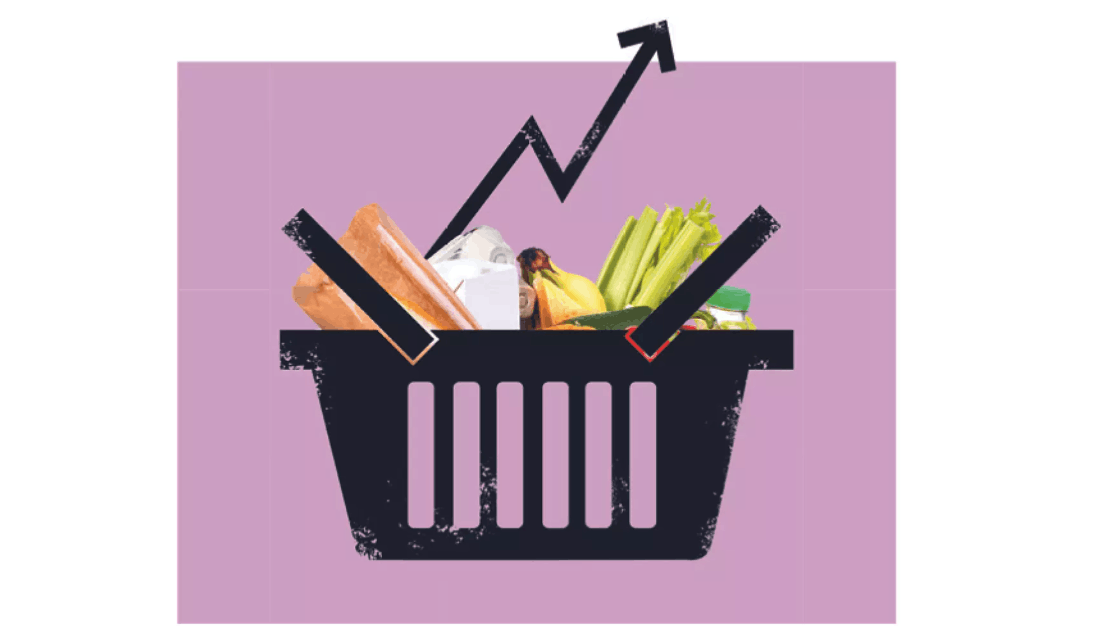
Luxembourg’s observatory of price formation on 16 March published a report on the evolution of inflation over 2021. It registered an inflation of 2.53% for Luxembourg, slightly higher than the EU average (2.47%). Higher services prices due to a wage indexation in October 2021 and the exploding prices of energy contributed most to the inflation, according to the report. Salomé Jottreau
A sense of déjà vu
Industries and companies are at risk because of the energy crisis. “This situation is at least as dramatic as the pandemic” for businesses in Luxembourg, argues Carlo Thelen, director of the Luxembourg Chamber of Commerce. “If the energy prices grow, they will impact the inflation rate, but because energy is the foundation of many businesses, it will impact sectors in other ways too,” he explains. In light of this, the national consumer union ULC and the LCGB, among other actors, had asked for a price freeze on energy and fuel.
On top of higher fuel and energy costs, companies will have to deal with the indexation of wages brought on by this inflation. If the country’s automatic indexation system is triggered three times in 2022--the worst-case scenario envisioned by Thelen--, the grand duchy will have gone through four wage increases (10%) in 16 months. Since our interview, the government announced, following the tripartite meeting on 22-23 March, a package of measures. This included only one indexation in 2022--in April--with the next indexation withheld until April 2023.
Luxembourg’s automatic indexation system at this point supports no one, says Thelen, who sees the indexation as a threat to the functioning of companies and thus employment rates. Price makers may adapt their prices accordingly--thus contributing to inflation even more--but price takers will see their competition shrink as they have to count the wage increase in their margins.
This does not make Luxembourg’s economic strategy viable over the long term, explains Thelen. Alongside reviewing the items considered when calculating inflation, Thelen argues that Luxembourg should review its unique automatic indexation system. Perhaps a fixed annual indexation is a solution in the long run. For now, however, the indexation would not be reviewed, said prime minister Xavier Bettel (DP) after the tripartite.
Right now, however, a sectorial approach to a solution needs to be adopted. Some companies are more impacted by rising energy prices than others. Just as during the pandemic, aids should be handed to businesses depending on the impact the price shock has on a business’ turnover. “Without companies, our economy cannot survive,” says Thelen. Businesses generate investments, innovation and employment, and an uncontrollable inflation and indexation could be detrimental to their survival.
No business, no jobs; no jobs, no energy
Among the 86,688 households dependent on gas, and the 262,255 households dependent on electricity--according to the Luxembourg regulation institute ILR--, some will inevitably be more affected by the increase in energy and goods prices than others. Fossil fuels, for instance, doubled to €2.112/l over one year--a harsh truth for those who are dependent on their car to work. Heating prices have followed a similar path, putting some households at risk of energy poverty.
To stuff the leak, the ministry has introduced energy aids--an unsustainable approach, says Trauffler. “The price increases seem to outweigh what compensations can achieve. However, a coherent policy would focus on the most vulnerable of our society and help with selective measures against energy poverty instead of broadly distributing aids that tend to cancel price signals.” The ULC had also argued that the maximum compensation of €200-400 would be unlikely to help lower-income households cover the stark increase in energy costs. These aids are not handed out to average-income households, who are also at risk.
Despite the additional cost-of-living allowance--ranging between €1,652 for a single person and €2,891 for a family of four--for low-income families, the price surge impacts consumers’ purchasing power unequally too. As it triggers an indexation of 2.5% across the board, lower-income families see a smaller amount added to their wages, whereas a high-income household will receive much more. “The current indexation system is unjust and antisocial,” says Thelen, an opinion supported by Trauffler.
Consumers should, however, also stop panic-buying fuel, to avoid increasing demand, Thelen explains. Though it is impossible for some to decrease their consumption, and the government’s lack of affordable sustainable alternatives keep many in a headlock, individuals should make an effort to reduce their energy needs to avoid bad surprises.
Storage, sustainability, and collaboration
There is no doubt that the invasion of Ukraine is first and foremost a humanitarian crisis and a violation of international law. But, when a crisis pokes holes through a fragile economic fabric, it also serves as an accelerator of change. The consequences of the Russo-Ukrainian war are still uncertain--Russia has yet to announce its countermeasures to the EU’s sanctions--but due to the nature of the conflict, speculation is difficult.
The EU must collaborate to ensure it becomes more unified, more resilient and more independent in its energy strategy, while also meeting its climate goals. The development of an EU-wide energy network, and energy-storing capacities have to match the pace at which the EU goals are set.
On a national level, Statec is already working on a new economic forecast for Luxembourg, based on inflation, price developments, stock indexes, and the EU’s sanctions on Russia.
The tripartite meetings last week resulted in a proposal by the government to reduce the price of fuel by 7.5cents/litre, and a possible compensation through tax credits for those whose purchasing power is impacted by the energy crisis. Other aids for businesses who suffer from the price surge are also planned. On 31 March, the unions and government will meet again to come to an agreement regarding the measures.
Whatever the outcome of this will be, all actors of the economy will have to weather the storm together.
This article first appeared in the April 2022 edition of Delano magazine and was edited on 30 March to include updates on the tripartite meeting.