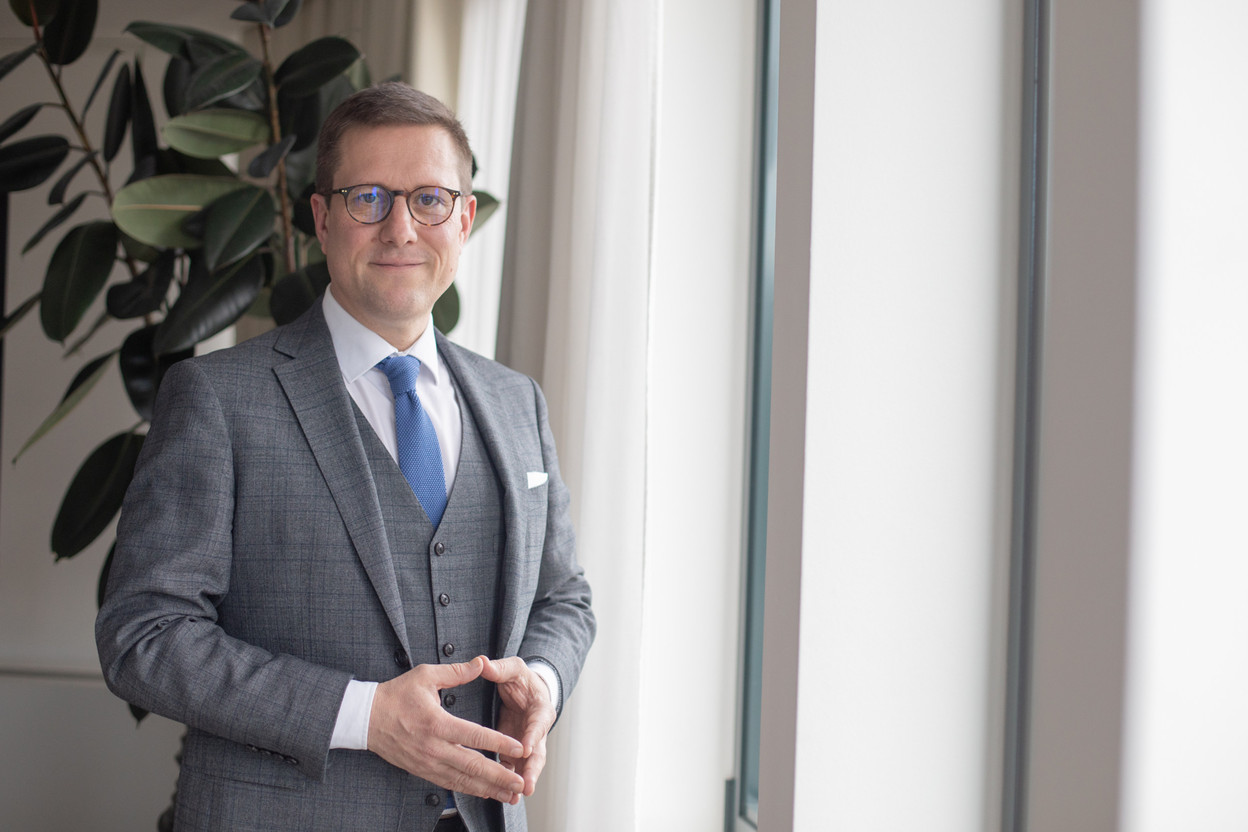
“Let’s extrapolate... With the explosion in technology, the only thing that will remain in companies is governance. Everything else will be replaced by robots and machines!” Ludo van der Heyden, professor emeritus at the Institut Européen d’Administration des Affaires (Insead) business school, used this Orwellian science-fiction joke to introduce the roundtable on governance organised as part of Entrepreneurs’ Days at the House of Entrepreneurship on Thursday 7 November. Well... we assume it was a joke!
In his opening remarks, van der Heyden compared governance to “an existential question.” “You can lose your business because of bad governance,” he told the dozens of business leaders who had come to listen. The World Bank nevertheless ranks Luxembourg fifth among European Union countries for the quality of its governance, he noted.
The past and the risks
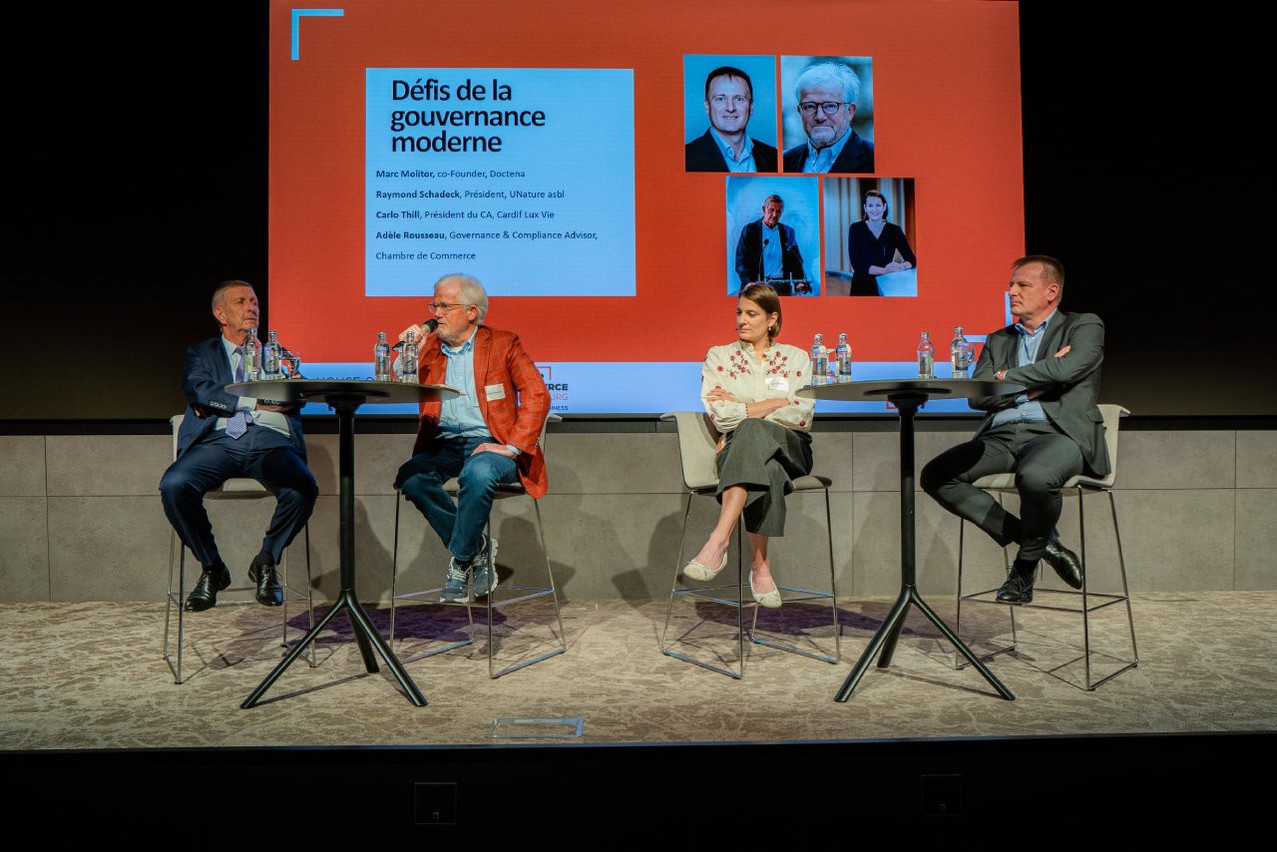
Three men and one woman made up the hour-long panel on the challenges of corporate governance, from very small businesses to large corporations.
“In many companies, we spend too much time talking about the past, and not enough about the future,” lamented the chairman of UNature asbl, 
For him, the size of the organisation is a real issue: “If I compare with listed companies, for example, SMEs are more focused on the medium and long term. Large companies, on the other hand, spend too much time on everything to do with risk and regulation. But being an entrepreneur means taking risks... I didn’t like being CEO of a big company. It’s almost a legal job. The board of directors always has risk-related thoughts in the background.”
Sinking foundations
The fluidity of relations “between the board and the executive” is another point on which Schadeck insisted. “And it is in SMEs,” he insisted, “that the best trust is created between the two entities.”
Within the board, “we need to define each role, assigning such and such competencies and powers to each director,” emphasised Adèle Rousseau, governance and compliance advisor at the Chamber of Commerce. “The more you justify and document your past actions, the more you can move forward.”
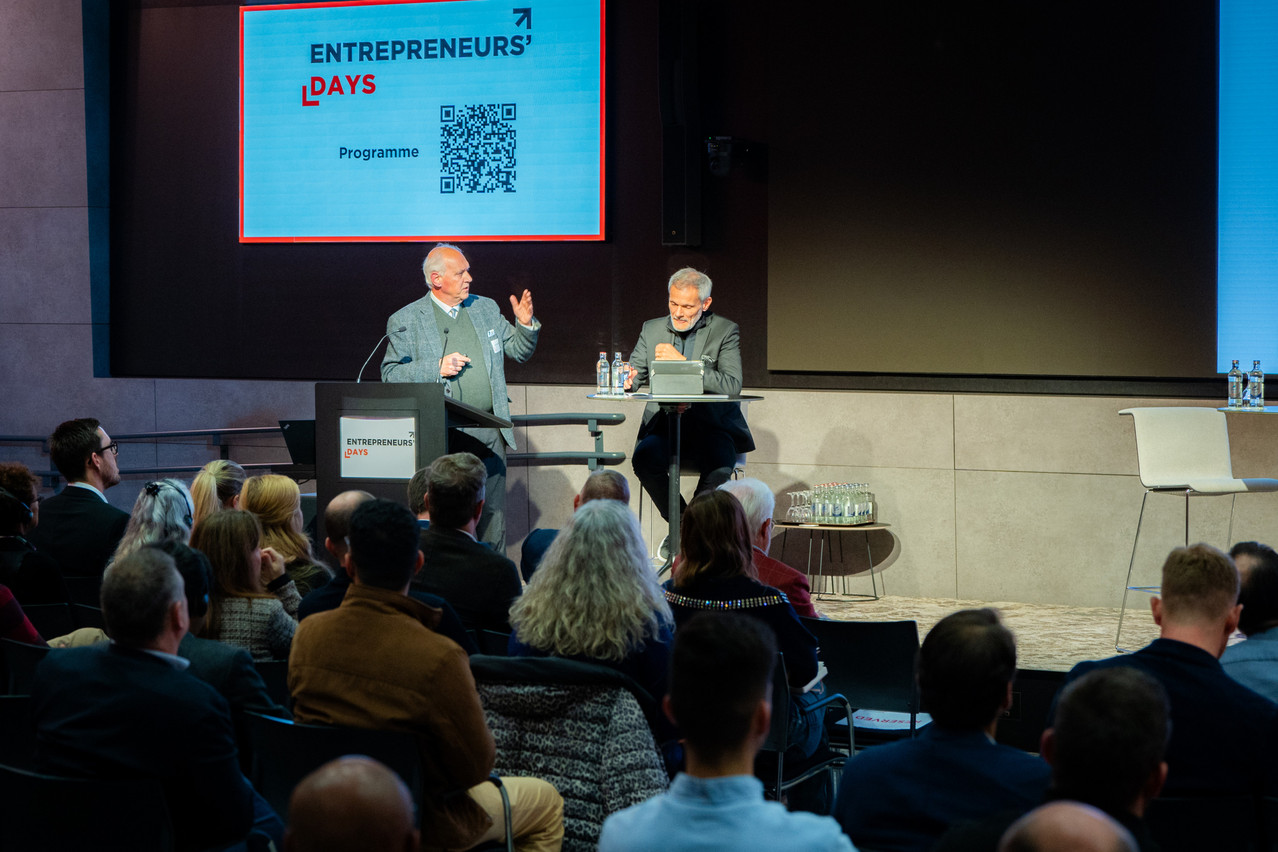
In his keynote address, Insead professor emeritus Ludo van der Heyden (left) challenged business leaders to face up to their responsibilities. Photo: Charly Petit/Chamber of Commerce
“In a startup, you have to think about it from the outset,” Marc Molitor, co-founder (with 
“Governance needs to be thought through upstream,” confirmed Rousseau. From mandates to exit clauses, “we need to think about every stage.”
Who decides what?
Another point raised by Molitor was “the separation between ‘day to day’ and strategic issues.” “At Doctena,” he said, “we have made sure that we have formal boards of directors, during which we take real strategic decisions. We don’t sit on the fence. Because these are the big questions to answer: how do we take decisions? Who executes them? And then, who controls them?”
“Before 2008, boards of directors operated in a very different way,” recalls 
“Mixing hats”
“The law in Luxembourg is flexible, and there is a wide range of options,” added Rousseau, governance and compliance advisor at the Luxembourg Chamber of Commerce.
“Governance must be adapted to the business model, there is no single profile,” reacted Carlo Thill. “Another important rule,” he added, “is to have a diverse range of skills on a board. You can’t be a specialist in everything. That’s what has fundamentally changed [since 2008].”
On this subject, Rousseau recommends not hesitating to call on independent directors “to get away from your own vision of things.”
This recommendation echoes the message of prevention passed on by the speakers regarding the threat of conflicts of interest or “mixing hats,” as Doctena co-founder Molitor described it.
Values and younger generations
“These days, you have to be careful not to mix your portfolio with that of your company. Ten years ago, we didn’t talk about misuse of corporate assets. Now we do. That’s why we need to separate the board of directors from the executive. Otherwise, it can be costly,” concluded Thill, when each participant was invited to say a final word.
“Companies are legal entities. The central issue is how to ensure the long-term future of this legal entity,” Molitor summed up, while Rousseau, from the Chamber of Commerce, ended on this note: when it comes to governance, “we need to find the right balance between flexibility and security.”
UNature chairman Schadeck, aged 69, looked further afield: “Governance is where we create, develop and promote the values of a company. Both internally and externally. We are at a stage where these values are a determining factor for the younger generations.” At least if they are not obliterated by robots and other technologies, that is…
This article was originally published in French.