(To our readers: the Paperjam editorial team was in Dudelange on Thursday and Friday to meet the political, social and economic players in this municipality of 22,000 inhabitants. This article is part of that 'concentrated' approach. We hope you enjoy reading these articles.)
“The employees will be entitled to the severance payments provided for in the labour code, which correspond to the month of the bankruptcy, the following month--i.e., December--and half the notice period to which they would have been entitled in the event of conventional dismissal,” explained Olivier Wagner as he left the Luxembourg Commercial Court on 29 November, when Liberty Liège-Dudelange and its Luxembourg site were declared bankrupt.
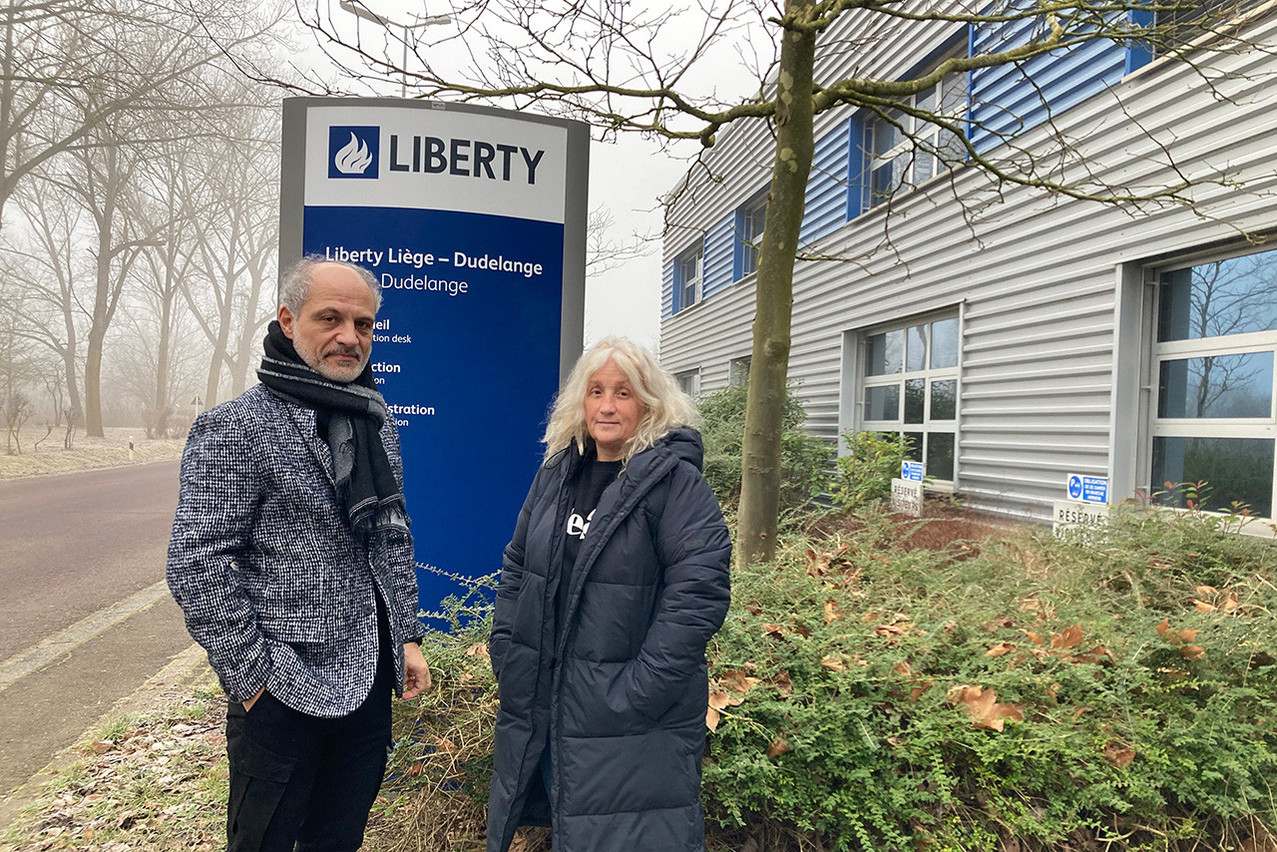
What has happened since then? “The legal amount owed by the Fonds pour l’emploi in the event of bankruptcy has been paid, as has the balance of all accounts. An advance was initially paid, as two months' wages were due before the Christmas holidays,” confirms Robert Fornieri, deputy general secretary of the LCGB labour union. However, “employees with a lot of seniority, like me, are losing out. If we had had normal departure or redundancy conditions, the amounts would have been much higher, particularly with the severance pay that we will never receive in the absence of a buyer,” adds Sylviane Gambini, employee and union delegate at Liberty Steel in Dudelange.
Gambini, who has held various administrative positions--accounting, payroll, purchasing and handling--was about to start her 39th year at the Dudelange site. “I’m a year away from retirement,” she points out. “Some employees have already found another job just to be on the safe side. It depends on their financial situation, because some can’t wait to pay their bills. We’re explaining to them that they can break their probationary period and come back to Dudelange if business picks up again. But I understand everyone's distress.”
The hope of a buyer before the end of February
The site had 147 active employees at the time of the declaration of bankruptcy. If there is a transfer of activity within three months, employment contracts will be reactivated and seniority retained. “The deadline for finding a buyer is therefore the end of February,” Fornieri sums up. “Several players are interested, either in a takeover without staff or activity, or with. We are, of course, in favour of a takeover with the workforce, to ensure a long-term future for the site and its employees. Restarting the plant will require the skills of the current employees.”
For Gambini, “the end of February is tomorrow.” But, adds Fornieri, the LCGB’s deputy general secretary, “As long as there are discussions, there is hope. The next two weeks are crucial: employees need to know whether they will return to work or whether they will have to look for another job. It won’t all be decided at the last minute. By the end of January, we should know whether we’re heading for a takeover, a sale or liquidation. We are aware that anything is possible.”
“This dossier has been a calamity for three years. It can’t go on like this,” says Fornieri. “This is a huge challenge: I’ve never seen an issue so far-fetched. It would be a total failure for everyone--ministries, unions and employees--not to restart the plant.”
Another problem concerns cross-border workers. “Unemployment cover in France, Belgium and Germany is not yet effective,” explains Gambini. “In France, for example, the amount paid by the Fonds pour l’emploi is considered to be a salary, so unemployment benefits are suspended. This creates inconsistencies in the Greater Region.”
Finally, delays in the processing of unemployment files are exacerbating the situation. “Some families, whether single parents or dependent on a single income, are in great difficulty,” laments Gambini.
This article was originally published in French.