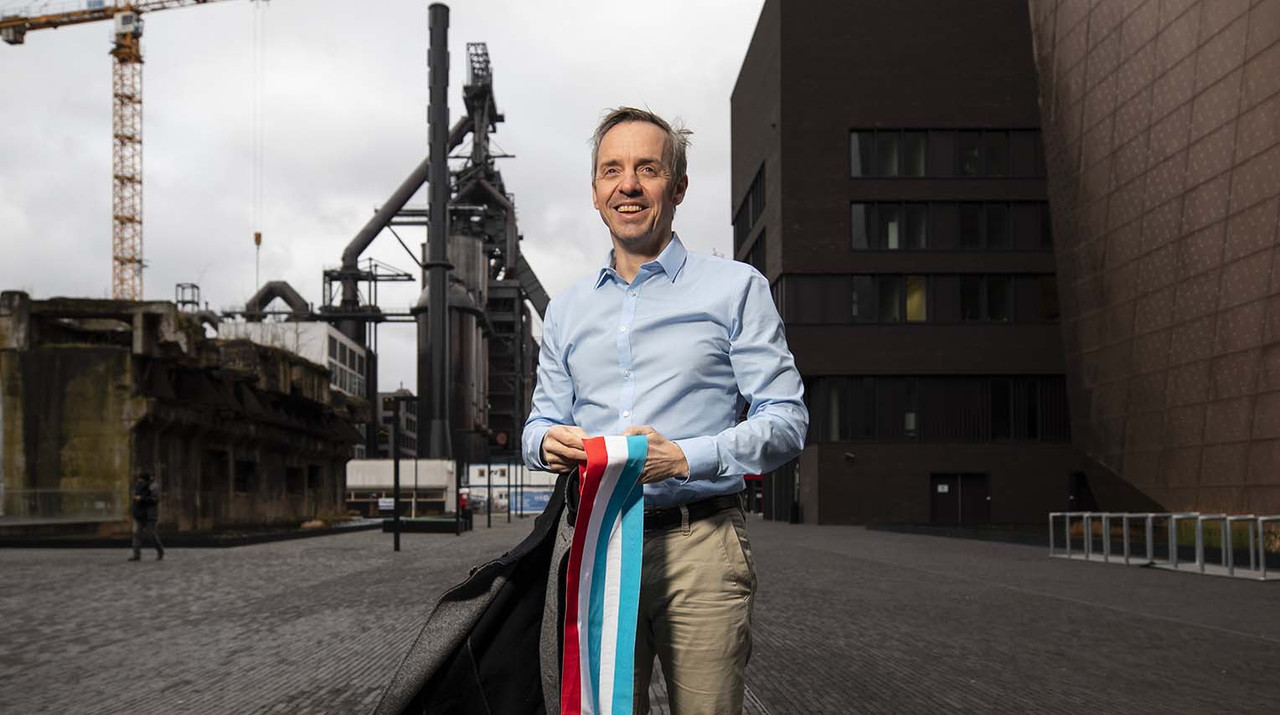
For the mayors of the eleven Luxembourg municipalities involved, this cultural year is an opportunity to demonstrate that these territories have been able to reinvent themselves and have made their contribution to the country's development.
Esch-sur-Alzette - Georges Mischo
“Esch2022 is a total of 2,000 events, 160 of which have the official label. And 80 of them will take place in Esch. 
Differdange - Christiane Brassel-Rausch
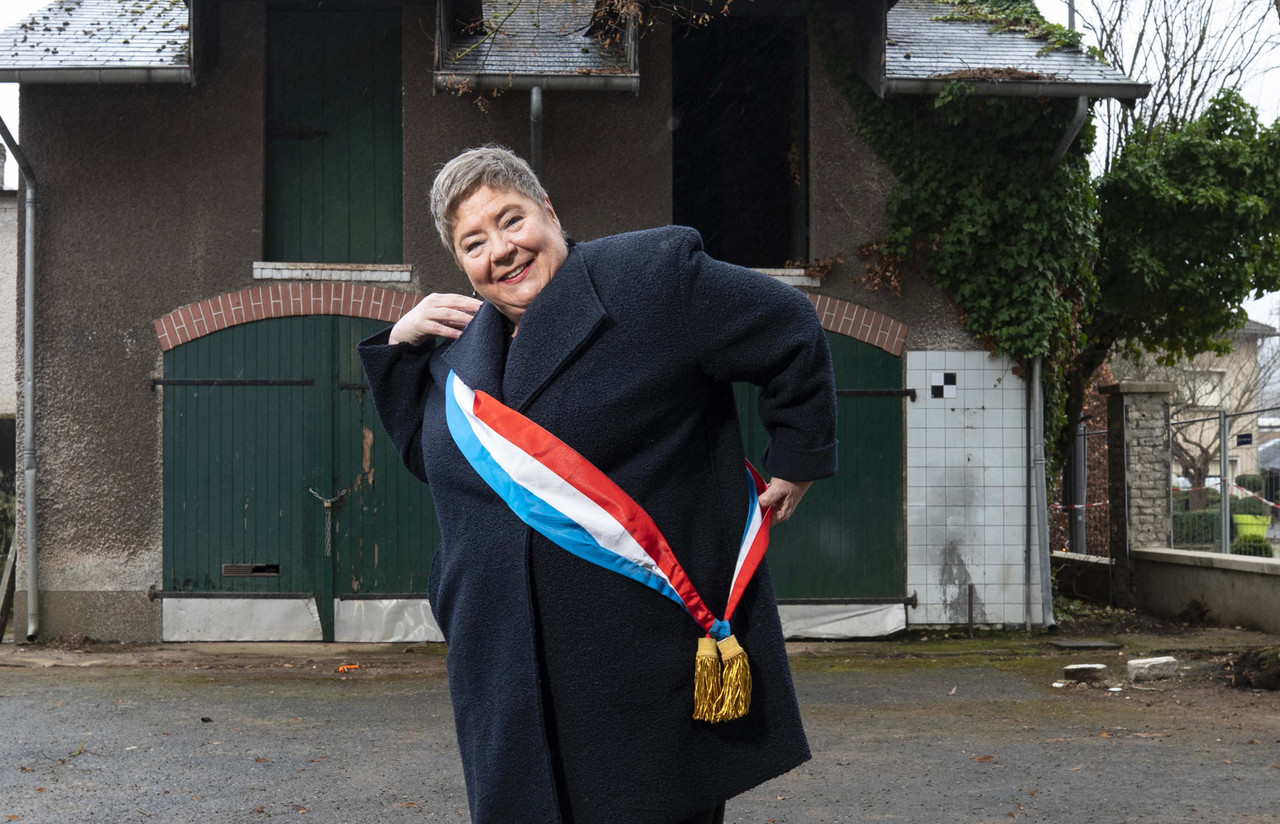
Christiane Brassel-Rausch. (Photo: Guy Wolff/Maison Moderne)
There was a time when Differdange was a hamlet of farms. It is in front of one of the last ones, Lommelshaff, that the mayor Christiane Brassel-Rausch (Déi Gréng) poses. The site will be showcased during the cultural year, “with an exhibition that will allow us to discover the many changes that this place has undergone”, smiles the mayor. It is also a way of showing the evolution of a city that is a good example of what Esch2022 wishes to highlight: “An industrial city in a more modern city, turned in particular towards knowledge with the presence of two universities (Lunex and Mudec).” The city does this while remaining a strong economic centre with an industrial zone like Haneboesch (Costantini, Airtech, etc.). “We have grown a lot in recent years. Now we may have to slow down to allow our municipal infrastructure to adapt. Three new schools, for example, are to be built within four years.”
Dudelange - Dan Biancalana
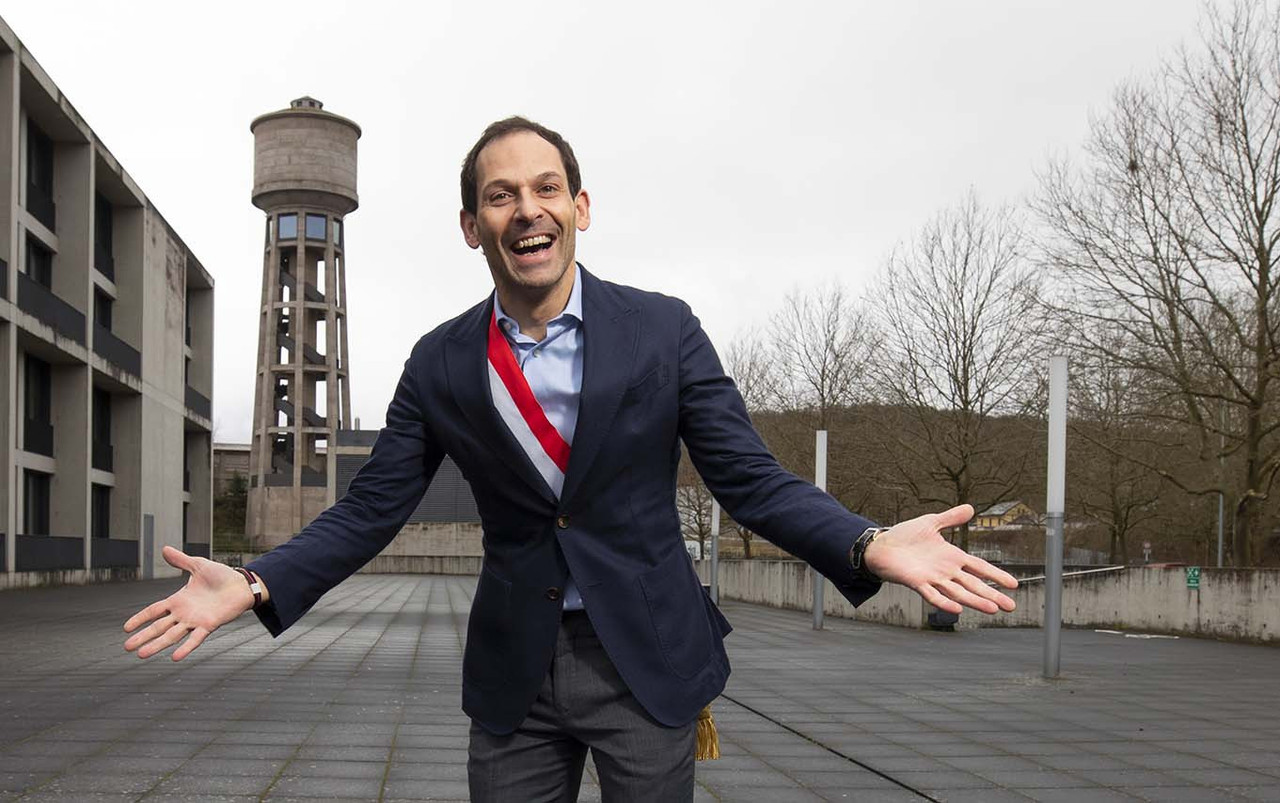
Dan Biancalana. (Photo: Guy Wolff/Maison Moderne)
In Dudelange, Esch2022 spells recovery. "We are indeed reviving our Return of Babel exhibition, which was created in 2007 and dealt with the first wave of migration to Dudelange and Luxembourg," says mayor Dan Biancalana (LSAP), posing above in front of the Opderschmelz cultural centre. "Re-retour de Babel will focus, this time, on the second and third generations of migrants,” according to the new co-president of the LSAP party. Today, Dudelange has 21,600 inhabitants, having "experienced moderate growth over the past 10 years. But the NeiSchmelz project, on the site of the former industrial wasteland, should provide 1,500 homes by 2035.” On the economic front, “a new pillar based on research and innovation is being created on the business park that already houses the National Health Laboratory (LNS).” This will complement the industrial (Husky, Ampacet) and logistical (CFL Multimodal) sectors already present.
Petange - Pierre Mellina
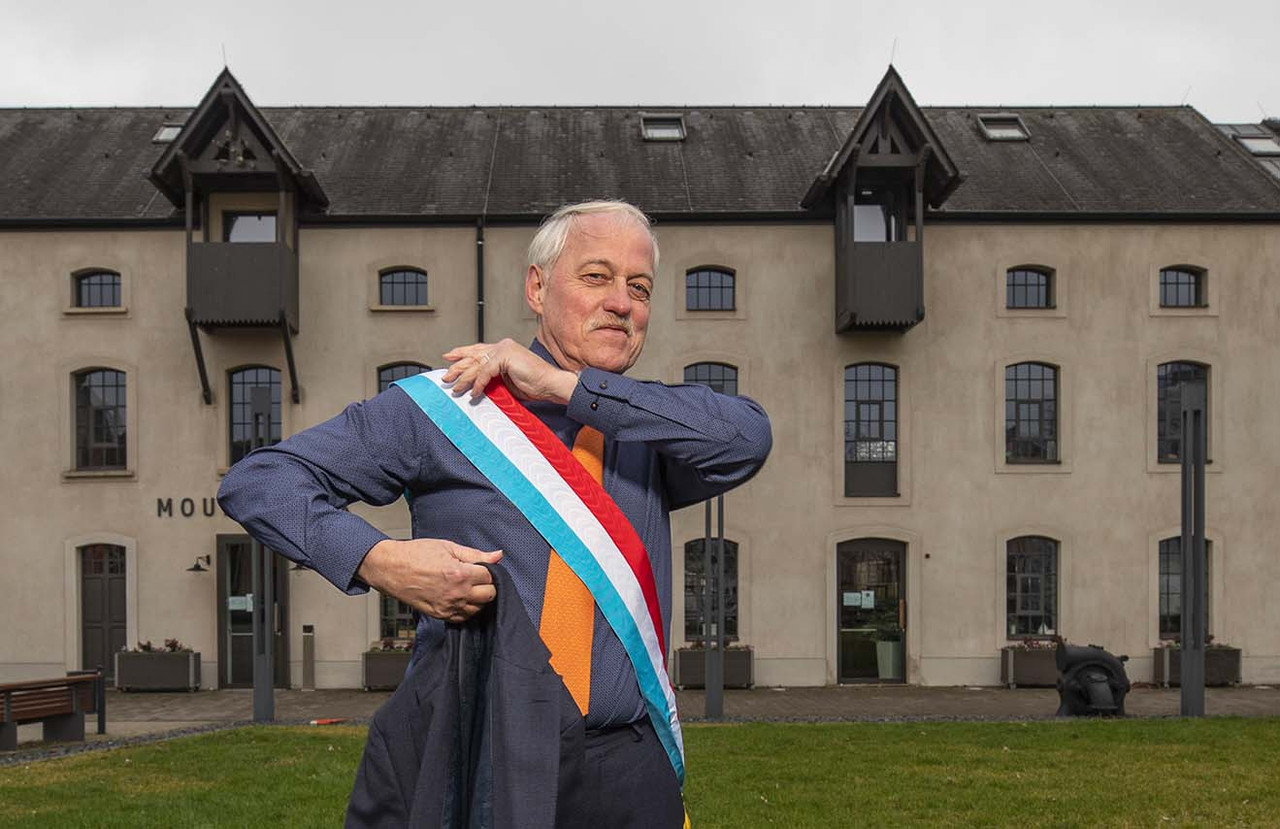
Pierre Mellina. (Photo: Guy Wolff/Maison Moderne)
In the space of 20 years, the population of the municipality of Pétange has increased by 40% and now exceeds 20,000 inhabitants. This is quite a spectacular figure when you consider that only 45% of the municipal territory can be built on. “In our area, land is still more affordable. The closer you get to the centre of the country, the less affordable it is,” says the mayor, Pierre Mellina (CSV), posing above in front of the Wax cultural centre. “We are also well supplied by rail. In 20 minutes you are in the city.” And it will get even better, as Mellina is expecting the new P+R at a station in Rodange “for the autumn”, which is due to be renovated in 2023. A tool that will bring new perspectives, just a stone's throw from a PED that seems to have never been in such good shape since the steel era. “Today, everything is practically occupied. And negotiations are still underway.”
Simone Asselborn-Bintz
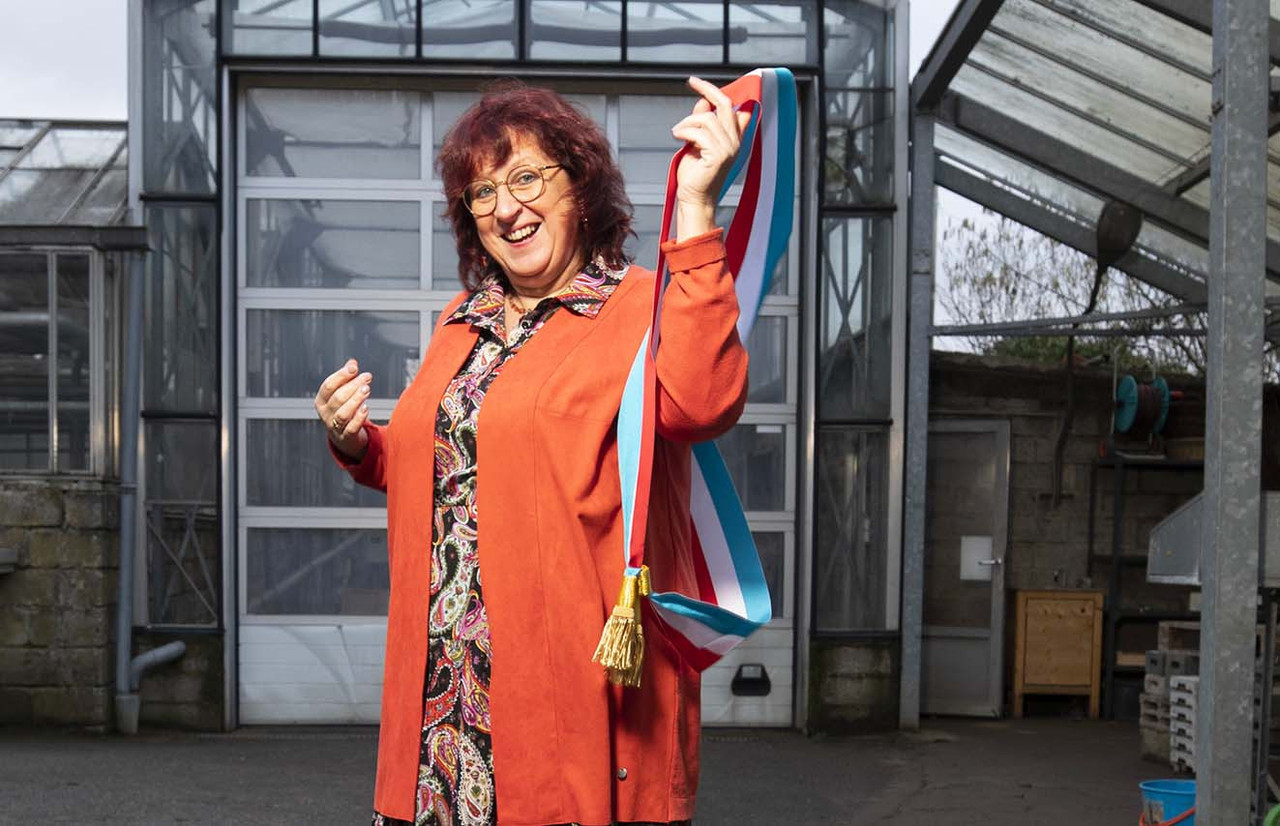
Simone Asselborn-Bintz. (Photo: Guy Wolff/Maison Moderne)
With Esch2022, the municipality of Sanem wants to revive the Bel-Val drinking water spring, which is little known today, but which was exported to the whole world in the 20th century. “It is now closed. We no longer draw its water, it has become too complicated. However, on the occasion of Esch2022, a pavilion will be set up on this site, explaining the history of this spring”, explains Mayor Simone Asselborn-Bintz (LSAP), who is posing above not far from there, on the site of the former municipal greenhouses. The name "Bel-Val" is not only synonymous with water in Sanem. The town with a similar name and growing economy, which straddles the municipalities of Sanem and Esch, is the source of “the strong population growth of recent years”. This is probably not the end of the story, with the creation of two new business parks in Op den Aessen, between Soleuvre and Sanem.
Bettembourg - Laurent Zeimet

Laurent Zeimet. (Photo: Guy Wolff/Maison Moderne)
“For Esch2022, the giant of the Parc Merveilleux will wake up!” according to Laurent Zeimet (CSV), the mayor of Bettembourg. Zeimet poses in front of the park, which is well known to local and Greater Region tourists. He knows that his phrase will catch on. “It will even make the rounds of the commune,” he adds. This will happen digitally, of course, with several artists planning the various stages. The whole thing will result in an adventure that will also be told in a comic book to be published in April. The timing is ideal to coincide with the special edition of the LiteraTour, the annual literary festival organised in the municipality, and with “the inauguration of the new cultural centre”. Bettembourg should also soon be able to count on a new business park for local companies. “So that they can leave the residential areas and develop. It will be located on the site of the 1997 Michael Jackson concert,” says Zeimet.
Schifflange - Paul Weimerskirch
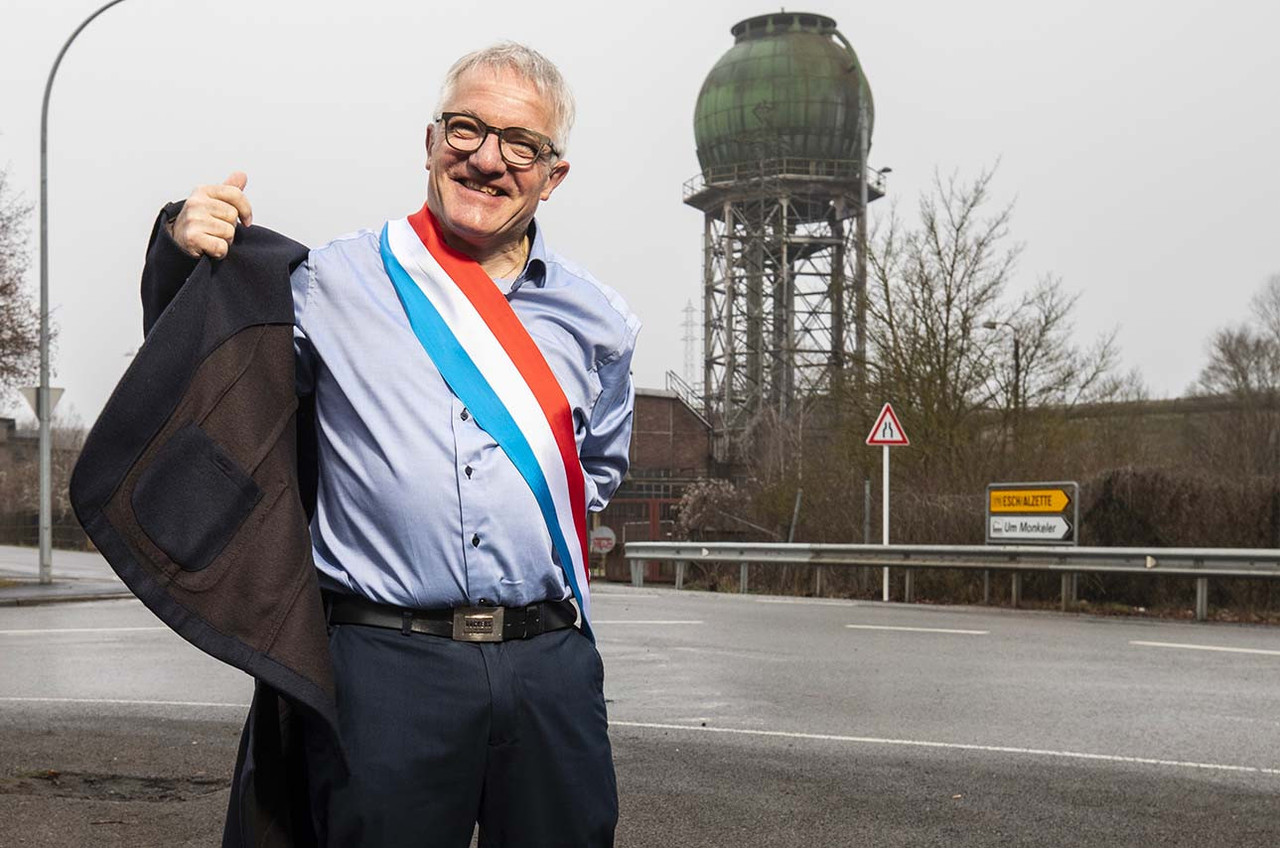
Paul Weimerskirch. (Photo: Guy Wolff/Maison Moderne)
Legend has it that a nymph lived near Schifflange, at the Marx Weier spring. She disappeared when the water dried up. But the Schifflange municipality wants to revive this myth. “The site is currently undergoing renovation. We are going to renaturalise it, and design an educational trail as well. And the story will be immortalised in a book,” says Paul Weimerskirch (CSV), the mayor, who poses above in front of the entrance to Metzer Schmelz, another place marked by Esch2022. And as the nymph in question attracted boys to her nets, the municipality has recently succeeded in attracting companies such as Bâtiself or Oberweis: these are “two points of attraction on the Op Herbett business park. At present, only one third of the area is occupied, but these arrivals give an idea of the future” as will the transformation of the Esch-Schifflange wasteland into a housing area that could eventually accommodate 10,000 inhabitants.
Bascharage - Michel Wolter
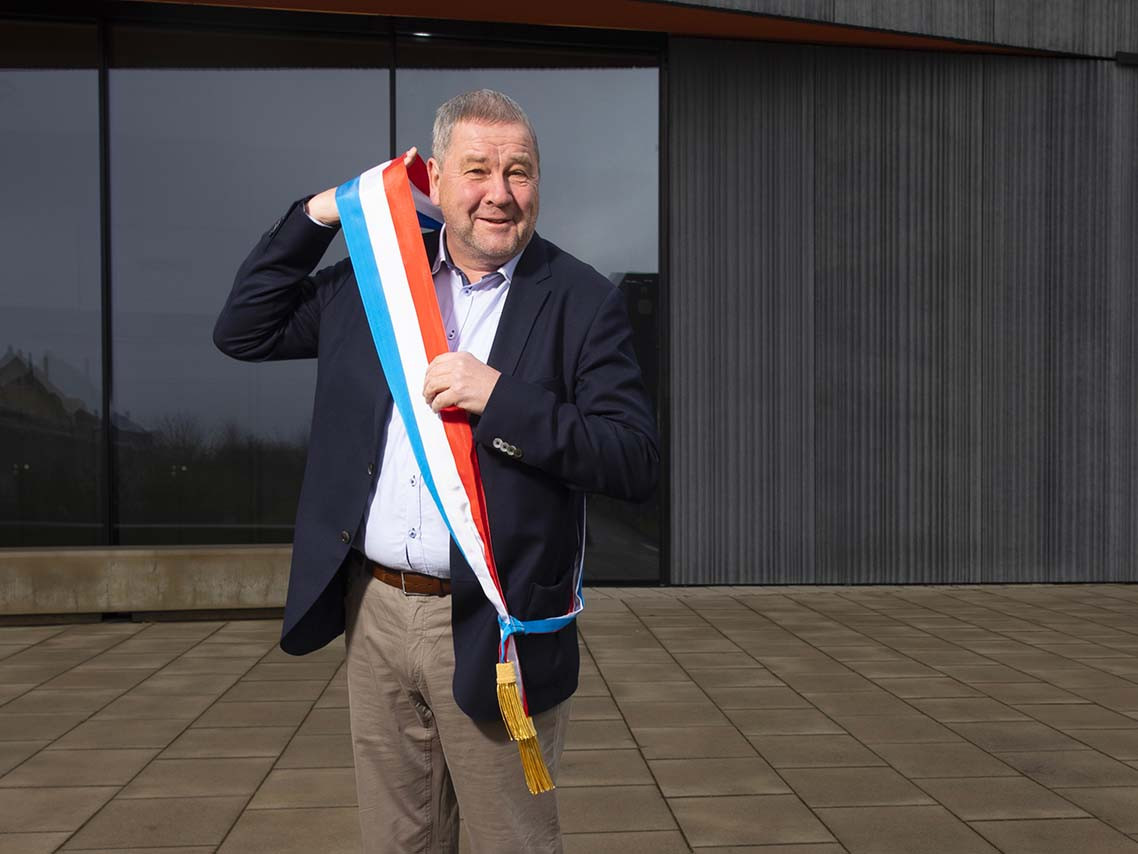
Michel Wolter. (Photo: Guy Wolff/Maison Moderne)
For Esch2022, Bascharage, known also as Käerjeng, worked hard on recycling and succeeded in its mission. “By giving a more important framework to the Buergbrennen, the tradition that follows the carnival and aims to chase away the winter. We are also working with the University of Luxembourg to conduct a study on this typical custom,” explains Michel Wolter (CSV), the mayor, who is posing here in front of the Käerjenger Treff cultural centre. When asked about the economic growth of the municipality, he says: "It is strongly based on the Robert Steichen business park, one of the largest in the country. However, there is no longer any real growth, as it is now almost full. It is therefore difficult to attract new companies. We need land, but we know how difficult it is to find it. And unlike some of our neighbours, we don't have any old industrial wastelands."
Kayl-Tétange - Jean Weiler
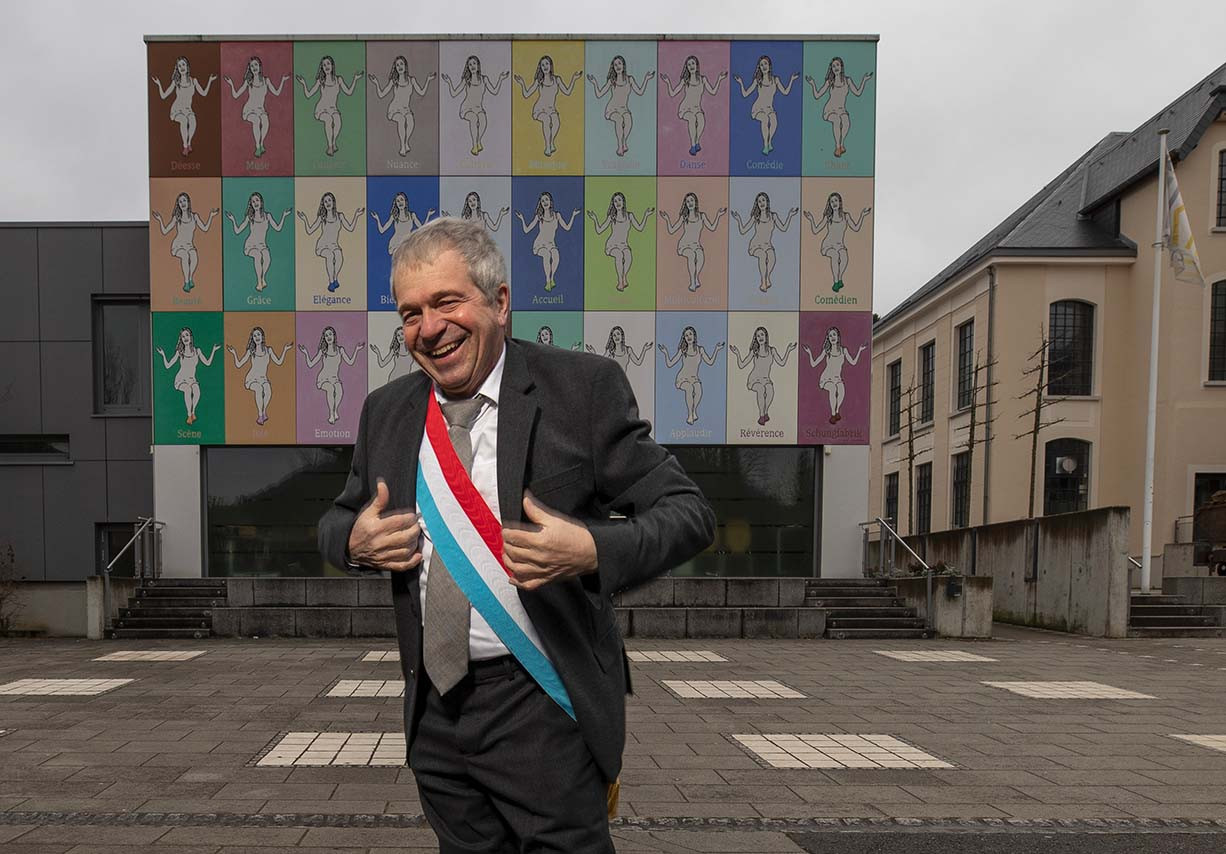
Jean Weiler. (Photo: Guy Wolff/Maison Moderne)
Like everywhere else, the first day of May is labour day in Kayl-Tétange. But it is also a day to remember Jean Schortgen, the first worker in the country to become a member of parliament. This was in 1914, four years before his death--on 1 May--in a mining accident in Tétange. This slice of history was worth the graphic novel that the municipality will publish--in collaboration with the Chamber of Deputies--on the occasion of Esch2022. The project that was unanimously approved by the town council. This is not insignificant when you know that the political majority has just changed in this municipality “where people live above all else”, according to Jean Weiler (CSV), the new mayor, who is posing above in front of the Schungfabrik cultural centre, which includes the Jean-Schortgen hall. “There is little industrial activity in our area. There is local commerce, but few large companies. And there is hardly any land available.”
Mondercange - Jeannot Fürpass
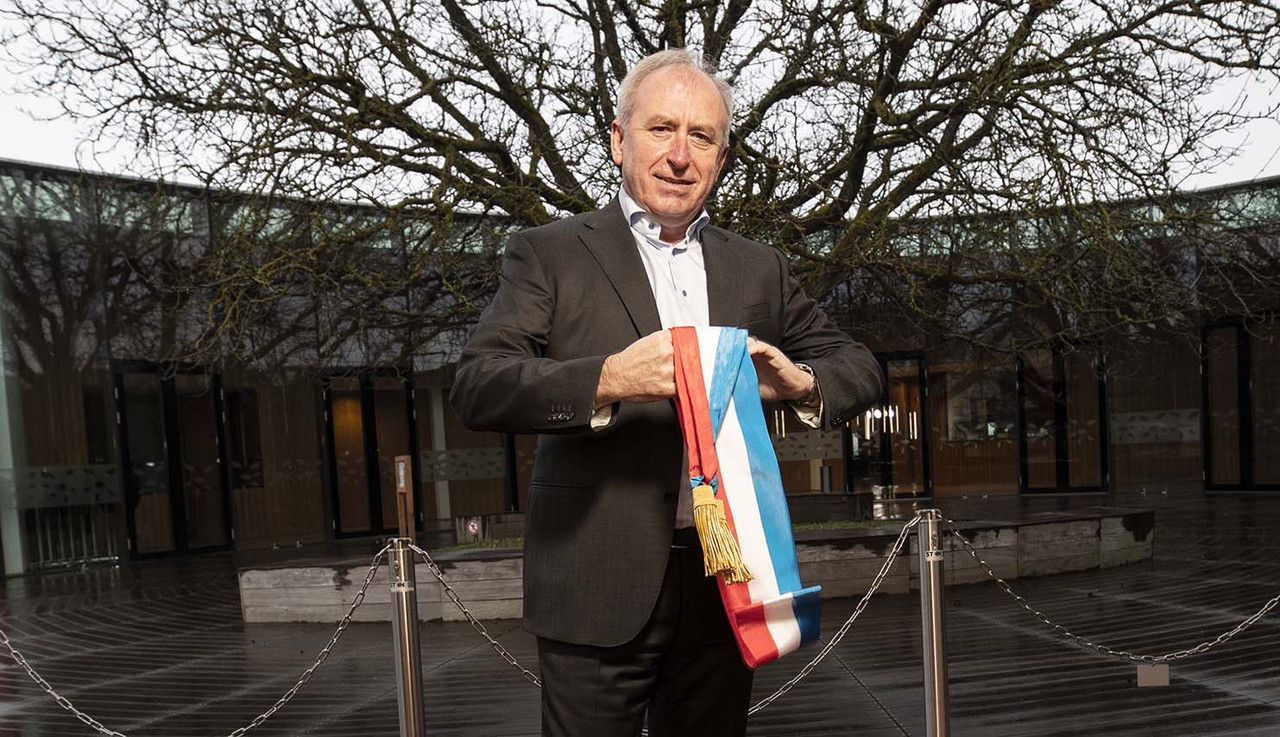
Jeannot Fürpass. (Photo: Guy Wolff/Maison Moderne)
“Mondercange is not a 'red soil' commune. In our town, everything is rather green”, says Jeannot Fürpass, the CSV mayor of the town. This is reflected in the major event that will take place in Esch2022: a "pop-up eco-design village” on the site of the Beim Nëssert cultural centre in Bergem (where the photo above was taken). “We will showcase the products and services that are available to the public. The aim is not only to entertain, but also to raise awareness.” And while the mayor is pleased with the upcoming arrival of a large Mercedes dealership (200 jobs) in Pontpierre, he is also looking for craftsmen. “We now want to turn to the circular economy,” he says, thinking in particular of the ZARE business park. As for a Foetz zoning area that is more than half a century old, “one of the biggest challenges will be to succeed in upgrading it. A long-term project,” he concludes.
Rumelange - Henri Haine
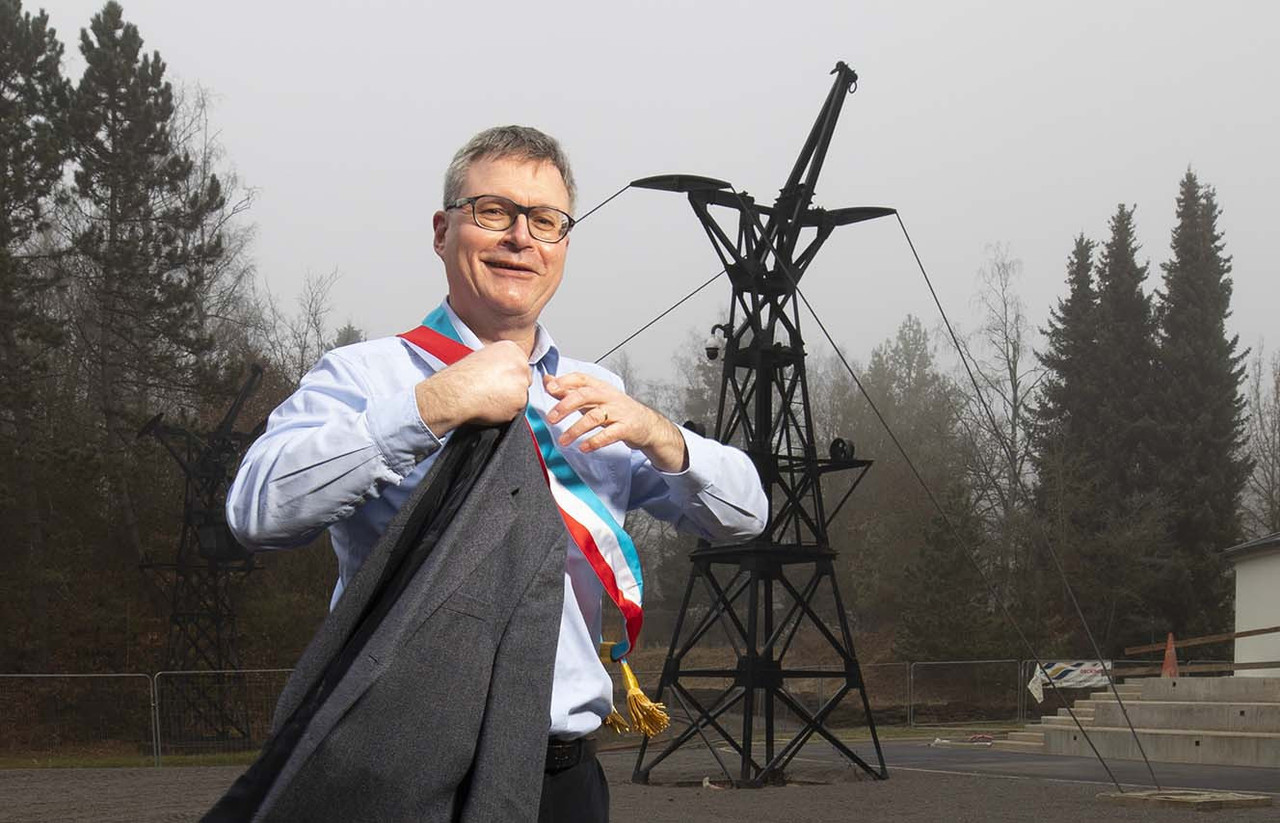
Henri Haine. (Photo: Guy Wolff/Maison Moderne)
“We are the second smallest municipality in the country, but also one of the most densely populated. This limits our development...”, explains Henri Haine (LSAP), the mayor of Rumelange. As a result, Rumelange is trying to make the most of the available space economically, with companies such as Cimalux, Vossloh Cogifer Kihn and Poeckes settling here. But there are also ideas for a different kind of image. Not least with the flagship project for Esch2022: Rëm.xx. “By using modern technologies and virtual reality, we aim to reposition Rumelange as a dynamic, future-oriented town while at the same time enhancing its past.” The ideal example is the transformation of the house of the former sculptor Albert Hames (located a few metres from the mayor in the photo above, not far from the old funicular) into a multifunctional space, suitable for an immersive tourist experience.
This article was written for the March 2022 edition of Paperjam magazine published on 23 February 2022. The content of the magazine is produced exclusively for the magazine. It is published on the website to contribute to the complete Paperjam archive.
Is your company a member of the Paperjam Club? You can request a subscription in your name. Let us know via club@paperjam.lu
This story was first published in French on Paperjam. It has been translated and edited for Delano.