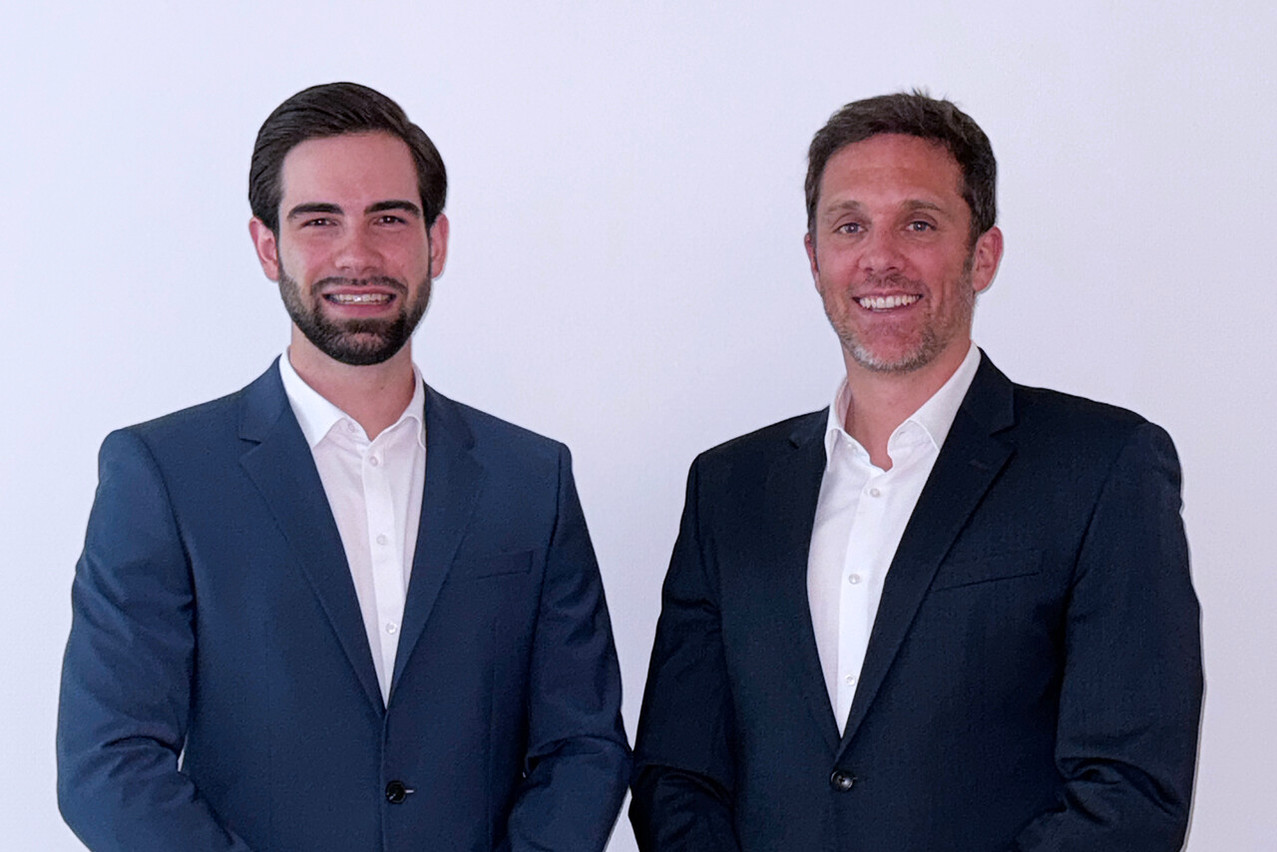
Officially established in March 2024, Simpact, a social impact company (SIS) founded by Luca Karels and Joe Schmit, has set itself the mission of developing affordable housing by working hand in hand with private developers, local authorities and the state. Their promise? To bring private-sector methods to affordable housing: speed, flexibility and efficiency, whilst complying with the very strict requirements imposed by Luxembourg’s Affordable Housing Act.
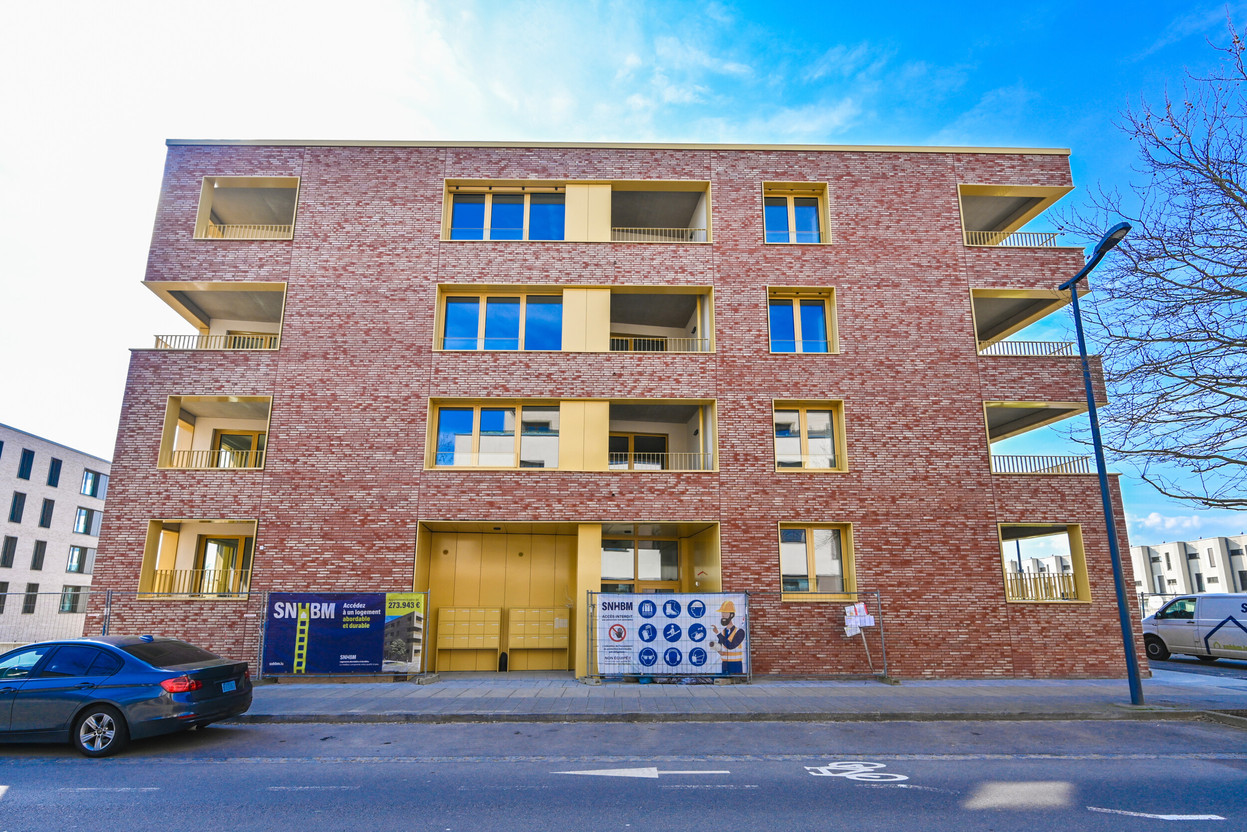
Today, Simpact reports that 133 units have already been approved, with around 60 more in the pipeline, several projects in collaboration with local councils, and the first homes already completed and occupied.
The story of Simpact began with a meeting arranged by a mutual acquaintance (Luxembourg really is a small world). On the one hand, there was Luca Karels, a sharp young mind (barely 26 years old), passionate about the challenges of affordable housing and convinced that a new approach to social housing provision was needed. On the other, Joe Schmit, a seasoned professional in the field of property development in Luxembourg, who has been working in the Grand Duchy for over 12 years.
The must-see match
“The idea for Simpact came to me during my time at university,” explains Luca Karels. “As this is a very sensitive area of work, especially when you’re inexperienced, I was fully aware that any mistakes could prove very costly and that having the right support would make all the difference…”
At that time, Joe Schmit was also going through a turning point. The property crisis hitting Luxembourg led him to rethink his business. “Two and a half years ago, given the circumstances, we sold our entire portfolio of land. I was looking for a new challenge,” he explains.
The two men met and quickly realised that their skills complemented each other. “It was a pretty good mix,” explains Joe Schmit. “Luca had a perfect grasp of the specifications and all the regulatory requirements. I brought the property network, contacts with developers and hands-on experience.”
We had to reinvent ourselves several times before we found a model that worked.

For over a year and a half, the duo worked on their project. “As with any business plan, you soon realise that it’s never quite right,” says Luca Karels with a smile. “We had to reinvent ourselves several times before we found the right model,” adds Joe Schmit.
The challenge facing an agile social enterprise
The founders’ observation is simple: public housing providers are often held back by cumbersome administrative procedures and lengthy delays. Simpact therefore aims to provide a complementary alternative.
“We operate under exactly the same legislation as the Housing Fund,” explains Luca Karels. “The housing we provide is the same. The difference is that we have greater flexibility, as we are not a public body.”
Flexibility is at the heart of the model. “Public bodies must comply with public procurement rules, which significantly lengthen the process. When the Housing Fund buys a plot of land, it can sometimes take a year just to appoint an architect,” explains Luca Karels. “We, on the other hand, simply call an architect we already work with and get on with things straight away.”
Joe Schmit also emphasises this point. “Our responsiveness is what really sets us apart. The time between a file arriving here and being sent to the Ministry is very short.”
The aim is clear: to save private developers time. “If a developer comes to see us, we want to be able to give them an answer within a week as to whether a project is feasible or not.”
A deliberately lightweight structure
Simpact operates with an extremely small team, comprising just three people in its core staff. This is a choice they have made entirely by design. “We have no desire whatsoever to create a rigid structure,” explains Luca Karels. “Our role is to act as a conductor.”
In practical terms, Simpact delegates various tasks to specialist partners: architects, engineers, developers and construction firms, with the two partners having worked with these stakeholders for as long as ten or 15 years. This approach enables Simpact to move forward quickly whilst keeping fixed costs down – a strategy that runs counter to that of many large public organisations. “A team of 200 people doesn’t necessarily make you more productive,” says Luca Karels.
Gaining a thorough understanding of the law
According to them, one of Simpact’s key strengths lies in its extremely thorough understanding of the regulatory framework. The specifications for affordable housing run to around 115 pages. And, according to the founders, very few players truly understand them.
“Most people don’t bother to read it all the way through,” says Luca Karels. “Yet every detail can have a huge impact on a project’s eligibility.” Simpact has therefore specialised in optimising applications to secure the maximum level of funding.
Today, all the applications we have submitted have been awarded the maximum level of state funding available.

“Today, all the projects we’ve secured funding for have received the maximum level of state support,” he points out, with well-deserved pride in a shrewdness that, to this day, makes all the difference.
The principle is simple: to qualify for grants of up to 75%, projects must meet extremely specific criteria regarding floor space, facilities, costs and housing types.
“Very often, the applications we receive do not meet the requirements,” explains Luca Karels. “Our role is precisely to work with architects to ensure they are eligible.” In his view, this expertise makes a real difference in the market. “If you simply ask an architect to put together an application, it will generally not comply with the ministerial specifications. At Simpact, we go over every detail,” explains the young man.
Close collaboration with developers
The Simpact model is also attracting an increasing number of private developers, as it enables them to secure large-scale sales quickly. “We have the option of buying ten or 20 houses directly,” explains Luca Karels. “For the developer, it’s much simpler than dealing with 20 individual buyers, each with different requirements and the risk of their mortgage applications being turned down,” adds Joe Schmit.
This approach also makes it possible to standardise certain technical aspects and reduce costs. “The developer can order materials in larger quantities and streamline the process with the architects,” he continues.
A rigorous selection of partners
“Our aim is to work exclusively with reputable, established developers,” says Joe Schmit. “We need to be sure that the projects will be seen through to completion.” This caution is also due to the significant financial risks taken on by the founders. “We are personally liable for the loans and bear a huge amount of responsibility,” points out Luca Karels.
We have already completed an initial cycle, which lends us further credibility.

The first houses were let as early as 1 May 2025. “We’ve already completed a full cycle from start to finish, which gives us added credibility,” says Luca Karels.
The duo’s projects are currently concentrated mainly in northern Luxembourg, a direct consequence of the way public funding is calculated: “For a long time, the government had set a uniform land price for the whole country,” explains Luca Karels. “In the south and around the centre, it was almost impossible to make the projects economically viable.”
Ongoing legislative reform is expected to allow for the regionalisation of ceilings in order to better reflect the reality of the property market.
Local authorities as a future model for growth
In addition to private developers, Simpact is now placing a strong emphasis on partnerships with local authorities. Some are already granting them land through long-term leases. “Our main advantage is that we can develop projects without immediate pressure on land availability,” explains Luca Karels.
Local authorities also see Simpact as a faster solution compared to traditional public housing schemes: “Today, many of these local authorities are finding that affordable housing is often the last to be built in public housing developments. Simpact aims to reverse this trend,” he emphasises.
“We have no interest in leaving the site vacant; rather, we want the project to move forward quickly and be let straight away,” insists Joe Schmit. Simpact’s stated aim is now to reach around 250 social housing units.
A hybrid model combining social impact and entrepreneurial principles
Simpact operates under the Luxembourg status of a social impact company (SIS). This is a relatively new hybrid model. “To be clear, it’s a capitalist approach with reasonable profits,” summarises Luca Karels. “The founders can be remunerated, but within a framework strictly regulated by law. Salaries are capped at six times the minimum wage,” he adds.
The government subsidises projects, not our day-to-day operations, which means Simpact must continue to perform well.

Unlike some organisations, the government does not directly fund the organisation. “The government subsidises projects, not our day-to-day running costs, which means Simpact has to remain efficient. If we don’t work, there’s no income,” insists Luca Karels.
This reality creates significant financial pressure. “From a purely financial point of view, what we’re doing doesn’t always make much sense. The responsibilities are enormous compared to the potential returns,” explains Luca Karels. But the two founders fully embrace this aspect, as they are both convinced that the project is sustainable and beneficial to the country.
One ambition: to become a long-term player in the affordable housing sector
Today, several new players are already seeking to replicate the Simpact model. But Luca Karels points out: “Many people think that all you need to do is set up a SIS to receive public funding. The reality is much more complex.” The young entrepreneur emphasises, in particular, the importance of governance, audits and compliance with the rules. “We manage extremely large amounts of public funds. Everything must be beyond reproach,” adds Joe Schmit.
“Our aim? Not just to talk about the housing crisis, but to actually create housing,” the two professionals conclude in unison.